The Antiquity of Man
1844
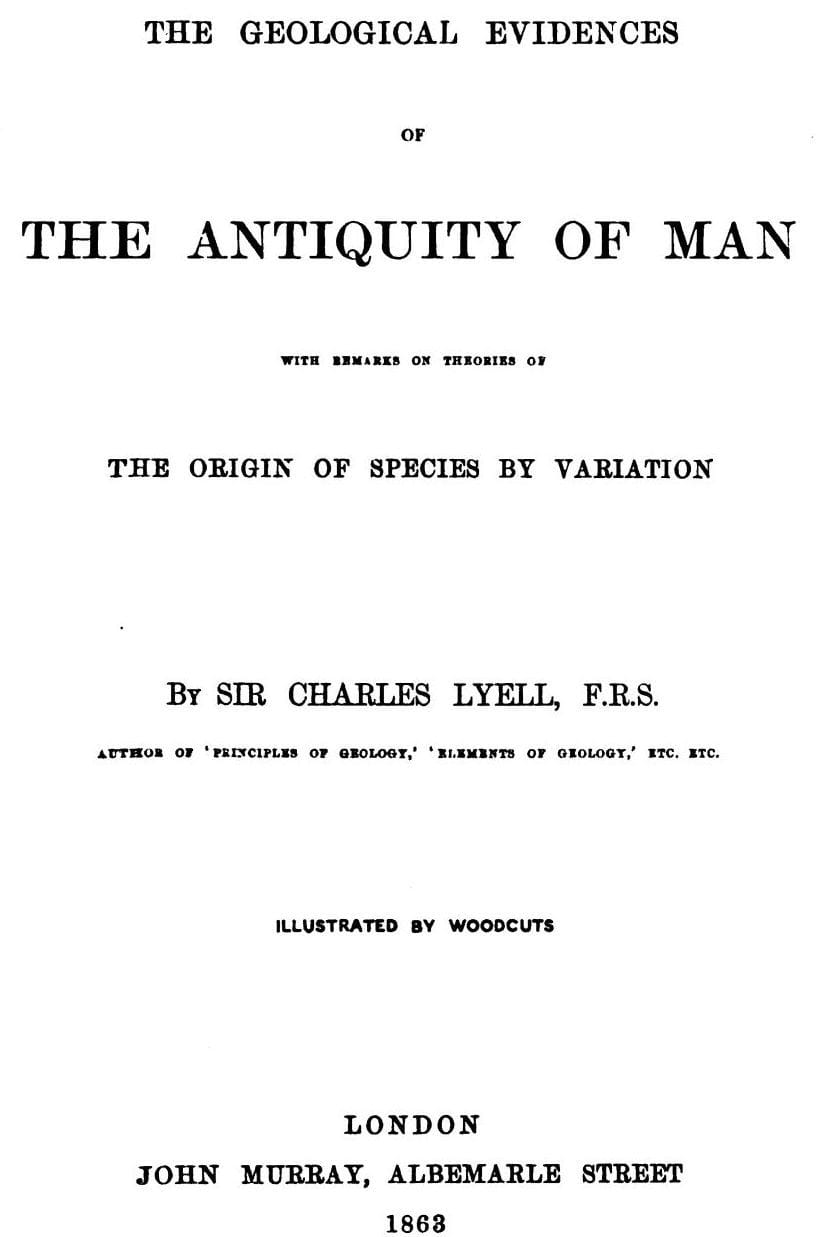
The Antiquity of Man
1844
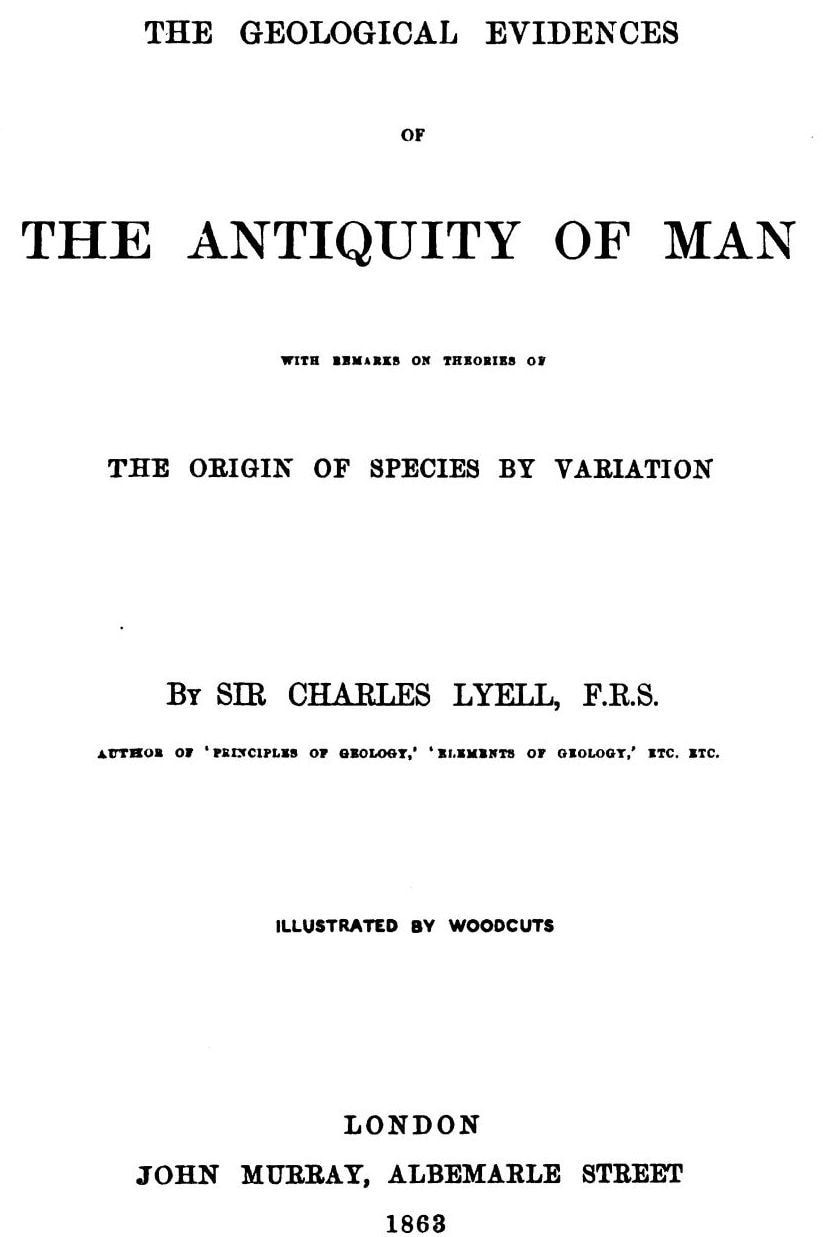
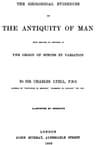
The Antiquity of Man, published in 1844 by Sir Charles Lyell, is a significant scientific work that examines geological evidence supporting the ancient existence of humans. Lyell analyzes archaeological findings, including human fossils and tools, to argue for the deep historical roots of humanity, building on earlier evolutionary theories. The book discusses discoveries from various European caves that suggest early humans coexisted with extinct species, redefining the timeline of human history in the context of natural history and geology.
Editions
X-Ray
The author and narrator, a prominent 19th-century geologist who presents evidence for human antiquity. He systematically examines geological formations and fossil evidence across Europe and North America.
Belgian anatomist and paleontologist who discovered human remains with extinct mammalia in Liege caverns in the 1830s. His work was initially dismissed but later vindicated by Lyell.
French antiquarian who discovered flint implements in ancient alluvium at Abbeville. His findings were initially met with skepticism but proved crucial to establishing human antiquity.
Evolutionary theorist whose 'Origin of Species' provides the theoretical framework for understanding human development. Though not physically present, his ideas permeate the work.
About The Antiquity of Man
Chapter Summaries
- 1
- Lyell introduces the question of human antiquity and defines geological periods, particularly Recent and Pleistocene. He explains the nomenclature and chronological framework that will structure his evidence.
- 2
- Examination of Danish peat bogs and shell mounds reveals three successive periods of vegetation and the progression from stone to bronze to iron ages. Swiss lake dwellings provide evidence of early agricultural and domestic life.
- 3
- Analysis of human remains in Nile delta, Ohio mounds, Brazilian sites, and Mississippi delta demonstrates Recent period human activity. Evidence of land level changes since human occupation is presented.
Key Themes
- Scientific Method and Evidence
- Lyell demonstrates how careful observation, systematic collection of evidence, and rigorous analysis can overcome preconceived notions. The book exemplifies the triumph of empirical evidence over dogmatic belief in establishing scientific truth.
- Human Antiquity and Evolution
- The central theme explores evidence that humans existed much earlier than previously believed, coexisting with extinct animals. This challenges biblical chronology and supports evolutionary theory by placing humans within natural history rather than as special creations.
- Geological Time and Change
- Lyell emphasizes the vast scales of geological time and gradual change, showing how landscapes, climates, and fauna have transformed over millennia. This uniformitarian principle underlies his arguments for human antiquity.
Characters
- Sir Charles Lyell(protagonist)
- The author and narrator, a prominent 19th-century geologist who presents evidence for human antiquity. He systematically examines geological formations and fossil evidence across Europe and North America.
- Dr. Schmerling(major)
- Belgian anatomist and paleontologist who discovered human remains with extinct mammalia in Liege caverns in the 1830s. His work was initially dismissed but later vindicated by Lyell.
- M. Boucher de Perthes(major)
- French antiquarian who discovered flint implements in ancient alluvium at Abbeville. His findings were initially met with skepticism but proved crucial to establishing human antiquity.
- Charles Darwin(major)
- Evolutionary theorist whose 'Origin of Species' provides the theoretical framework for understanding human development. Though not physically present, his ideas permeate the work.
- Professor Huxley(major)
- Anatomist who provides detailed analysis of fossil human skulls, particularly the Neanderthal and Engis specimens. His comparative studies link human and ape anatomy.
- Dr. Falconer(major)
- Paleontologist who played a crucial role in the systematic exploration of the Brixham Cave and validation of flint implements. Expert on fossil mammalia.
Link to this book
Add a free, dofollow link to Lex on your blog, forum, syllabus, or reading list.

<a href="https://lex-books.com/book/the-antiquity-of-man-e2935d6b-053e-4d71-af41-7493d8cbbf43"><img src="https://lex-books.com/badges/read-on-lex.svg" alt="Read The Antiquity of Man by Charles, Sir Lyell free on Lex" width="160" height="40"></a>[](https://lex-books.com/book/the-antiquity-of-man-e2935d6b-053e-4d71-af41-7493d8cbbf43)[url=https://lex-books.com/book/the-antiquity-of-man-e2935d6b-053e-4d71-af41-7493d8cbbf43][img]https://lex-books.com/badges/read-on-lex.svg[/img][/url]Read The Antiquity of Man by Charles, Sir Lyell free on Lex: https://lex-books.com/book/the-antiquity-of-man-e2935d6b-053e-4d71-af41-7493d8cbbf43Cite this book
Reading this edition for a paper or guide? Copy a citation.
Charles, Sir Lyell. The Antiquity of Man. Lex, lex-books.com/book/the-antiquity-of-man-e2935d6b-053e-4d71-af41-7493d8cbbf43.Charles, S. L. (1844). The Antiquity of Man. Lex. https://lex-books.com/book/the-antiquity-of-man-e2935d6b-053e-4d71-af41-7493d8cbbf43Charles, Sir Lyell. The Antiquity of Man. Lex. https://lex-books.com/book/the-antiquity-of-man-e2935d6b-053e-4d71-af41-7493d8cbbf43.