
Bernardin de Saint-Pierre
Bernardin de Saint-Pierre was a prominent French writer and botanist, celebrated for his contributions to literature and natural science in the 18th century. Born in Le Havre, he developed a passion for nature and literature early in life, which would profoundly influence his writing. His most notable work, 'Paul et Virginie,' published in 1788, is a poignant tale of love and innocence set against the backdrop of the exotic landscapes of Mauritius. The novel's themes of idealized love and the contrast between nature and civilization resonated deeply with contemporary readers, securing its place as a classic of French literature. In addition to his literary achievements, Bernardin de Saint-Pierre was also an influential figure in the field of botany, contributing to the understanding of plant life in the tropics. His writings often reflected Enlightenment ideals, emphasizing the beauty of nature and the importance of a harmonious relationship between humanity and the environment. His legacy endures not only through 'Paul et Virginie' but also through his impact on later Romantic writers who were inspired by his vivid depictions of nature and emotional depth in storytelling.
Famous Quotes
View all 12 quotes“If life is a punishment, one should wish for an end; if life is a test, one should wish it to be short.””
“Death, my son, is a good thing for all men; it is the night for this worried day that we call life. It is in the sleep of death that finds rest for eternity the sickness, pain, desperation, and the fears that agitate, without end, we unhappy living souls.””
“There is never but one pleasant side to this human life. Like the globe on which we turn, our own rapid rotation is but one day, and a part of this day cannot receive light, so that the other part will not be delivered into darkness.””
Books from the author


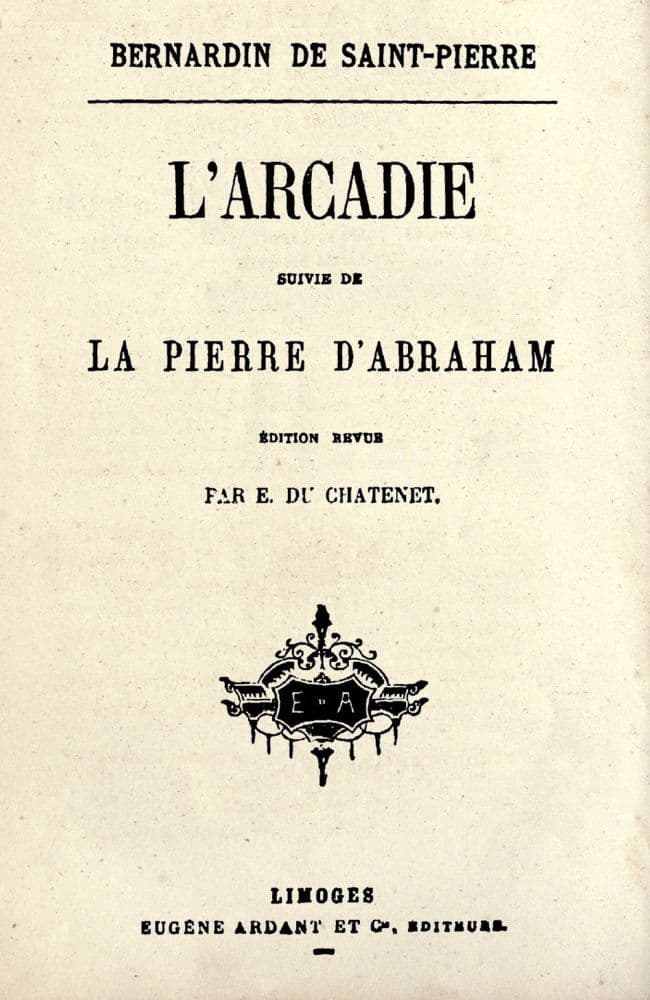

Link to this page
Add a free, dofollow link to Lex on your blog, forum, syllabus, or reading list.

<a href="https://lex-books.com/author/bernardin-de-saint-pierre"><img src="https://lex-books.com/badges/read-on-lex.svg" alt="Bernardin de Saint-Pierre on Lex" width="160" height="40"></a>[](https://lex-books.com/author/bernardin-de-saint-pierre)[url=https://lex-books.com/author/bernardin-de-saint-pierre][img]https://lex-books.com/badges/read-on-lex.svg[/img][/url]Bernardin de Saint-Pierre on Lex: https://lex-books.com/author/bernardin-de-saint-pierre