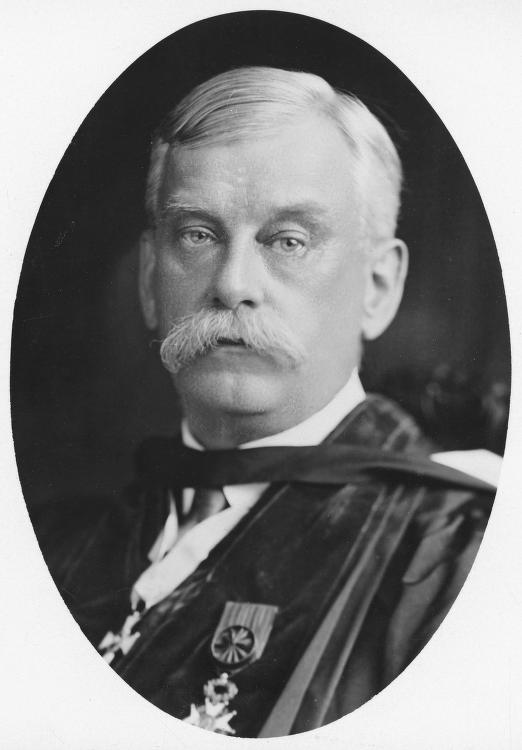
A. B. Brooks
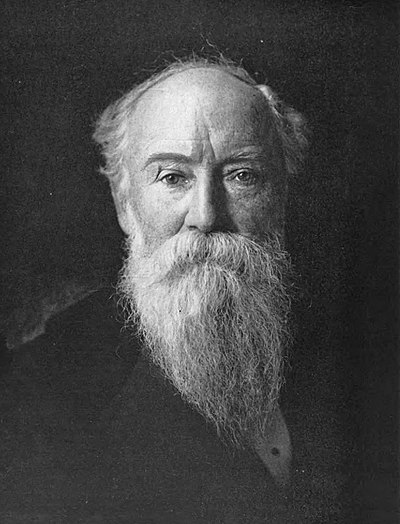
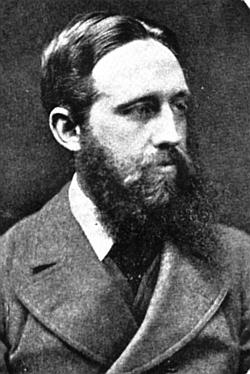
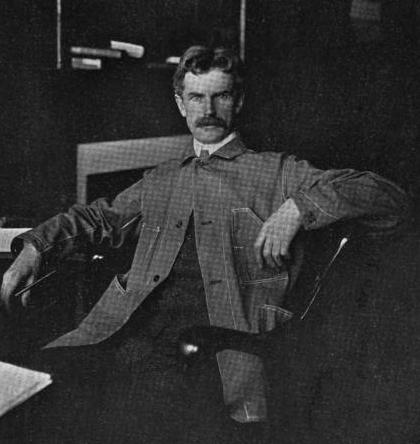
A. B. Brooks was an American author and naturalist, best known for his work in environmental literature and his deep appreciation for the natural world. His most notable work, "West Virginia Trees," showcases his expertise in botany and his love for the diverse flora of West Virginia. Through detailed descriptions and insightful observations, Brooks captured the essence of the Appalachian landscape, highlighting the importance of conservation and the beauty of the region's trees. Brooks's writings reflect a growing awareness of environmental issues during his lifetime, making him an important figure in the early conservation movement. His contributions not only enriched the literary landscape of the early 20th century but also served to educate readers about the significance of preserving natural habitats. His legacy continues to inspire those who advocate for environmental awareness and appreciation of the natural world.
Famous Quotes
View all 5 quotes“Enigmas answered. Not only is QFT the answer to Einstein's search, it also answers or resolves his Enigmas, and in a way that can be understood by the man (or woman) on the street. In Appendix A you will see how the paradoxes of special relativity become natural and understandable consequences of the way fields behave. In Appendix B you will see that the problematic curvature of space-time in general relativity is gone; in QFT gravity is just another force field and space and time are the same space and time we intuitively believe in. Finally, in Appendix C you will see how the infamous wave-particle duality of QM is eliminated because there are no particles - only fields - and hence there is no duality. However abandoning the familiar picture of solid particles and replacing it with intangible fields is not easy. It will require a leap of imagination greater than did the atomic picture that Eddington struggled with.””
“A delicate balance. In summary, nuclei are held together by a delicate balance among (a) the attractive strong force between nucleons, (b) the electrical repulsion between protons, (c) the dilution of this repulsive force by neutrons, and (d) the instability created by the Exclusion Principle if there are too many neutrons. Thus, for a given number of protons there is a narrow range of allowable neutron numbers: not enough and the protons will fly apart because of electrical repulsion: too many and the nucleus will be unstable because of the Exclusion Principle.””
“So, how are we doing this? Ambush? B&E after dark? The traditional distraction with some sticky fingers? Oh, or my favorite”
Books from the author






Link to this page
Add a free, dofollow link to Lex on your blog, forum, syllabus, or reading list.

<a href="https://lex-books.com/author/a-b-brooks"><img src="https://lex-books.com/badges/read-on-lex.svg" alt="A. B. Brooks on Lex" width="160" height="40"></a>[](https://lex-books.com/author/a-b-brooks)[url=https://lex-books.com/author/a-b-brooks][img]https://lex-books.com/badges/read-on-lex.svg[/img][/url]A. B. Brooks on Lex: https://lex-books.com/author/a-b-brooks