Yayá Garcia
1976
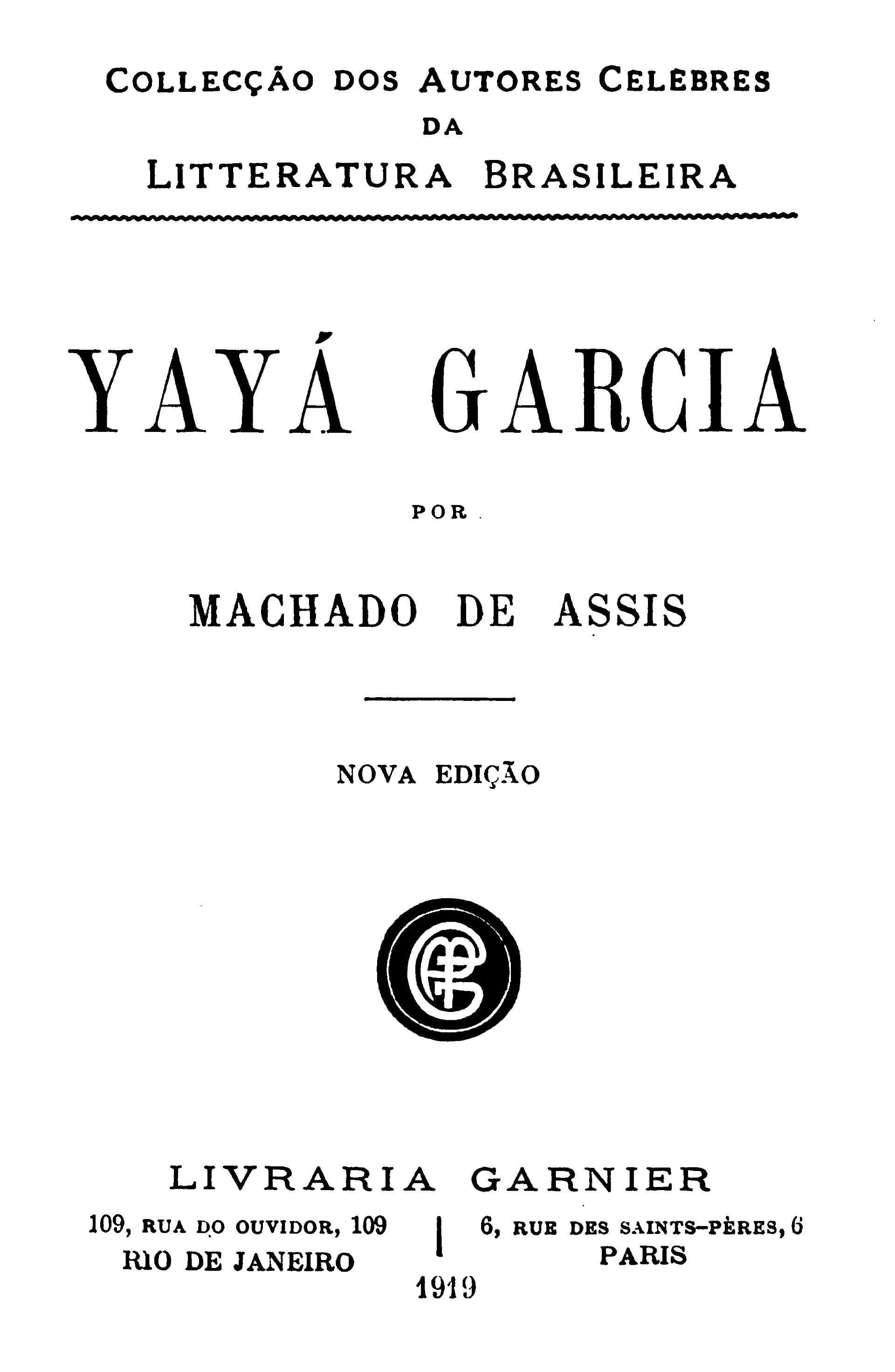
Machado de Assis constructs a quietly devastating portrait of a man who has chosen withdrawal from the world, only to find that love refuses to let him rest in peace. Luiz Garcia, a minor bureaucrat in colonial Rio, has arranged his life around solitude: his modest house in Santa Thereza, his routines, his deliberate silence. Into this carefully constructed isolation comes his daughter Yayá, whose innocent joy threatens everything Luiz has built. When Valeria, a widow seeking counsel about her son's participation in an ongoing war, enters his life, Luiz must choose between his cherished solitude and the claims that love, duty, and community make upon him. This is Machado at his most subtle, writing a novel where almost nothing happens yet everything shifts. The prose moves with deceptive calm, like water over stone, but beneath its surface run currents of duty, affection, and quiet desperation. For readers who prize psychological precision and the slow revelation of character, Yayá Garcia offers one of Assis's most intimate studies of what we owe to others and what we owe to ourselves.
Editions

X-Ray
“He felt that there is a loose balance of good and evil, and that the art of living consists in getting the greatest good out of the greatest evil.””
— Machado de Assis
“Quando estimo alguém, perdôo; quando não estimo, esqueço. Perdoar e esquecer é raro, mas não é possível; está nas tuas mãos””
— Machado de Assis
“- O coração humano é a região do inesperado, dizia consigo o cético subindo as escadas da repartição.””
— Machado de Assis
Link to this book
Add a free, dofollow link to Lex on your blog, forum, syllabus, or reading list.

<a href="https://lex-books.com/book/yay-garcia-4b839a1b-1a4f-4fb2-b4f1-0ba19e3d5ac4"><img src="https://lex-books.com/badges/read-on-lex.svg" alt="Read Yayá Garcia by Machado de Assis free on Lex" width="160" height="40"></a>[](https://lex-books.com/book/yay-garcia-4b839a1b-1a4f-4fb2-b4f1-0ba19e3d5ac4)[url=https://lex-books.com/book/yay-garcia-4b839a1b-1a4f-4fb2-b4f1-0ba19e3d5ac4][img]https://lex-books.com/badges/read-on-lex.svg[/img][/url]Read Yayá Garcia by Machado de Assis free on Lex: https://lex-books.com/book/yay-garcia-4b839a1b-1a4f-4fb2-b4f1-0ba19e3d5ac4Cite this book
Reading this edition for a paper or guide? Copy a citation.
Assis, Machado de. Yayá Garcia. Lex, lex-books.com/book/yay-garcia-4b839a1b-1a4f-4fb2-b4f1-0ba19e3d5ac4.Assis, M. D. (1976). Yayá Garcia. Lex. https://lex-books.com/book/yay-garcia-4b839a1b-1a4f-4fb2-b4f1-0ba19e3d5ac4Assis, Machado de. Yayá Garcia. Lex. https://lex-books.com/book/yay-garcia-4b839a1b-1a4f-4fb2-b4f1-0ba19e3d5ac4.