Wissenschaft Der Logik — Band 2
1816
Wissenschaft Der Logik — Band 2
1816
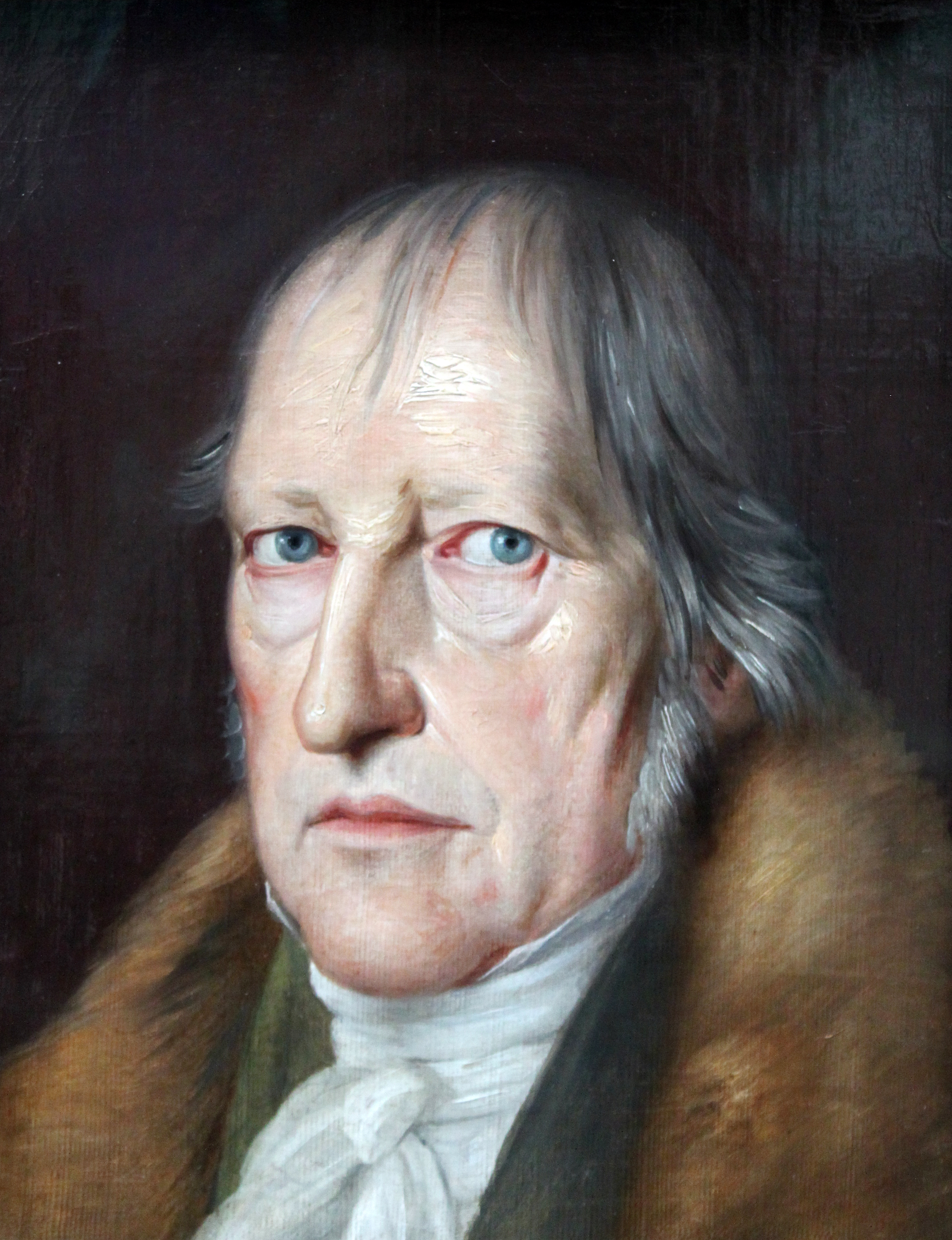
Wissenschaft Der Logik — Band 2, published in 1816 by Georg Wilhelm Friedrich Hegel, is a pivotal philosophical treatise that examines subjective logic and the theory of concepts. It explores the nature of concepts, judgments, and inferences, aiming to articulate the process of thought. This volume emphasizes the evolution of philosophical thought and challenges traditional metaphysical views, introducing complex arguments about being, essence, and the absolute idea. Hegel's work has significantly influenced contemporary philosophical schools, including Marxism and Existentialism, establishing a foundation for critical and dialectical thought.
Editions
X-Ray
“The system of logic is the realm of shadows, the world of simple essentialities, freed of all sensuous concretion. To study this science, to dwell and to labor in this realm of shadows, is the absolute culture and discipline of consciousness.””
— Georg Wilhelm Friedrich Hegel
“The nature of finite things as such is to have the seed of passing away as their essential being: the hour of their birth is the hour of their death.””
— Georg Wilhelm Friedrich Hegel
“The thinking or figurate conception which has before it only a specific, determinate being must be referred back to the [...] beginning of the science made by Parmenides who purified and elevated his own figurate conception, and so, too, that of posterity, to pure thought, to being as such and thereby created the element of the science. What is the first in the science had of necessity to show itself historically as the first. And we must regard the Eleatic One or being as the first step in the knowledge of thought.””
— Georg Wilhelm Friedrich Hegel
“When we say of things that they are finite, we understand thereby that they not only have a determinateness, that their quality is not only a reality and an intrinsic determination, that finite things are not merely limited . . . but that on the contrary, non-being constitutes their nature and being. Finite things are, but their relation to themselves is that they are negatively self-related and this very relation drives them beyond their being. They are, but the truth of this being is their destruction. The finite not only alters, as anything does, but it ceases to be, and it is not merely a possibility that it ceases to be, as though it could be that it might not cease. No, the nature of the being of finite things is that they have within them the seeds of their own destruction; the hour of their birth is the hour of their death.””
— Georg Wilhelm Friedrich Hegel
“Aber die Philosophie soll keine Erzählung dessen sein, was geschieht, sondern eine Erkenntnis dessen, was wahr darin ist, und aus dem Wahren soll sie ferner das begreifen, was in der Erzählung als ein bloßes Geschehen erscheint.””
— Georg Wilhelm Friedrich Hegel
“At first, therefore, logic must indeed be learnt as something which one understands and sees into quite well but in which, at the beginning, one feels the lack of scope and depth and a wider significance. It is only after profounder acquaintance with the other sciences that logic ceases to be for subjective spirit a merely abstract universal and reveals itself as the universal which embraces within itself the wealth of the particular-just as the same proverb, in the mouth of a youth who understands it quite well, does not possess the wide range of meaning which it has in the mind of a man with the experience of a lifetime behind him, for whom the meaning is expressed in all its power. Thus the value of logic is only appreciated when it is preceded by experience of the sciences; it then displays itself to mind as the universal truth, not as a particular knowledge alongside other matters and realities, but as the essential being of all these latter.””
— Georg Wilhelm Friedrich Hegel
“But philosophy ought not to be a narrative of what happens, but a cognition of what is in what happens, in order further to comprehend on the basis of this truth what in the narrative appears as a mere happening.””
— Georg Wilhelm Friedrich Hegel
Link to this book
Add a free, dofollow link to Lex on your blog, forum, syllabus, or reading list.

<a href="https://lex-books.com/book/wissenschaft-der-logik-band-2-a4c09ee7-4898-4734-bae1-43572a4c0b88"><img src="https://lex-books.com/badges/read-on-lex.svg" alt="Read Wissenschaft Der Logik — Band 2 by Georg Wilhelm Friedrich Hegel free on Lex" width="160" height="40"></a>[](https://lex-books.com/book/wissenschaft-der-logik-band-2-a4c09ee7-4898-4734-bae1-43572a4c0b88)[url=https://lex-books.com/book/wissenschaft-der-logik-band-2-a4c09ee7-4898-4734-bae1-43572a4c0b88][img]https://lex-books.com/badges/read-on-lex.svg[/img][/url]Read Wissenschaft Der Logik — Band 2 by Georg Wilhelm Friedrich Hegel free on Lex: https://lex-books.com/book/wissenschaft-der-logik-band-2-a4c09ee7-4898-4734-bae1-43572a4c0b88Cite this book
Reading this edition for a paper or guide? Copy a citation.
Hegel, Georg Wilhelm Friedrich. Wissenschaft Der Logik — Band 2. Lex, lex-books.com/book/wissenschaft-der-logik-band-2-a4c09ee7-4898-4734-bae1-43572a4c0b88.Hegel, G. W. F. (1816). Wissenschaft Der Logik — Band 2. Lex. https://lex-books.com/book/wissenschaft-der-logik-band-2-a4c09ee7-4898-4734-bae1-43572a4c0b88Hegel, Georg Wilhelm Friedrich. Wissenschaft Der Logik — Band 2. Lex. https://lex-books.com/book/wissenschaft-der-logik-band-2-a4c09ee7-4898-4734-bae1-43572a4c0b88.