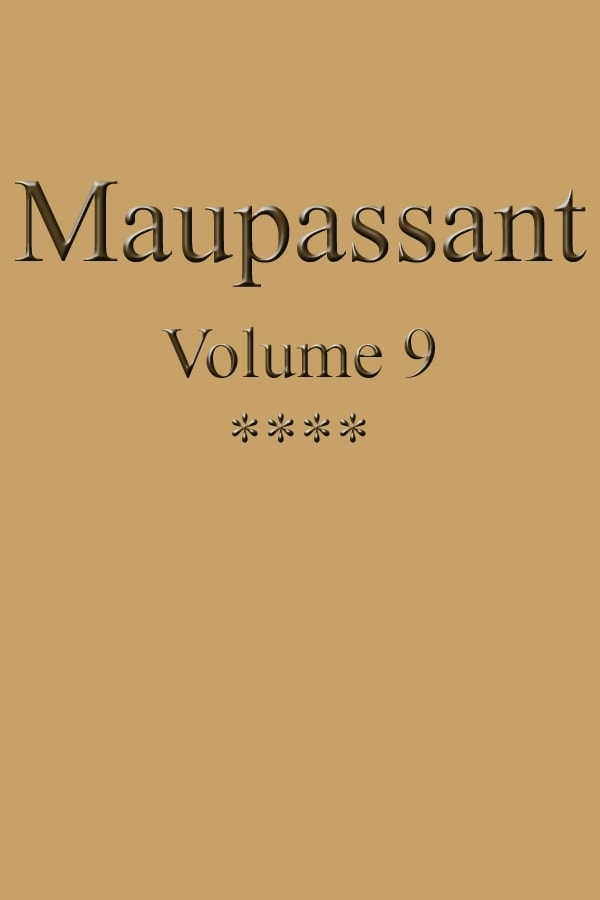
Œuvres Complètes De Guy De Maupassant - Volume 09
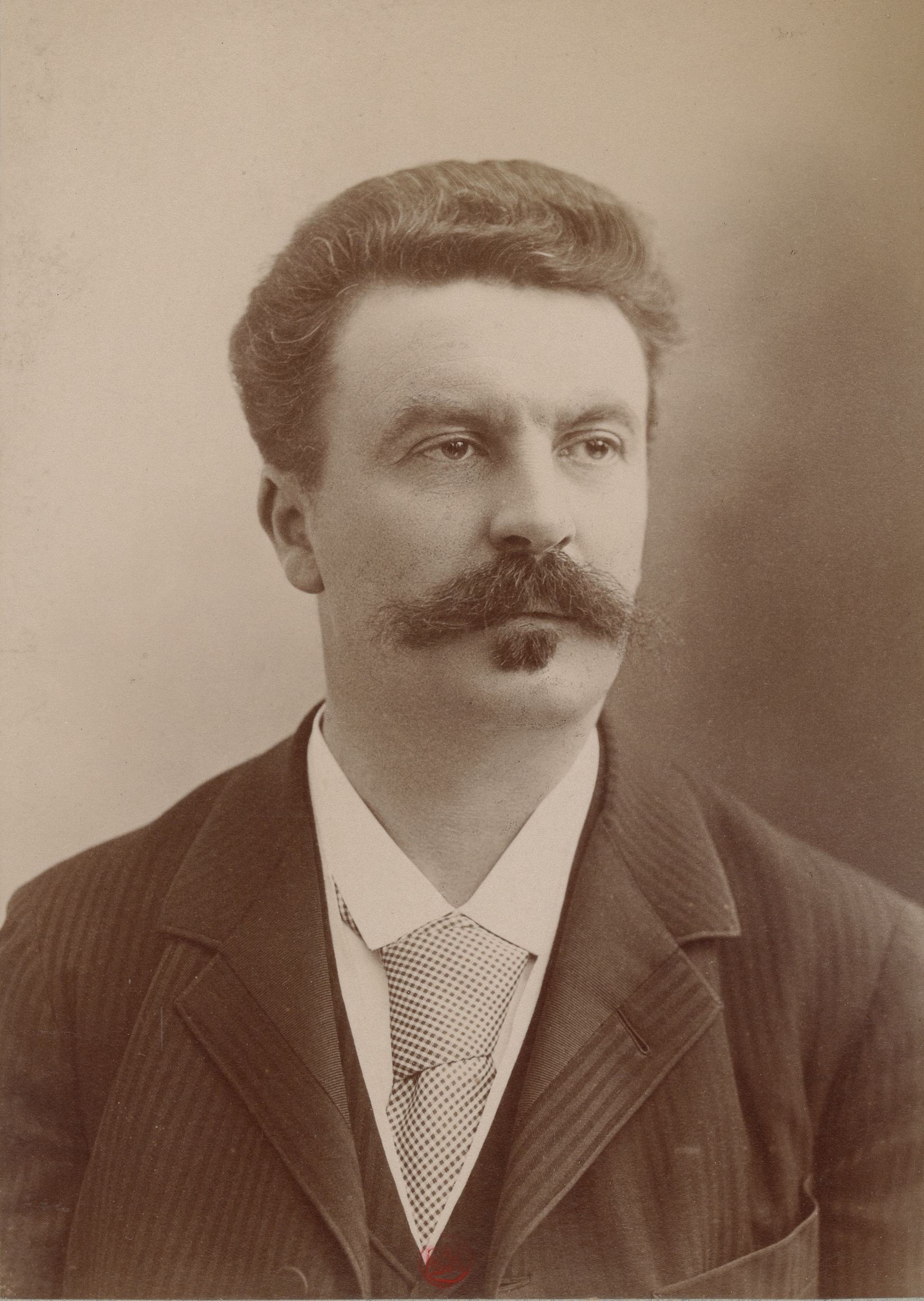
Maupassant understood something most writers of his era missed: the violence beneath polite surfaces. This ninth volume gathers stories that pierce the facade of bourgeois propriety with surgical precision. In 'Les Sœurs Rondoli,' we meet Pierre Jouvenet, who professes to hate travel yet burns to visit Italy, a contradiction that embodies Maupassant's obsession with the gap between what people claim to be and what they truly desire. A striking Italian woman enters the train, and suddenly two Frenchmen are undone by longing, their civilized masks slipping. Across these stories, Maupassant dissects romantic obsession, the tyranny of provincial society, and the small cruelties we inflict in the name of love. His sentences appear simple, almost effortless, but they contain an almost brutal intelligence. These are tales of people trapped by their own vanities, by what society demands, by desires they cannot name. They endure because they tell us truths about ourselves we still don't want to admit: that we are lonely even in crowds, that we lie most convincingly to ourselves, that behind everyadai protocol lies something raw and undefended.
Editions
X-Ray
“La plus violente douleur qu'on puisse éprouver, certes, est la perte d'un enfant pour une mère, et la perte de la mère pour un homme. Cela est violent, terrible, cela bouleverse et déchire; mais on guérit de ces catastrophes comme des larges blessures saignantes. Or, certaines rencontres, certaines choses entr'aperçues, devinées, certains chagrins secrets, certaines perfidies du sort, qui remuent en nous tout un monde douloureux de pensées, qui entr'ouvrent devant nous brusquement la porte mystérieuse des souffrances morales, compliquées, incurables, d'autant plus profondes qu'elles semblent bénignes, d'autant plus cuisantes qu'elles semblent presque insaisissables, d'autant plus tenaces qu'elles semblent factices, nous laissent à l'âme comme une traînée, un goût d'amertume, une sensation de désenchantement dont nous sommes longtemps à nous débarrasser.””
— Guy de Maupassant
Link to this book
Add a free, dofollow link to Lex on your blog, forum, syllabus, or reading list.

<a href="https://lex-books.com/book/uvres-compl-tes-de-guy-de-maupassant-volume-09-340f8059-db3b-4f24-a759-fc21cb7f78a0"><img src="https://lex-books.com/badges/read-on-lex.svg" alt="Read Œuvres Complètes De Guy De Maupassant - Volume 09 by Guy de Maupassant free on Lex" width="160" height="40"></a>[](https://lex-books.com/book/uvres-compl-tes-de-guy-de-maupassant-volume-09-340f8059-db3b-4f24-a759-fc21cb7f78a0)[url=https://lex-books.com/book/uvres-compl-tes-de-guy-de-maupassant-volume-09-340f8059-db3b-4f24-a759-fc21cb7f78a0][img]https://lex-books.com/badges/read-on-lex.svg[/img][/url]Read Œuvres Complètes De Guy De Maupassant - Volume 09 by Guy de Maupassant free on Lex: https://lex-books.com/book/uvres-compl-tes-de-guy-de-maupassant-volume-09-340f8059-db3b-4f24-a759-fc21cb7f78a0Cite this book
Reading this edition for a paper or guide? Copy a citation.
Maupassant, Guy de. Œuvres Complètes De Guy De Maupassant - Volume 09. Lex, lex-books.com/book/uvres-compl-tes-de-guy-de-maupassant-volume-09-340f8059-db3b-4f24-a759-fc21cb7f78a0.Maupassant, G. D. (n.d.). Œuvres Complètes De Guy De Maupassant - Volume 09. Lex. https://lex-books.com/book/uvres-compl-tes-de-guy-de-maupassant-volume-09-340f8059-db3b-4f24-a759-fc21cb7f78a0Maupassant, Guy de. Œuvres Complètes De Guy De Maupassant - Volume 09. Lex. https://lex-books.com/book/uvres-compl-tes-de-guy-de-maupassant-volume-09-340f8059-db3b-4f24-a759-fc21cb7f78a0.