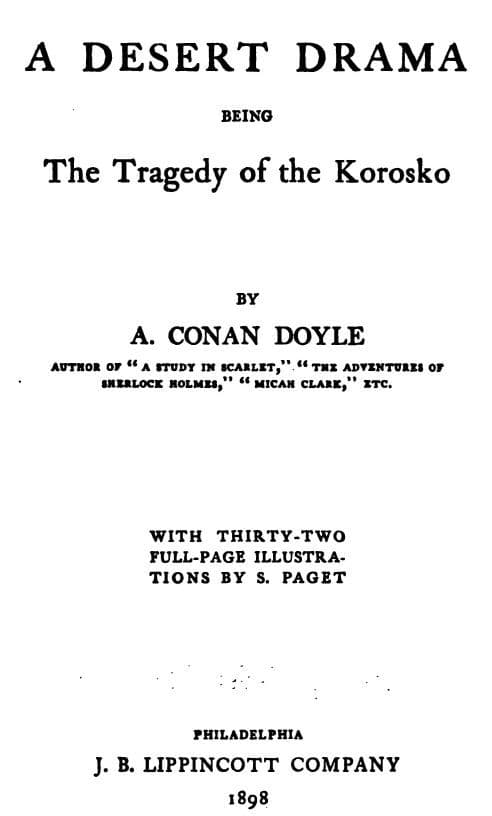
Tragedy of the Korosko
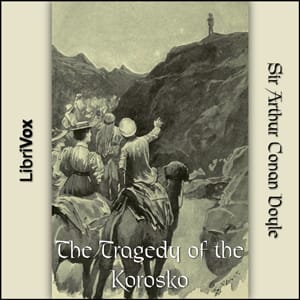
The Nile, 1895. A paddle-steamer called the Korosko carries a disparate company of British tourists, an American doctor, and a German professor into the deep south of Egypt, toward the frontier where Islamic Dervish territory begins. What begins as a leisurely cruise through ancient landscapes curdles into nightmare when the vessel is ambushed and its passengers dragged into the desert, hostages of warriors who see them as instruments of Western imperialism or potential converts to the faith. Conan Doyle constructs his adventure with the same precision he brought to detective fiction, layering cultural friction, religious tension, and the raw psychology of captivity into a narrative that moves with relentless momentum. The tourists represent the assumptions of late-Victorian empire, and their captors are neither simple villains nor heroes but something more unsettling: men of genuine conviction operating by their own logic. The novel transcends simple adventure, becoming a sharp examination of how strangers can misread one another across an unbridgeable divide. For readers who crave Conan Doyle at his most propulsive, and for anyone drawn to the tangled legacy of the colonial encounter.
Editions

Link to this book
Add a free, dofollow link to Lex on your blog, forum, syllabus, or reading list.

<a href="https://lex-books.com/book/tragedy-of-the-korosko-2290a4fb-5cb9-4ac1-a616-2b3b7c580edf"><img src="https://lex-books.com/badges/read-on-lex.svg" alt="Read Tragedy of the Korosko by Arthur Conan Doyle free on Lex" width="160" height="40"></a>[](https://lex-books.com/book/tragedy-of-the-korosko-2290a4fb-5cb9-4ac1-a616-2b3b7c580edf)[url=https://lex-books.com/book/tragedy-of-the-korosko-2290a4fb-5cb9-4ac1-a616-2b3b7c580edf][img]https://lex-books.com/badges/read-on-lex.svg[/img][/url]Read Tragedy of the Korosko by Arthur Conan Doyle free on Lex: https://lex-books.com/book/tragedy-of-the-korosko-2290a4fb-5cb9-4ac1-a616-2b3b7c580edfCite this book
Reading this edition for a paper or guide? Copy a citation.
Doyle, Arthur Conan. Tragedy of the Korosko. Lex, lex-books.com/book/tragedy-of-the-korosko-2290a4fb-5cb9-4ac1-a616-2b3b7c580edf.Doyle, A. C. (n.d.). Tragedy of the Korosko. Lex. https://lex-books.com/book/tragedy-of-the-korosko-2290a4fb-5cb9-4ac1-a616-2b3b7c580edfDoyle, Arthur Conan. Tragedy of the Korosko. Lex. https://lex-books.com/book/tragedy-of-the-korosko-2290a4fb-5cb9-4ac1-a616-2b3b7c580edf.