The World as Will and Idea (vol. 2 of 3)
The World as Will and Idea (vol. 2 of 3)
Translated by R. B. Haldane (Richard Burdon Haldane), Viscount Haldane
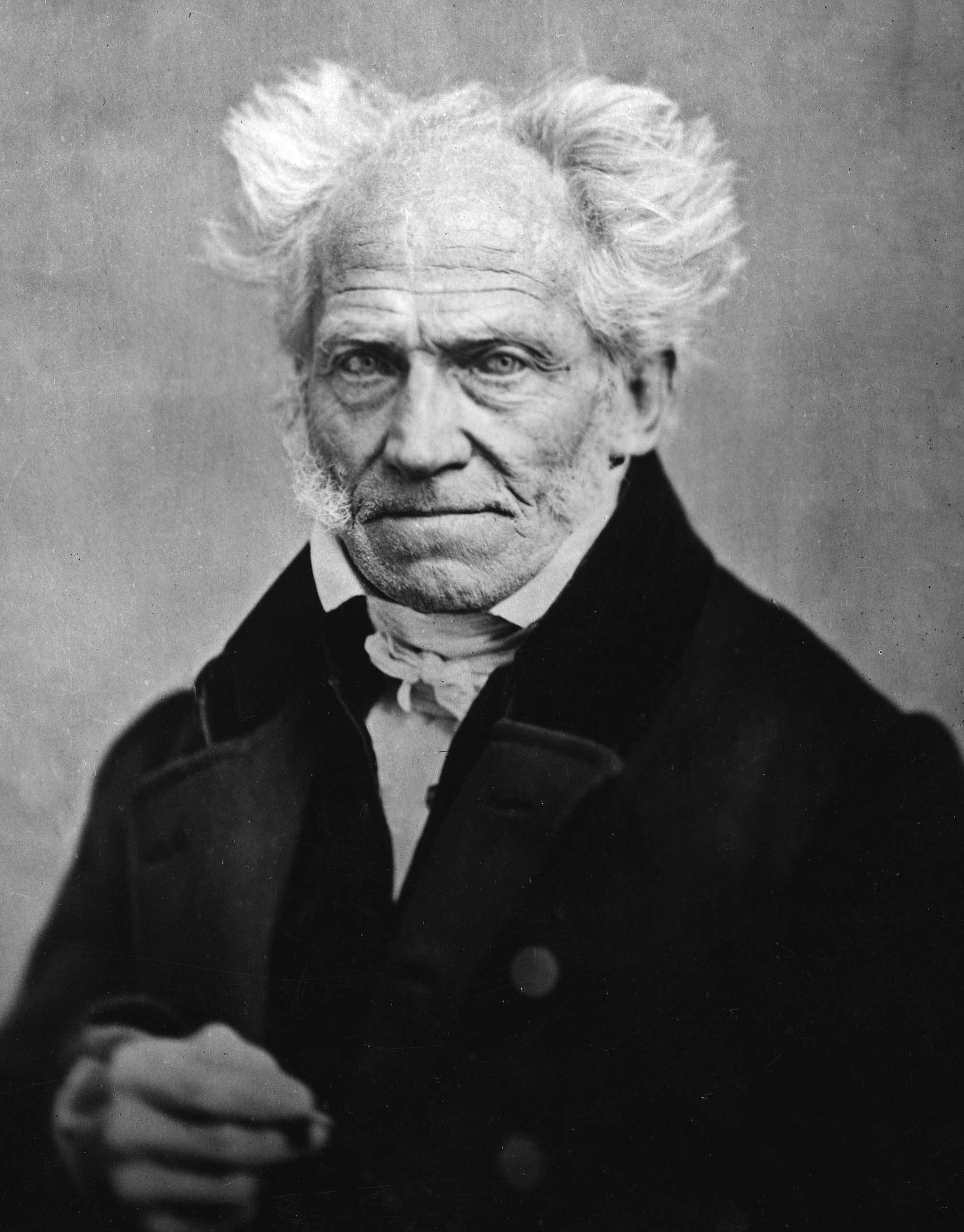
Arthur Schopenhauer's 1844 expansion of his masterwork is one of the most radical books ever written about consciousness, reality, and what it means to be alive. While Volume 1 established his devastating proposition that the world is both our representation and our will, Volume 2 deepens the assault on Kantian philosophy that made his name, dismantling the distinction between phenomenon and noumenon with surgical precision. Schopenhauer argues that the will the individual experiences is not separate from the world but is the world's innermost essence, the blind, ceaseless striving that underlies all appearance. This is the philosophical text that birthed modern pessimism, that influenced Nietzsche's genealogy of morals, that sent Freud dreaming, that made Wagner's Ring possible. It is dense, demanding, and unflinching in its claim that existence is suffering, that the will can never be satisfied, and that only aesthetic contemplation and ethical renunciation offer glimpses of escape. For readers willing to wrestle with a mind that saw the world's beauty and terror with equal clarity, this remains essential reading.
Editions
X-Ray
“The life of every individual, viewed as a whole and in general, and when only its most significant features are emphasized, is really a tragedy; but gone through in detail it has the character of a comedy.””
— Arthur Schopenhauer
“Life is short and truth works far and lives long: let us speak the truth.””
— Arthur Schopenhauer
“What keeps all living things busy and in motion is the striving to exist. But when existence is secured, they do not know what to do: that is why the second thing that sets them in motion is a striving to get rid of the burden of existence, not to feel it any longer, 'to kill time', i.e. to escape boredom.””
— Arthur Schopenhauer
“Truth is no harlot who throws her arms round the neck of him who does not desire her; on the contrary, she is so coy a beauty that even the man who sacrifices everything to her can still not be certain of her favors.””
— Arthur Schopenhauer
“And to this world, to this scene of tormented and agonised beings, who only continue to exist by devouring each other, in which, therefore, every ravenous beast is the living grave of thousands of others, and its self-maintenance is a chain of painful deaths; and in which the capacity for feeling pain increases with knowledge, and therefore reaches its highest degree in man, a degree which is the higher the more intelligent the man is; to this world it has been sought to apply the system of optimism, and demonstrate to us that it is the best of all possible worlds. The absurdity is glaring.””
— Arthur Schopenhauer
“Optimism is not only a false but also a pernicious doctrine, for it presents life as a desirable state and man's happiness as its aim and object. Starting from this, everyone then believes he has the most legitimate claim to happiness and enjoyment. If, as usually happens, these do not fall to his lot, he believes that he suffers an injustice, in fact that he misses the whole point of his existence.””
— Arthur Schopenhauer
“What give all that is tragic, whatever its form, the characteristic of the sublime, is the first inkling of the knowledge that the world and life can give no satisfaction, and are not worth our investment in them. The tragic spirit consists in this. Accordingly it leads to resignation.””
— Arthur Schopenhauer
“All striving comes from lack, from a dissatisfaction with one's condition, and is thus suffering as long as it is not satisfied; but no satisfaction is lasting; instead, it is only the beginning of a new striving. We see striving everywhere inhibited in many ways, struggling everywhere; and thus always suffering; there is no final goal of striving, and therefore no bounds or end to suffering.””
— Arthur Schopenhauer
“Genius is the ability to leave entirely out of sight our own interest, our willing, and our aims, and consequently to discard entirely our own personality for a time, in order to remain pure knowing subject, the clear eye of the world; and this not merely for moments, but with the necessary continuity and conscious thought to enable us to repeat by deliberate art what has been apprehended and "what in wavering apparition gleams fix in its place with thoughts that stand for ever!””
— Arthur Schopenhauer
Link to this book
Add a free, dofollow link to Lex on your blog, forum, syllabus, or reading list.

<a href="https://lex-books.com/book/the-world-as-will-and-idea-vol-2-of-3-e952adf1-902e-4575-a761-6550df445cbf"><img src="https://lex-books.com/badges/read-on-lex.svg" alt="Read The World as Will and Idea (vol. 2 of 3) by Arthur Schopenhauer free on Lex" width="160" height="40"></a>[](https://lex-books.com/book/the-world-as-will-and-idea-vol-2-of-3-e952adf1-902e-4575-a761-6550df445cbf)[url=https://lex-books.com/book/the-world-as-will-and-idea-vol-2-of-3-e952adf1-902e-4575-a761-6550df445cbf][img]https://lex-books.com/badges/read-on-lex.svg[/img][/url]Read The World as Will and Idea (vol. 2 of 3) by Arthur Schopenhauer free on Lex: https://lex-books.com/book/the-world-as-will-and-idea-vol-2-of-3-e952adf1-902e-4575-a761-6550df445cbfCite this book
Reading this edition for a paper or guide? Copy a citation.
Schopenhauer, Arthur. The World as Will and Idea (vol. 2 of 3). Lex, lex-books.com/book/the-world-as-will-and-idea-vol-2-of-3-e952adf1-902e-4575-a761-6550df445cbf.Schopenhauer, A. (n.d.). The World as Will and Idea (vol. 2 of 3). Lex. https://lex-books.com/book/the-world-as-will-and-idea-vol-2-of-3-e952adf1-902e-4575-a761-6550df445cbfSchopenhauer, Arthur. The World as Will and Idea (vol. 2 of 3). Lex. https://lex-books.com/book/the-world-as-will-and-idea-vol-2-of-3-e952adf1-902e-4575-a761-6550df445cbf.