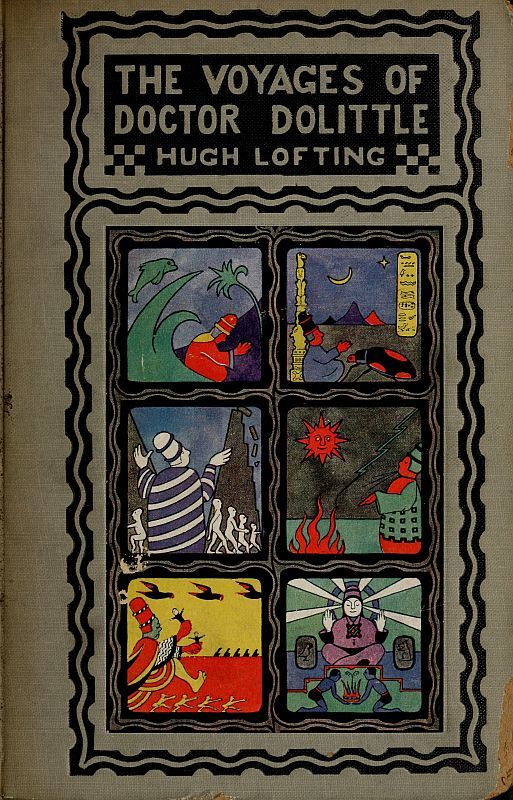
The Voyages of Doctor Dolittle
1922
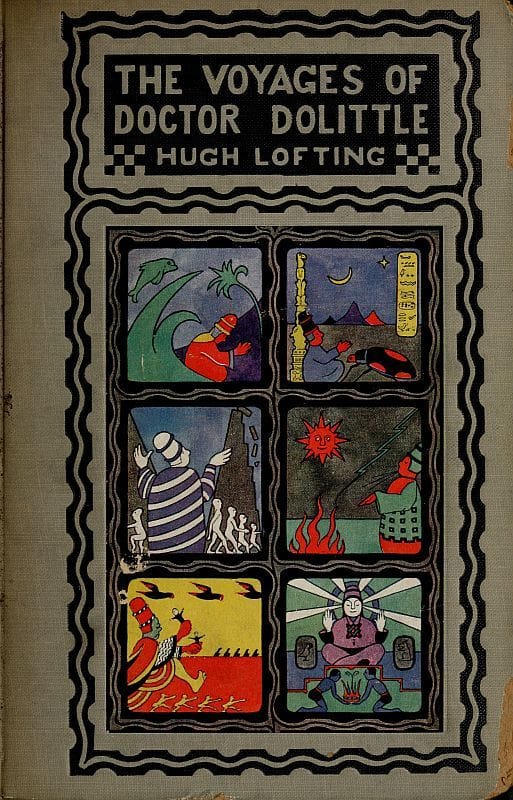
Told by Tommy Stubbins in the voice of a very old man looking back on the adventure that defined his life, The Voyages of Doctor Dolittle begins in the small town of Puddleby-on-the-Marsh, where a young cobbler's son rescues a wounded squirrel and finds his way to the eccentric doctor who can speak with animals. Under the tutelage of Polynesia the parrot and the gruff but loving Doctor Dolittle, Tommy learns to understand creatures in their own languages, a transformation that propels him into a voyage spanning South American jungles, Mediterranean shores, and the depths of the ocean where a giant sea snail holds secrets. When the mysterious disappearance of Luke the Hermit sets the plot in motion, Tommy sails with the Doctor to find Long Arrow, the Native American naturalist reputed to be the greatest in the world, son of the legendary Golden Arrow. What unfolds is part mystery, part adventure, and entirely a plea for compassion toward the living world. The book won the 1922 Newbery Medal, and its sweeping scope (nearly five times the length of its predecessor) reveals a writer who trusted his young readers with genuine peril and genuine wonder. It endures because of its narrator's tender, aged voice: we hear a man who once sailed with dolphins and walked with cannibals, now remembering what it felt like to believe that kindness to animals was the most important thing in the world.
Editions

X-Ray
“I don't believe in a lot of baggage. It's such a nuisance. Life's too short to fuss with it. And it isn't really necessary””
— Hugh Lofting
“time for tea.””
— Hugh Lofting
“It certainly was a most beautiful insect. It was pale blue underneath; but its back was glossy black with huge red spots on it.””
— Hugh Lofting
“Most of them were champions at spoiling good food.””
— Hugh Lofting
“Great decisions often take no more than a moment in the making.””
— Hugh Lofting
“are they given in exchange for the glory of an African sunrise, for the twilight breeze whispering through the palms, for the green shade of the matted, tangled vines, for the cool, big-starred nights of the desert, for the patter of the waterfall after a hard day's hunt? What, I ask you, are they given in exchange for THESE? Why, a bare cage with iron bars; an ugly piece of dead meat thrust in to them once a day; and a crowd of fools to come and stare at them with open mouths!”
— Hugh Lofting
“landscape, it was a””
— Hugh Lofting
Link to this book
Add a free, dofollow link to Lex on your blog, forum, syllabus, or reading list.

<a href="https://lex-books.com/book/the-voyages-of-doctor-dolittle-9d065358-12f3-4035-9461-f8f998c73869"><img src="https://lex-books.com/badges/read-on-lex.svg" alt="Read The Voyages of Doctor Dolittle by Hugh Lofting free on Lex" width="160" height="40"></a>[](https://lex-books.com/book/the-voyages-of-doctor-dolittle-9d065358-12f3-4035-9461-f8f998c73869)[url=https://lex-books.com/book/the-voyages-of-doctor-dolittle-9d065358-12f3-4035-9461-f8f998c73869][img]https://lex-books.com/badges/read-on-lex.svg[/img][/url]Read The Voyages of Doctor Dolittle by Hugh Lofting free on Lex: https://lex-books.com/book/the-voyages-of-doctor-dolittle-9d065358-12f3-4035-9461-f8f998c73869Cite this book
Reading this edition for a paper or guide? Copy a citation.
Lofting, Hugh. The Voyages of Doctor Dolittle. Lex, lex-books.com/book/the-voyages-of-doctor-dolittle-9d065358-12f3-4035-9461-f8f998c73869.Lofting, H. (1922). The Voyages of Doctor Dolittle. Lex. https://lex-books.com/book/the-voyages-of-doctor-dolittle-9d065358-12f3-4035-9461-f8f998c73869Lofting, Hugh. The Voyages of Doctor Dolittle. Lex. https://lex-books.com/book/the-voyages-of-doctor-dolittle-9d065358-12f3-4035-9461-f8f998c73869.