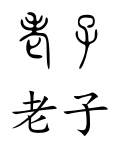
The Tao Teh King, or the Tao and its Characteristics

Before you attempt to describe the indescribable, you must first learn to be still. The Tao Teh King is the radical proposition that the ultimate truth of the universe cannot be spoken, only pointed toward. Attributed to the mythical figure Laozi, this collection of 81 brief verses constitutes the founding text of Taoism, a philosophy that has shaped Chinese thought for twenty-five centuries. At its heart lies the concept of wu wei, often translated as non-action but better understood as effortless action, or aligning with the natural flow of existence rather than forcing outcomes. The text advocates simplicity, humility, and yielding over competition and conquest. It is a paradox in literary form: a book about the Wordless that speaks in haunting poetry. Its influence extends far beyond philosophy into leadership, art, medicine, and spiritual practice across East and West. The Dao De Jing offers something increasingly rare in modern life: a vision of power through gentleness, of strength through surrender, and of meaning through letting go.
Editions

X-Ray
“Simplicity, patience, compassion.These three are your greatest treasures.Simple in actions and thoughts, you return to the source of being.Patient with both friends and enemies,you accord with the way things are.Compassionate toward yourself,you reconcile all beings in the world.””
— Laozi
“Knowing others is intelligence;knowing yourself is true wisdom.Mastering others is strength; mastering yourself is true power.””
— Laozi
“Those who know do not speak. Those who speak do not know.””
— Laozi
“When you are content to be simply yourself and don't compare or compete, everyone will respect you.””
— Laozi
“The truth is not always beautiful, nor beautiful words the truth.””
— Laozi
“A man with outward courage dares to die; a man with inner courage dares to live.””
— Laozi
“Do you have the patience to wait until your mud settles and the water is clear?””
— Laozi
“The flame that burns Twice as bright burns half as long.””
— Laozi
“If you understand others you are smart.If you understand yourself you are illuminated.If you overcome others you are powerful.If you overcome yourself you have strength.If you know how to be satisfied you are rich.If you can act with vigor, you have a will.If you don't lose your objectives you can be long-lasting.If you die without loss, you are eternal.””
— Laozi
Link to this book
Add a free, dofollow link to Lex on your blog, forum, syllabus, or reading list.

<a href="https://lex-books.com/book/the-tao-teh-king-or-the-tao-and-its-characteristics-9bbb581b-5015-4eb8-8750-f1af400476f1"><img src="https://lex-books.com/badges/read-on-lex.svg" alt="Read The Tao Teh King, or the Tao and its Characteristics by Laozi free on Lex" width="160" height="40"></a>[](https://lex-books.com/book/the-tao-teh-king-or-the-tao-and-its-characteristics-9bbb581b-5015-4eb8-8750-f1af400476f1)[url=https://lex-books.com/book/the-tao-teh-king-or-the-tao-and-its-characteristics-9bbb581b-5015-4eb8-8750-f1af400476f1][img]https://lex-books.com/badges/read-on-lex.svg[/img][/url]Read The Tao Teh King, or the Tao and its Characteristics by Laozi free on Lex: https://lex-books.com/book/the-tao-teh-king-or-the-tao-and-its-characteristics-9bbb581b-5015-4eb8-8750-f1af400476f1Cite this book
Reading this edition for a paper or guide? Copy a citation.
Laozi. The Tao Teh King, or the Tao and its Characteristics. Lex, lex-books.com/book/the-tao-teh-king-or-the-tao-and-its-characteristics-9bbb581b-5015-4eb8-8750-f1af400476f1.Laozi (n.d.). The Tao Teh King, or the Tao and its Characteristics. Lex. https://lex-books.com/book/the-tao-teh-king-or-the-tao-and-its-characteristics-9bbb581b-5015-4eb8-8750-f1af400476f1Laozi. The Tao Teh King, or the Tao and its Characteristics. Lex. https://lex-books.com/book/the-tao-teh-king-or-the-tao-and-its-characteristics-9bbb581b-5015-4eb8-8750-f1af400476f1.