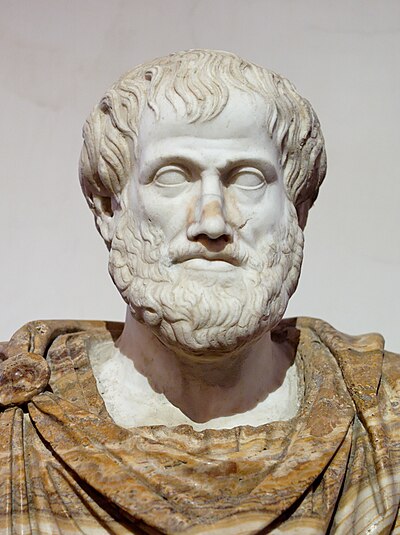
The Poetics of Aristotle
1997
Aristotle's Poetics is not a book about poetry in the way we might expect. It is a blueprint for how stories work - why they move us, what makes them endure, and how to build one that matters. Written in the 4th century BCE, it is the oldest surviving treatise on literary art, and shockingly, nearly everything we understand about narrative structure traces back to its 26 short chapters. Here Aristotle invents the vocabulary we still use today: mimesis (imitation), catharsis (the emotional purging tragedy performs), hamartia (the flaw that undoes the hero), and the crucial distinction between plot and character. He argues that tragedy depicts a noble figure's fall not through mere suffering, but through a reversible moment of recognition - the pivot upon which pity and fear coalesce into something transformative. Part philosophical inquiry, part practical manual for playwrights, this compact work laid the foundation for two millennia of Western literary thought.
Editions


X-Ray
“With respect to the requirement of art, the probable impossible is always preferable to the improbable possible.””
— Aristotle
“A beginning is that which does not itself follow anything by causal necessity, but after which something naturally is or comes to be. An end, on the contrary, is that which itself naturally follows some other thing, either by necessity, or as a rule, but has nothing following it. A middle is that which follows something as some other thing follows it. A well constructed plot, therefore, must neither begin nor end at haphazard, but conform to these principles.””
— Aristotle
“Accordingly, the poet should prefer probable impossibilities to improbable possibilities.””
— Aristotle
“the greatest thing by far is to have a command of metaphor. This alone cannot be imparted by another; it is the mark of genius, for to make good metaphors implies an eye for resemblances.””
— Aristotle
“A likely impossibility is always preferable to an unconvincing possibility. The story should never be made up of improbable incidents; there should be nothing of the sort in it.””
— Aristotle
“The plot, then, is the first principle, and, as it were, the soul of a tragedy; Character holds the second place.””
— Aristotle
“For the essence of a riddle is to express true facts under impossible combinations.””
— Aristotle
“All human happiness or misery takes the form of action; the end for which we live is a certain kind of action.””
— Aristotle
“Character is that which reveals moral purpose, showing what kind of things a man chooses or avoids.””
— Aristotle
Link to this book
Add a free, dofollow link to Lex on your blog, forum, syllabus, or reading list.

<a href="https://lex-books.com/book/the-poetics-of-aristotle-4fdf566e-4fea-4305-947b-bb66bf4f0f63"><img src="https://lex-books.com/badges/read-on-lex.svg" alt="Read The Poetics of Aristotle by Aristotle free on Lex" width="160" height="40"></a>[](https://lex-books.com/book/the-poetics-of-aristotle-4fdf566e-4fea-4305-947b-bb66bf4f0f63)[url=https://lex-books.com/book/the-poetics-of-aristotle-4fdf566e-4fea-4305-947b-bb66bf4f0f63][img]https://lex-books.com/badges/read-on-lex.svg[/img][/url]Read The Poetics of Aristotle by Aristotle free on Lex: https://lex-books.com/book/the-poetics-of-aristotle-4fdf566e-4fea-4305-947b-bb66bf4f0f63Cite this book
Reading this edition for a paper or guide? Copy a citation.
Aristotle. The Poetics of Aristotle. Lex, lex-books.com/book/the-poetics-of-aristotle-4fdf566e-4fea-4305-947b-bb66bf4f0f63.Aristotle (1997). The Poetics of Aristotle. Lex. https://lex-books.com/book/the-poetics-of-aristotle-4fdf566e-4fea-4305-947b-bb66bf4f0f63Aristotle. The Poetics of Aristotle. Lex. https://lex-books.com/book/the-poetics-of-aristotle-4fdf566e-4fea-4305-947b-bb66bf4f0f63.