Poetics

Two thousand three hundred years ago, a philosopher sat down to answer a deceptively simple question: what makes poetry work? The result was Poetics, a compact and radical treatise that would shape every century of Western literature that followed. Aristotle here coins or refines concepts we still cannot discuss literature without: mimesis (imitation), catharsis (the purgation of emotion through art), and the idea that plot is not mere story but a structure of cause and effect that mirrors how we understand reality itself. He dissects tragedy with a scientist's precision, arguing that its power lies not in spectacle but in its ability to provoke pity and fear in ways that purify those emotions. Yet Poetics is not merely theoretical. Aristotle writes for practitioners, offering playwrights concrete advice on constructing plots, developing characters, and achieving the proper proportion of elements. The text that follows is brief, dense, and astonishingly alive. It remains the single most influential book on how we think about narrative, drama, and the purpose of art.
Editions


X-Ray
“With respect to the requirement of art, the probable impossible is always preferable to the improbable possible.””
— Aristotle
“A beginning is that which does not itself follow anything by causal necessity, but after which something naturally is or comes to be. An end, on the contrary, is that which itself naturally follows some other thing, either by necessity, or as a rule, but has nothing following it. A middle is that which follows something as some other thing follows it. A well constructed plot, therefore, must neither begin nor end at haphazard, but conform to these principles.””
— Aristotle
“Accordingly, the poet should prefer probable impossibilities to improbable possibilities.””
— Aristotle
“the greatest thing by far is to have a command of metaphor. This alone cannot be imparted by another; it is the mark of genius, for to make good metaphors implies an eye for resemblances.””
— Aristotle
“A likely impossibility is always preferable to an unconvincing possibility. The story should never be made up of improbable incidents; there should be nothing of the sort in it.””
— Aristotle
“The plot, then, is the first principle, and, as it were, the soul of a tragedy; Character holds the second place.””
— Aristotle
“For the essence of a riddle is to express true facts under impossible combinations.””
— Aristotle
“All human happiness or misery takes the form of action; the end for which we live is a certain kind of action.””
— Aristotle
“Character is that which reveals moral purpose, showing what kind of things a man chooses or avoids.””
— Aristotle
Link to this book
Add a free, dofollow link to Lex on your blog, forum, syllabus, or reading list.

<a href="https://lex-books.com/book/poetics-e27d0e22-45a8-426d-8ee4-5ef0aefff6f4"><img src="https://lex-books.com/badges/read-on-lex.svg" alt="Read Poetics by Aristotle free on Lex" width="160" height="40"></a>[](https://lex-books.com/book/poetics-e27d0e22-45a8-426d-8ee4-5ef0aefff6f4)[url=https://lex-books.com/book/poetics-e27d0e22-45a8-426d-8ee4-5ef0aefff6f4][img]https://lex-books.com/badges/read-on-lex.svg[/img][/url]Read Poetics by Aristotle free on Lex: https://lex-books.com/book/poetics-e27d0e22-45a8-426d-8ee4-5ef0aefff6f4Cite this book
Reading this edition for a paper or guide? Copy a citation.
Aristotle. Poetics. Lex, lex-books.com/book/poetics-e27d0e22-45a8-426d-8ee4-5ef0aefff6f4.Aristotle (n.d.). Poetics. Lex. https://lex-books.com/book/poetics-e27d0e22-45a8-426d-8ee4-5ef0aefff6f4Aristotle. Poetics. Lex. https://lex-books.com/book/poetics-e27d0e22-45a8-426d-8ee4-5ef0aefff6f4.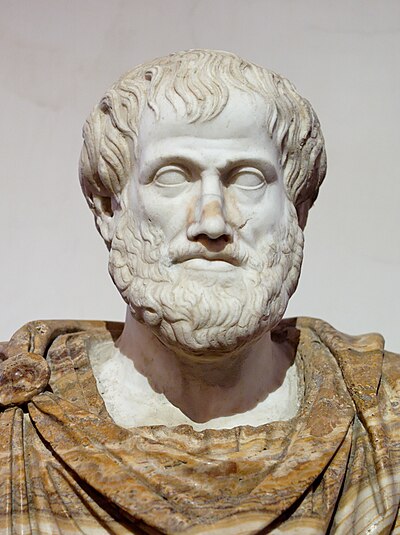






![Birds and Nature, Vol. 12 No. 1 [June 1902]illustrated by Color Photography](/_next/image?url=https%3A%2F%2Fd3b2n8gj62qnwr.cloudfront.net%2FCOVERS%2Fgutenberg_covers75k%2Febook-47881.png&w=3840&q=75)