The Philosophy of Mathematics
1851
The Philosophy of Mathematics
1851
Translated by W. M. (William Mitchell) Gillespie
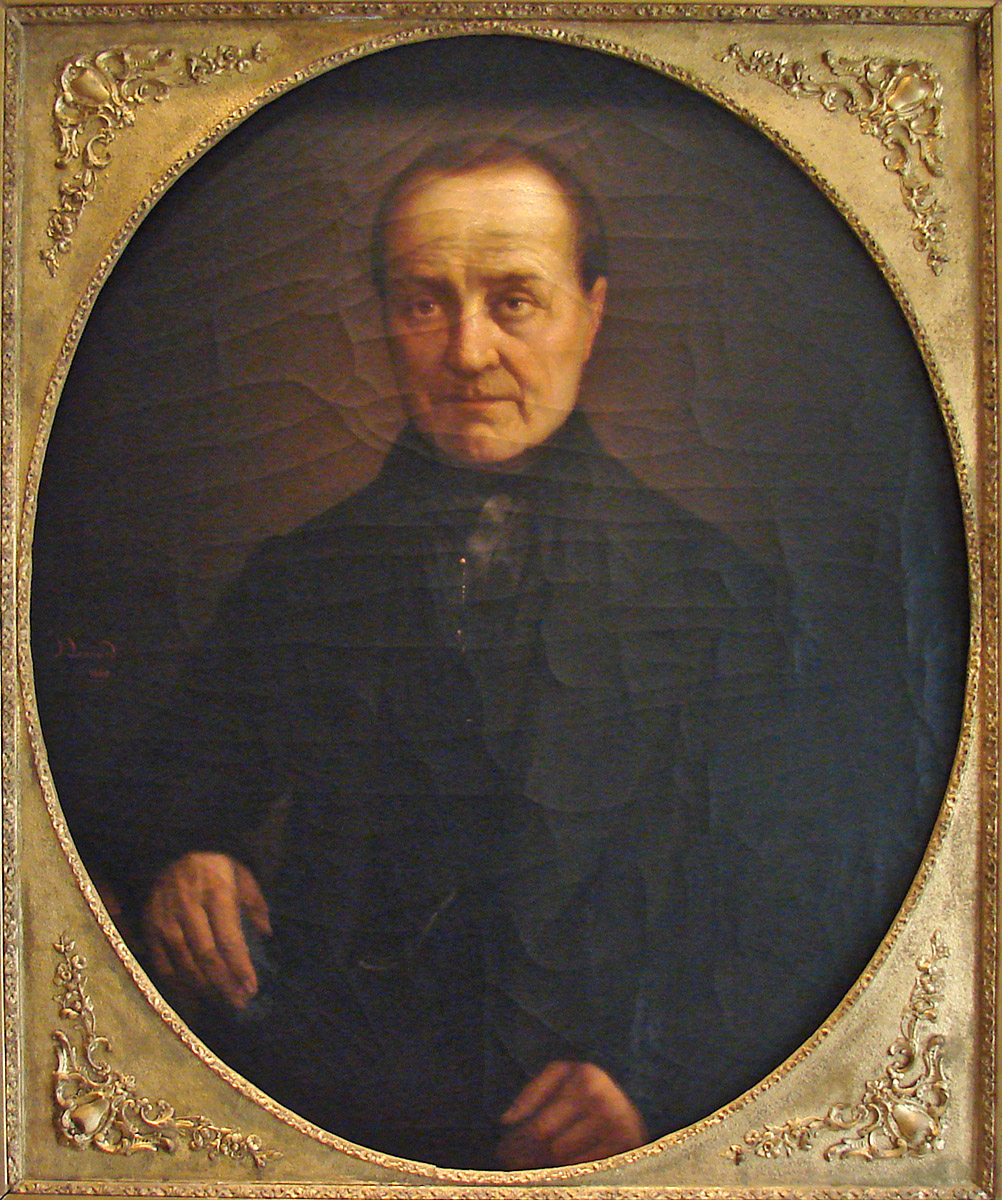
Auguste Comte, the thinker who coined the term "sociology" and fundamentally reshaped how we understand scientific knowledge, turned his philosophical rigor to the most abstract of sciences: mathematics. Written in 1837 and appearing in English in 1851, this is not a textbook but a rigorous investigation into what mathematics truly is and how it fits into the hierarchy of human knowledge. Comte rejects the notion of mathematics as mere calculation or technique, arguing instead for its status as a profound scientific discipline whose methods and assumptions deserve the same philosophical scrutiny we apply to physics or biology. He examines the nature of mathematical truth, the relationship between abstract quantities and physical reality, and how mathematics serves as the foundation upon which all other sciences are built. The book interweaves Comte's emerging positivist philosophy with detailed analysis of mathematical methodology, showing how indirect measurement, systematic classification, and the derivation of quantities from one another constitute a coherent and rigorous scientific enterprise. For readers interested in the intellectual history of mathematics, the development of positivist thought, or the philosophical foundations of the sciences, this text remains a compelling argument for taking mathematics seriously as a humanistic discipline rather than a neutral tool.
Editions
Link to this book
Add a free, dofollow link to Lex on your blog, forum, syllabus, or reading list.

<a href="https://lex-books.com/book/the-philosophy-of-mathematics-1640ee45-fc00-41b1-82bf-43ac8652410a"><img src="https://lex-books.com/badges/read-on-lex.svg" alt="Read The Philosophy of Mathematics by Auguste Comte free on Lex" width="160" height="40"></a>[](https://lex-books.com/book/the-philosophy-of-mathematics-1640ee45-fc00-41b1-82bf-43ac8652410a)[url=https://lex-books.com/book/the-philosophy-of-mathematics-1640ee45-fc00-41b1-82bf-43ac8652410a][img]https://lex-books.com/badges/read-on-lex.svg[/img][/url]Read The Philosophy of Mathematics by Auguste Comte free on Lex: https://lex-books.com/book/the-philosophy-of-mathematics-1640ee45-fc00-41b1-82bf-43ac8652410aCite this book
Reading this edition for a paper or guide? Copy a citation.
Comte, Auguste. The Philosophy of Mathematics. Lex, lex-books.com/book/the-philosophy-of-mathematics-1640ee45-fc00-41b1-82bf-43ac8652410a.Comte, A. (1851). The Philosophy of Mathematics. Lex. https://lex-books.com/book/the-philosophy-of-mathematics-1640ee45-fc00-41b1-82bf-43ac8652410aComte, Auguste. The Philosophy of Mathematics. Lex. https://lex-books.com/book/the-philosophy-of-mathematics-1640ee45-fc00-41b1-82bf-43ac8652410a.