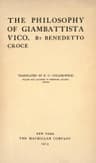
The Philosophy of Giambattista Vico
1913

The Philosophy of Giambattista Vico
1913
Translated by R. G. (Robin George) Collingwood
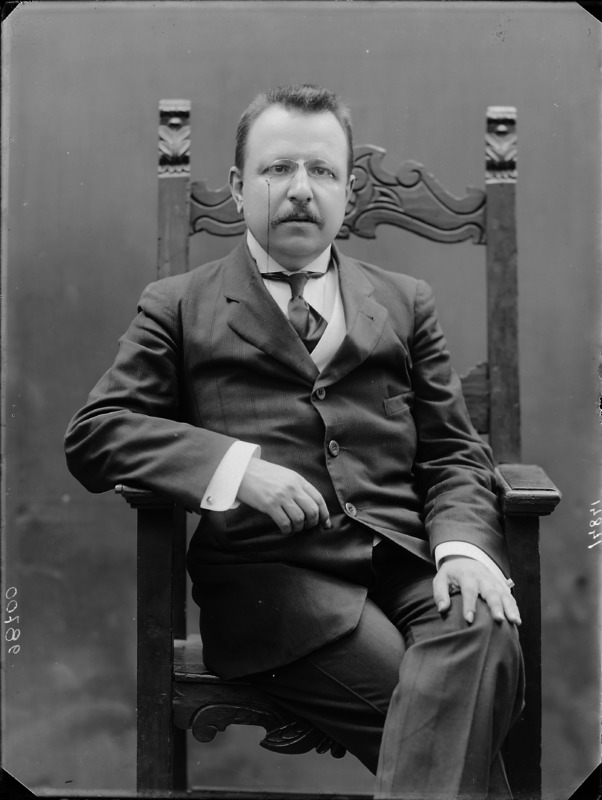
In the early twentieth century, Italian philosopher Benedetto Croce undertook the vital work of reviving Giambattista Vico, the brilliant but neglected eighteenth-century thinker who had dared to challenge the supremacy of Cartesian rationalism. This book presents Vico's radical critique: that mathematics, with its abstract certainties, does not represent the highest form of knowledge, but rather that true understanding emerges from the human sciences, from history, language, and imagination. Vico's famous principle, "verum ipsum factum" - the true is the made - proposes that we know most completely what we have created, placing human creative activity at the center of epistemology. Croce traces how this insight fundamentally reorients our approach to the moral sciences, the arts, and historical understanding, arguing that these domains achieve greatness precisely through their imaginative and constructive elements rather than through mathematical rigor. Written with Croce's characteristic intellectual passion, this 1913 work helped restore Vico to his rightful place in the philosophical canon and remains essential reading for anyone interested in the foundations of hermeneutics, the philosophy of history, or the ongoing debate between humanistic and scientific modes of knowing.
Editions
Link to this book
Add a free, dofollow link to Lex on your blog, forum, syllabus, or reading list.

<a href="https://lex-books.com/book/the-philosophy-of-giambattista-vico-4ba160cf-5778-4451-9462-5c3981a406a6"><img src="https://lex-books.com/badges/read-on-lex.svg" alt="Read The Philosophy of Giambattista Vico by Benedetto Croce free on Lex" width="160" height="40"></a>[](https://lex-books.com/book/the-philosophy-of-giambattista-vico-4ba160cf-5778-4451-9462-5c3981a406a6)[url=https://lex-books.com/book/the-philosophy-of-giambattista-vico-4ba160cf-5778-4451-9462-5c3981a406a6][img]https://lex-books.com/badges/read-on-lex.svg[/img][/url]Read The Philosophy of Giambattista Vico by Benedetto Croce free on Lex: https://lex-books.com/book/the-philosophy-of-giambattista-vico-4ba160cf-5778-4451-9462-5c3981a406a6Cite this book
Reading this edition for a paper or guide? Copy a citation.
Croce, Benedetto. The Philosophy of Giambattista Vico. Lex, lex-books.com/book/the-philosophy-of-giambattista-vico-4ba160cf-5778-4451-9462-5c3981a406a6.Croce, B. (1913). The Philosophy of Giambattista Vico. Lex. https://lex-books.com/book/the-philosophy-of-giambattista-vico-4ba160cf-5778-4451-9462-5c3981a406a6Croce, Benedetto. The Philosophy of Giambattista Vico. Lex. https://lex-books.com/book/the-philosophy-of-giambattista-vico-4ba160cf-5778-4451-9462-5c3981a406a6.