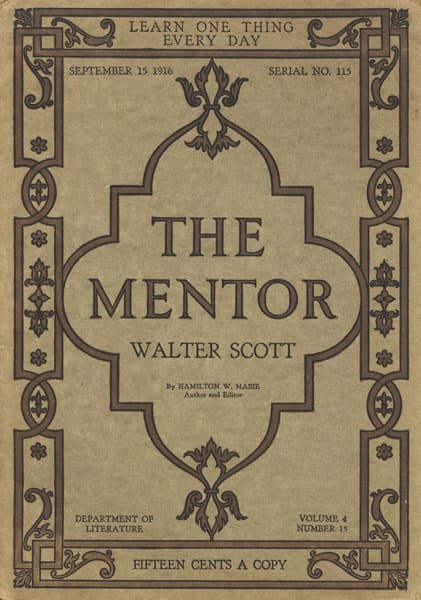
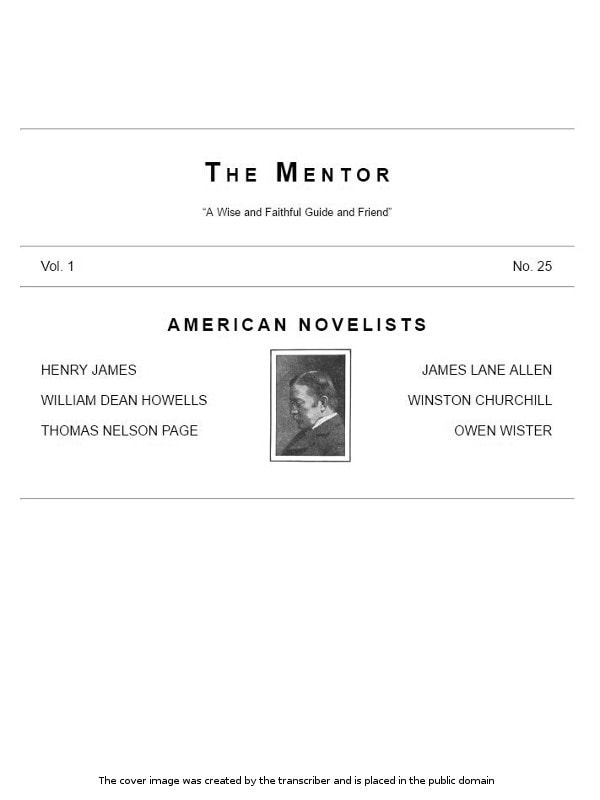
The Mentor: American Novelists, Vol. 1, No. 25

Published in 1908 as part of the influential Mentor series, this volume captures a remarkable moment in American cultural self-definition: the critical assessment of a national literary tradition still in its making. Hamilton Wright Mabie examines the architects of American fiction, tracing how Cooper invented the first distinctly American novel through his Leather-stocking Tales, how Hawthorne forged the American romance from Puritan New England's shadowed consciousness, and how Stowe's Uncle Tom's Cabin became a political lightning rod translated across Europe. He then turns to the senior figures of his own moment, Henry James, with his revolutionary psychological depth and international sensibility, and William Dean Howells, champion of American realism. The result is less a dry academic survey than a passionate argument about what American literature is and what it might become, written by a critic who watched this tradition taking shape before his eyes. For readers interested in the birth of American literary consciousness, or in how early critics understood the project of creating a distinctly American art form, this remains a vivid, engaged, and historically invaluable document.
Editions

Link to this book
Add a free, dofollow link to Lex on your blog, forum, syllabus, or reading list.

<a href="https://lex-books.com/book/the-mentor-american-novelists-vol-1-no-25-39a3d9ac-9b14-4744-8bd0-775e0e60f474"><img src="https://lex-books.com/badges/read-on-lex.svg" alt="Read The Mentor: American Novelists, Vol. 1, No. 25 by Hamilton Wright Mabie free on Lex" width="160" height="40"></a>[](https://lex-books.com/book/the-mentor-american-novelists-vol-1-no-25-39a3d9ac-9b14-4744-8bd0-775e0e60f474)[url=https://lex-books.com/book/the-mentor-american-novelists-vol-1-no-25-39a3d9ac-9b14-4744-8bd0-775e0e60f474][img]https://lex-books.com/badges/read-on-lex.svg[/img][/url]Read The Mentor: American Novelists, Vol. 1, No. 25 by Hamilton Wright Mabie free on Lex: https://lex-books.com/book/the-mentor-american-novelists-vol-1-no-25-39a3d9ac-9b14-4744-8bd0-775e0e60f474Cite this book
Reading this edition for a paper or guide? Copy a citation.
Mabie, Hamilton Wright. The Mentor: American Novelists, Vol. 1, No. 25. Lex, lex-books.com/book/the-mentor-american-novelists-vol-1-no-25-39a3d9ac-9b14-4744-8bd0-775e0e60f474.Mabie, H. W. (n.d.). The Mentor: American Novelists, Vol. 1, No. 25. Lex. https://lex-books.com/book/the-mentor-american-novelists-vol-1-no-25-39a3d9ac-9b14-4744-8bd0-775e0e60f474Mabie, Hamilton Wright. The Mentor: American Novelists, Vol. 1, No. 25. Lex. https://lex-books.com/book/the-mentor-american-novelists-vol-1-no-25-39a3d9ac-9b14-4744-8bd0-775e0e60f474.