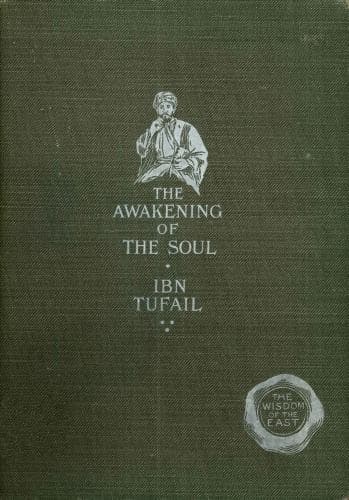
The Improvement of Human Reason: Exhibited in the Life of Hai Ebn Yokdhan
1708
The Improvement of Human Reason: Exhibited in the Life of Hai Ebn Yokdhan
Muhammad ibn 'Abd al-Malik Ibn Tufayl
1708
In the 12th century, a Moroccan philosopher imagined something extraordinary: a child, born or abandoned on a deserted island, raised not by humans but by a doe. This feral boy, Hai Ebn Yokdhan, grows up knowing nothing of language, society, or scripture. Yet through careful observation of the natural world and relentless reasoning, he reconstructs the foundations of mathematics, astronomy, natural philosophy, and ultimately, metaphysics. Ibn Tufail's daring thought experiment asks what a human mind, stripped of tradition and teaching, could discover on its own. The narrative follows Hai from raw survival to profound spiritual awakening, as he reasons his way toward an understanding of God, the soul, and the limits of human knowledge. Written nearly six centuries before Defoe gave us Robinson Crusoe, this is the original island enlightenment story: a meditation on reason's power, and its boundaries. It remains startlingly alive, a book that asks whether we truly need others to find truth, or whether the mind, alone with the world, is enough.
Editions
Link to this book
Add a free, dofollow link to Lex on your blog, forum, syllabus, or reading list.

<a href="https://lex-books.com/book/the-improvement-of-human-reason-exhibited-in-the-life-of-hai-ebn-yokdhan-d541dd8f-7c9e-4878-bfd3-8b541047618b"><img src="https://lex-books.com/badges/read-on-lex.svg" alt="Read The Improvement of Human Reason: Exhibited in the Life of Hai Ebn Yokdhan by Muhammad ibn 'Abd al-Malik Ibn Tufayl free on Lex" width="160" height="40"></a>[](https://lex-books.com/book/the-improvement-of-human-reason-exhibited-in-the-life-of-hai-ebn-yokdhan-d541dd8f-7c9e-4878-bfd3-8b541047618b)[url=https://lex-books.com/book/the-improvement-of-human-reason-exhibited-in-the-life-of-hai-ebn-yokdhan-d541dd8f-7c9e-4878-bfd3-8b541047618b][img]https://lex-books.com/badges/read-on-lex.svg[/img][/url]Read The Improvement of Human Reason: Exhibited in the Life of Hai Ebn Yokdhan by Muhammad ibn 'Abd al-Malik Ibn Tufayl free on Lex: https://lex-books.com/book/the-improvement-of-human-reason-exhibited-in-the-life-of-hai-ebn-yokdhan-d541dd8f-7c9e-4878-bfd3-8b541047618bCite this book
Reading this edition for a paper or guide? Copy a citation.
Tufayl, Muhammad ibn 'Abd al-Malik Ibn. The Improvement of Human Reason: Exhibited in the Life of Hai Ebn Yokdhan. Lex, lex-books.com/book/the-improvement-of-human-reason-exhibited-in-the-life-of-hai-ebn-yokdhan-d541dd8f-7c9e-4878-bfd3-8b541047618b.Tufayl, M. I. '. A. I. (1708). The Improvement of Human Reason: Exhibited in the Life of Hai Ebn Yokdhan. Lex. https://lex-books.com/book/the-improvement-of-human-reason-exhibited-in-the-life-of-hai-ebn-yokdhan-d541dd8f-7c9e-4878-bfd3-8b541047618bTufayl, Muhammad ibn 'Abd al-Malik Ibn. The Improvement of Human Reason: Exhibited in the Life of Hai Ebn Yokdhan. Lex. https://lex-books.com/book/the-improvement-of-human-reason-exhibited-in-the-life-of-hai-ebn-yokdhan-d541dd8f-7c9e-4878-bfd3-8b541047618b.