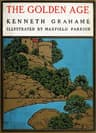
The Golden Age
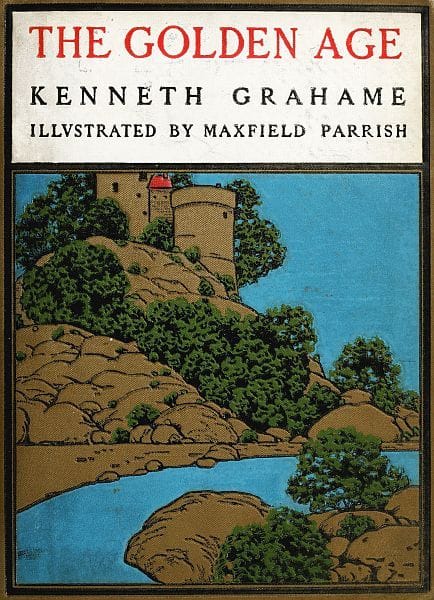
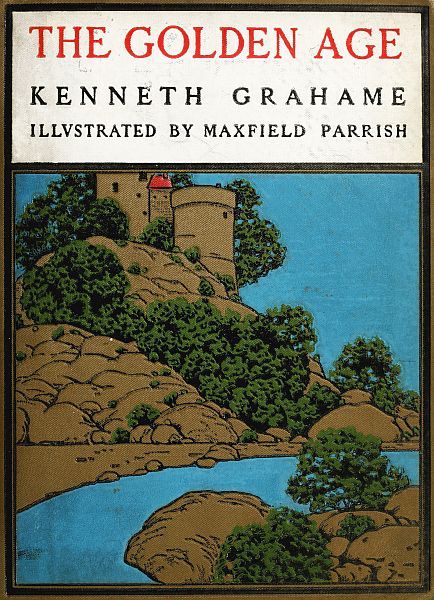
Published in the late 19th century, 'The Golden Age' by Kenneth Grahame is a nostalgic novel that explores childhood through the eyes of young siblings. The narrative captures their adventures and imaginative play, contrasting their innocent world with the obliviousness of adults, whom they refer to as 'Olympians.' This bildungsroman reflects on themes of imagination, innocence, and the bittersweet nature of growing up, inviting readers to reminisce about the joys of childhood and the inevitable transition to adulthood.
Editions
X-Ray
“And perhaps we have reason to be very grateful that, both as children and long afterwards, we are never allowed to guess how the absorbing pursuit of the moment will appear, not only to others, but to ourselves, a very short time hence.””
— Kenneth Grahame
“The pure, absolute quality and nature of each note in itself are only appreciated by the strummer. For some notes have all the sea in them, and some cathedral bells; others a woodland joyance and a smell of greenery; in some fauns dance to the merry reed, and even the grave centaurs peep out from their caves. Some bring moonlight, and some the deep crimson of a rose's heart; some are blue, some red, and others will tell of an army with silken standards and march-music. And throughout all the sequence of suggestion, up above the little white men leap and peep, and strive against the imprisoning wires; and all the big rosewood box hums as it were full of hiving bees.””
— Kenneth Grahame
“Time, the destroyer of all things beautiful,””
— Kenneth Grahame
“Presently I somehow found myself singing. The words were mere nonsense- irresponsible babble...Humanity would have rejected it with scorn. Nature, everywhere singing in the same key, recognized and accepted it without a flicker of dissent.””
— Kenneth Grahame
“only to be sent tealess to bed seemed infinite mercy to him. Officially tealess, that is; for, as was usual after such escapades, a sympathetic housemaid, coming delicately by backstairs, stayed him with chunks of cold pudding and condolence, till his small skin was tight as any drum.””
— Kenneth Grahame
“Like a black pirate flag on the blue ocean of air, a hawk hung ominous; then, plummet-wise, dropped to the hedgerow, whence there rose, thin and shrill, a piteous voice of squealing. By””
— Kenneth Grahame
“Piteous was the sight that greeted us. Aunt Maria was on the seat, in a white evening frock, looking”
— Kenneth Grahame
“I accompanied them, without any feeling of false delicacy. The world, as known to me, was spread with food each several mid-day, and the particular table one sat at seemed a matter of no importance. The palace was very sumptuous and beautiful, just what a palace ought to be; and we were met by a stately lady, rather more grownup than the Princess”
— Kenneth Grahame
“Further on, a hedgehog lay dead athwart the path”
— Kenneth Grahame
Link to this book
Add a free, dofollow link to Lex on your blog, forum, syllabus, or reading list.

<a href="https://lex-books.com/book/the-golden-age-c7a087f2-1968-49c9-bde1-1d21b94ac099"><img src="https://lex-books.com/badges/read-on-lex.svg" alt="Read The Golden Age by Kenneth Grahame free on Lex" width="160" height="40"></a>[](https://lex-books.com/book/the-golden-age-c7a087f2-1968-49c9-bde1-1d21b94ac099)[url=https://lex-books.com/book/the-golden-age-c7a087f2-1968-49c9-bde1-1d21b94ac099][img]https://lex-books.com/badges/read-on-lex.svg[/img][/url]Read The Golden Age by Kenneth Grahame free on Lex: https://lex-books.com/book/the-golden-age-c7a087f2-1968-49c9-bde1-1d21b94ac099Cite this book
Reading this edition for a paper or guide? Copy a citation.
Grahame, Kenneth. The Golden Age. Lex, lex-books.com/book/the-golden-age-c7a087f2-1968-49c9-bde1-1d21b94ac099.Grahame, K. (n.d.). The Golden Age. Lex. https://lex-books.com/book/the-golden-age-c7a087f2-1968-49c9-bde1-1d21b94ac099Grahame, Kenneth. The Golden Age. Lex. https://lex-books.com/book/the-golden-age-c7a087f2-1968-49c9-bde1-1d21b94ac099.