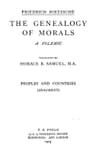
The Genealogy of Morals

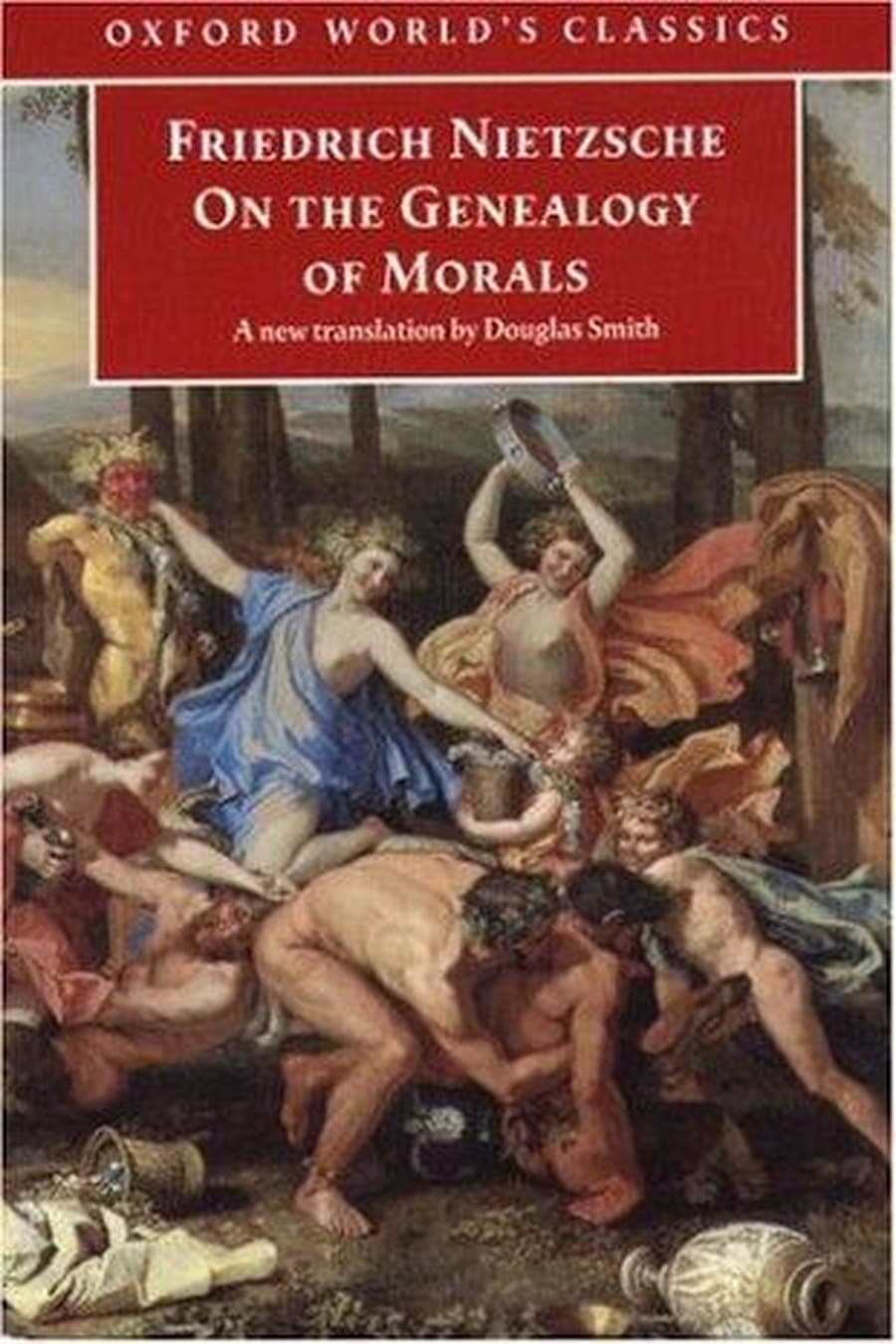
Nietzsche's *The Genealogy of Morals* dissects the origins of our most fundamental ethical concepts, arguing that modern morality, particularly Christian ethics, is a "slave morality" born of *ressentiment*—the bitter envy of the weak towards the strong. Through three incisive essays, he traces the evolution of "good and evil" from the noble "good and bad," explores the punitive roots of guilt and bad conscience, and deconstructs the pervasive, often self-destructive, power of ascetic ideals, from priests to philosophers. It's a provocative, often confrontational, journey into the psychological underpinnings of our values, questioning their supposed universality and revealing their historical contingency. More than a philosophical treatise, *The Genealogy of Morals* is a stylistic tour-de-force, intentionally difficult and electrifying, a "revaluation of all values" delivered with aphoristic brilliance and rhetorical thunder. It challenges readers to confront uncomfortable truths about human nature, power dynamics, and the hidden cruelty embedded in cultural development. Its enduring relevance lies in its radical interrogation of ethical systems and its audacious claim that even the "will to truth" itself is a manifestation of the ascetic ideal. Prepare to be unsettled, infuriated, and ultimately, forced to re-examine everything you thought you knew about morality.
Editions

Link to this book
Add a free, dofollow link to Lex on your blog, forum, syllabus, or reading list.

<a href="https://lex-books.com/book/the-genealogy-of-morals-d707149e-a48f-48cf-aced-049d511f7f9e"><img src="https://lex-books.com/badges/read-on-lex.svg" alt="Read The Genealogy of Morals by Friedrich Nietzsche free on Lex" width="160" height="40"></a>[](https://lex-books.com/book/the-genealogy-of-morals-d707149e-a48f-48cf-aced-049d511f7f9e)[url=https://lex-books.com/book/the-genealogy-of-morals-d707149e-a48f-48cf-aced-049d511f7f9e][img]https://lex-books.com/badges/read-on-lex.svg[/img][/url]Read The Genealogy of Morals by Friedrich Nietzsche free on Lex: https://lex-books.com/book/the-genealogy-of-morals-d707149e-a48f-48cf-aced-049d511f7f9eCite this book
Reading this edition for a paper or guide? Copy a citation.
Nietzsche, Friedrich. The Genealogy of Morals. Lex, lex-books.com/book/the-genealogy-of-morals-d707149e-a48f-48cf-aced-049d511f7f9e.Nietzsche, F. (n.d.). The Genealogy of Morals. Lex. https://lex-books.com/book/the-genealogy-of-morals-d707149e-a48f-48cf-aced-049d511f7f9eNietzsche, Friedrich. The Genealogy of Morals. Lex. https://lex-books.com/book/the-genealogy-of-morals-d707149e-a48f-48cf-aced-049d511f7f9e.