The Fourteenth of July, and Danton: Two Plays of the French Revolution
1918
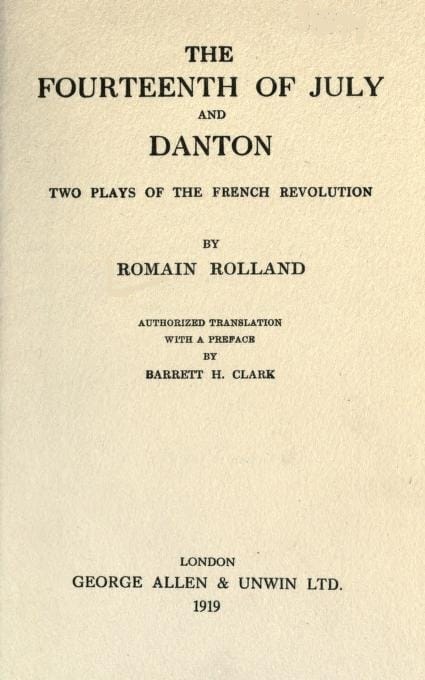
The Fourteenth of July, and Danton: Two Plays of the French Revolution
1918
Translated by Barrett H. (Barrett Harper) Clark
Romain Rolland, the Nobel laureate who spent his life examining the moral weight of history, turned his gaze to the French Revolution in these two bracing plays. Written in the shadow of the Great War, they ask what revolution costs the souls of those who make it. "The Fourteenth of July" captures the electric hours before the Bastille falls, following Camille Desmoulins and the Parisian crowd as they teeter between hope and violence. "Danton" traces the revolutionary leader's descent from hero to accused, wrestling with whether the guillotine can ever serve liberty. Rolland's innovation is radical: he treats "the People" as a living character, a collective consciousness that lifts individuals to glory and then devours them. The dialogue crackles with the urgency of people deciding the fate of nations. These are not nostalgic pageants but unflinching inquiries into how idealists become tyrants, and why the revolutionary always risks becoming the oppressor.
Editions

Link to this book
Add a free, dofollow link to Lex on your blog, forum, syllabus, or reading list.

<a href="https://lex-books.com/book/the-fourteenth-of-july-and-danton-two-plays-of-the-french-revolution-609bda95-af68-4612-bb87-708a282a2a0e"><img src="https://lex-books.com/badges/read-on-lex.svg" alt="Read The Fourteenth of July, and Danton: Two Plays of the French Revolution by Romain Rolland free on Lex" width="160" height="40"></a>[](https://lex-books.com/book/the-fourteenth-of-july-and-danton-two-plays-of-the-french-revolution-609bda95-af68-4612-bb87-708a282a2a0e)[url=https://lex-books.com/book/the-fourteenth-of-july-and-danton-two-plays-of-the-french-revolution-609bda95-af68-4612-bb87-708a282a2a0e][img]https://lex-books.com/badges/read-on-lex.svg[/img][/url]Read The Fourteenth of July, and Danton: Two Plays of the French Revolution by Romain Rolland free on Lex: https://lex-books.com/book/the-fourteenth-of-july-and-danton-two-plays-of-the-french-revolution-609bda95-af68-4612-bb87-708a282a2a0eCite this book
Reading this edition for a paper or guide? Copy a citation.
Rolland, Romain. The Fourteenth of July, and Danton: Two Plays of the French Revolution. Lex, lex-books.com/book/the-fourteenth-of-july-and-danton-two-plays-of-the-french-revolution-609bda95-af68-4612-bb87-708a282a2a0e.Rolland, R. (1918). The Fourteenth of July, and Danton: Two Plays of the French Revolution. Lex. https://lex-books.com/book/the-fourteenth-of-july-and-danton-two-plays-of-the-french-revolution-609bda95-af68-4612-bb87-708a282a2a0eRolland, Romain. The Fourteenth of July, and Danton: Two Plays of the French Revolution. Lex. https://lex-books.com/book/the-fourteenth-of-july-and-danton-two-plays-of-the-french-revolution-609bda95-af68-4612-bb87-708a282a2a0e.