The Formation of Vegetable Mould Through the Action of Worms: With Observations on Their Habits
1881
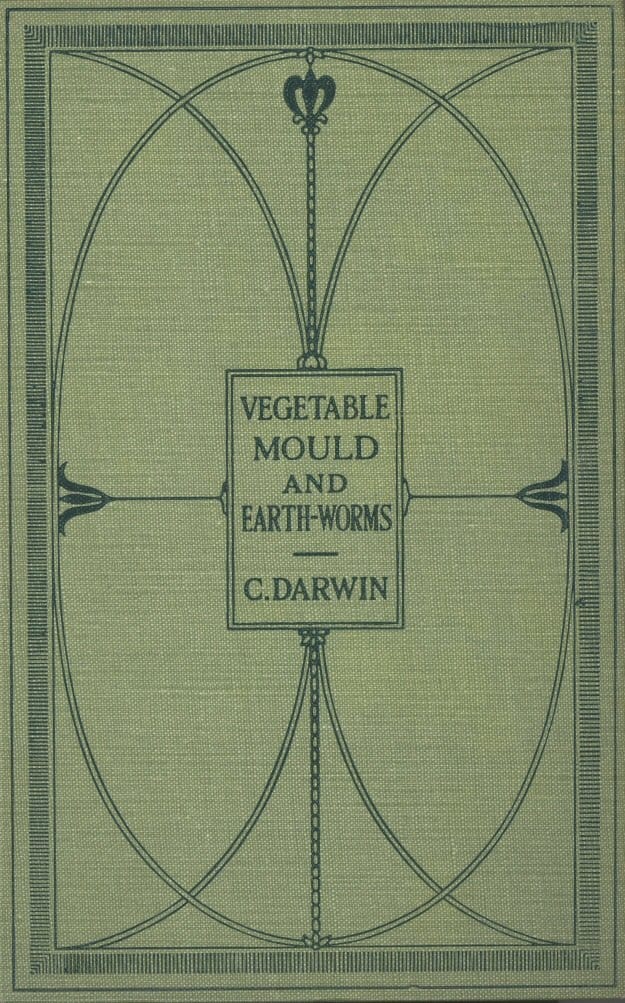
The Formation of Vegetable Mould Through the Action of Worms: With Observations on Their Habits
1881
Charles Darwin's final work begins with a disarming admission: he once thought little of earthworms, considering them too familiar to warrant serious study. Yet the creature that writhes unnoticed beneath our feet, Darwin argues, has quietly reshaped the surface of the earth itself. Through years of patient experiment, he watched worms drag leaves into their burrows, measured the rate at which they produce castings, and calculated how slowly but relentlessly they turn over the soil, creating the fertile layer that sustains all plant life. The result is a book that reads less like a scientific treatise and more like a naturalist's love letter to patience itself. Darwin demonstrates that these small, blind, unassuming animals have, through countless generations, buried ancient ruins, formed agricultural land, and transformed the very face of the planet. The writing is precise and often surprisingly funny, full of experiments that seem almost absurd in their simplicity (watching worms react to light, testing whether they prefer certain leaves to others) yet yield profound insights. It is the final statement from a man who built his career on the idea that tiny changes, accumulated over vast stretches of time, produce consequences no one could have predicted. For readers who loved Darwin's other works, this is essential. But it also speaks to anyone who has ever wondered about the invisible forces that shape our world, or who finds solace in the idea that humble, relentless labor, even from creatures without brains, can alter the earth.
Editions
Link to this book
Add a free, dofollow link to Lex on your blog, forum, syllabus, or reading list.

<a href="https://lex-books.com/book/the-formation-of-vegetable-mould-through-the-action-of-worms-with-observations-o-fac9d763-cf0d-48db-9b97-c9f22daf5152"><img src="https://lex-books.com/badges/read-on-lex.svg" alt="Read The Formation of Vegetable Mould Through the Action of Worms: With Observations on Their Habits by Charles Darwin free on Lex" width="160" height="40"></a>[](https://lex-books.com/book/the-formation-of-vegetable-mould-through-the-action-of-worms-with-observations-o-fac9d763-cf0d-48db-9b97-c9f22daf5152)[url=https://lex-books.com/book/the-formation-of-vegetable-mould-through-the-action-of-worms-with-observations-o-fac9d763-cf0d-48db-9b97-c9f22daf5152][img]https://lex-books.com/badges/read-on-lex.svg[/img][/url]Read The Formation of Vegetable Mould Through the Action of Worms: With Observations on Their Habits by Charles Darwin free on Lex: https://lex-books.com/book/the-formation-of-vegetable-mould-through-the-action-of-worms-with-observations-o-fac9d763-cf0d-48db-9b97-c9f22daf5152Cite this book
Reading this edition for a paper or guide? Copy a citation.
Darwin, Charles. The Formation of Vegetable Mould Through the Action of Worms: With Observations on Their Habits. Lex, lex-books.com/book/the-formation-of-vegetable-mould-through-the-action-of-worms-with-observations-o-fac9d763-cf0d-48db-9b97-c9f22daf5152.Darwin, C. (1881). The Formation of Vegetable Mould Through the Action of Worms: With Observations on Their Habits. Lex. https://lex-books.com/book/the-formation-of-vegetable-mould-through-the-action-of-worms-with-observations-o-fac9d763-cf0d-48db-9b97-c9f22daf5152Darwin, Charles. The Formation of Vegetable Mould Through the Action of Worms: With Observations on Their Habits. Lex. https://lex-books.com/book/the-formation-of-vegetable-mould-through-the-action-of-worms-with-observations-o-fac9d763-cf0d-48db-9b97-c9f22daf5152.