The Descent of Man, and Selection in Relation to Sex
1871
The Descent of Man, and Selection in Relation to Sex
1871
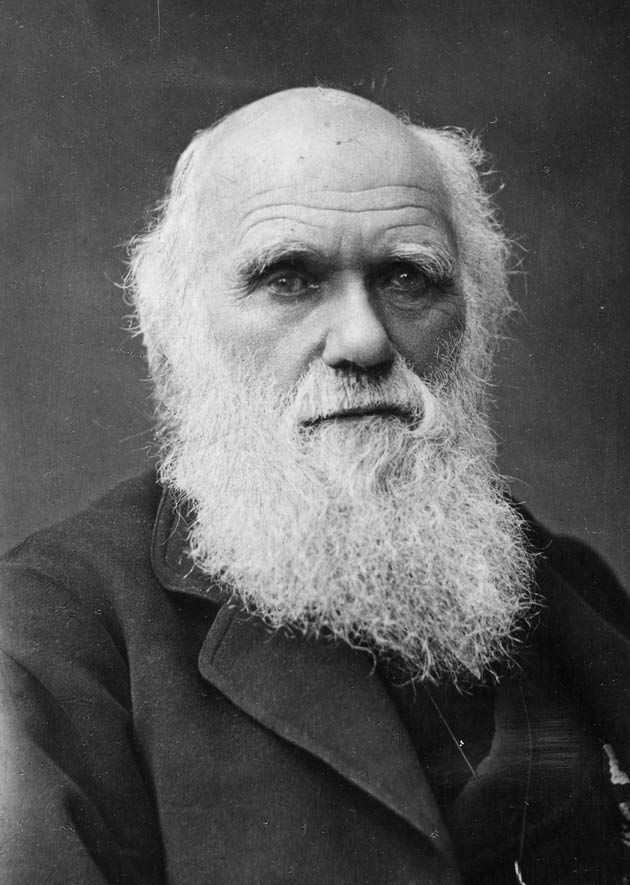
In 1871, Charles Darwin finally turned his formidable powers of observation on the question he had long avoided: where do we come from? The result was a book that placed humans squarely in the animal kingdom, arguing that our species descended from lower forms of life through the same processes that shape all living things. But Darwin went further, proposing a second evolutionary force he called sexual selection: the competition for mates and the choices made by females that he believed had shaped human races and driven the differences between sexes. Written with the caution of a man who knew he was challenging the foundations of Victorian certainty, The Descent of Man remains one of the most consequential books ever published. It introduced ideas about human nature, competition, and desire that still reverberate in how we understand ourselves. Darwin's theories on race have been widely criticized, yet the book also reflected his deep hatred of slavery, arguing for the common ancestry of all human populations. Whatever one makes of its specific claims, this is the work that forced science to take human evolution seriously.
Editions
X-Ray
“Ignorance more frequently begets confidence than does knowledge: it is those who know little, not those who know much, who so positively assert that this or that problem will never be solved by science.””
— Charles Darwin
“As man advances in civilization, and small tribes are united into larger communities, the simplest reason would tell each individual that he ought to extend his social instincts and sympathies to all members of the same nation, though personally unknown to him. This point being once reached, there is only an artificial barrier to prevent his sympathies extending to the men of all nations and races.””
— Charles Darwin
“The following proposition seems to me in a high degree probable”
— Charles Darwin
“We are not here concerned with hopes or fears, only with truth as far as our reason permits us to discover it.””
— Charles Darwin
“For my own part I would as soon be descended from that heroic little monkey, who braved his dreaded enemy in order to save the life of his keeper; or from that old baboon, who, descending from the mountains, carried away in triumph his young comrade from a crowd of astonished dogs”
— Charles Darwin
“But we are not here concerned with hopes or fears, only with the truth as far as our reason allows us to discover it. I have given the evidence to the best of my ability; and we must acknowledge , as it seems to me, that man with all his noble qualities, with sympathy which feels for the most debased, with benevolence which extends not only to other men but to the humblest living creature, with his godlike intellect which has penetrated into the movements and constitution of the solar system - with all these exalted powers - Man still bears in his bodily frame the indelible stamp of his lowly origin.””
— Charles Darwin
“Man with all his noble qualities, with sympathy which feels for the most debased, with benevolence which extends not only to other men but to the humblest living creature, with his god-like intellect which has penetrated into the movements and constitution of the solar system”
— Charles Darwin
“A moral being is one who is capable of reflecting on his past actions and their motives”
— Charles Darwin
“Man has an instinctive tendency to speak, as we see in the babble of our young children, but no child has an instinctive tendency to bake, brew, or write.””
— Charles Darwin
Link to this book
Add a free, dofollow link to Lex on your blog, forum, syllabus, or reading list.

<a href="https://lex-books.com/book/the-descent-of-man-and-selection-in-relation-to-sex-04abfe39-0aab-472c-aa3c-843c0dc44872"><img src="https://lex-books.com/badges/read-on-lex.svg" alt="Read The Descent of Man, and Selection in Relation to Sex by Charles Darwin free on Lex" width="160" height="40"></a>[](https://lex-books.com/book/the-descent-of-man-and-selection-in-relation-to-sex-04abfe39-0aab-472c-aa3c-843c0dc44872)[url=https://lex-books.com/book/the-descent-of-man-and-selection-in-relation-to-sex-04abfe39-0aab-472c-aa3c-843c0dc44872][img]https://lex-books.com/badges/read-on-lex.svg[/img][/url]Read The Descent of Man, and Selection in Relation to Sex by Charles Darwin free on Lex: https://lex-books.com/book/the-descent-of-man-and-selection-in-relation-to-sex-04abfe39-0aab-472c-aa3c-843c0dc44872Cite this book
Reading this edition for a paper or guide? Copy a citation.
Darwin, Charles. The Descent of Man, and Selection in Relation to Sex. Lex, lex-books.com/book/the-descent-of-man-and-selection-in-relation-to-sex-04abfe39-0aab-472c-aa3c-843c0dc44872.Darwin, C. (1871). The Descent of Man, and Selection in Relation to Sex. Lex. https://lex-books.com/book/the-descent-of-man-and-selection-in-relation-to-sex-04abfe39-0aab-472c-aa3c-843c0dc44872Darwin, Charles. The Descent of Man, and Selection in Relation to Sex. Lex. https://lex-books.com/book/the-descent-of-man-and-selection-in-relation-to-sex-04abfe39-0aab-472c-aa3c-843c0dc44872.