The Expedition of Humphry Clinker
1771
The Expedition of Humphry Clinker
1771
The greatest comedy of letters ever written. Tobias Smollett's final novel presents the same road trip through Georgian England six times over, through six wildly unreliable voices, and the result is magnificent chaos. The hypochondriac Squire Bramble sees gout, fog, and quack doctors everywhere; his sister Tabitha hunts for husbands with alarming urgency; their niece Lydia dreams of romance; and young Jeremy records it all with rakish glee. When the simple, virtuous Humphry Clinker enters their orbit, the family's pretensions crumble into delightful disorder. Each letter contradicts the last, what one celebrates, another deplores, and from these collisions emerges something true about human nature: we are all unreliable narrators of our own lives. Smollett's satirical eye spares no one: the aristocracy, the medical profession, the spa-town beau monde, all receive his merciless wit. The body itself becomes comic territory. This is 18th-century literature at its most alive, messy, and funny.
Editions
X-Ray
“The capital is become an overgrown monster; which like a dropsical head, will in time leave the body and extremities without nourishment and support.””
— T. Smollett
“What passes for wine among us, is not the juice of the grape. It is an adulterous mixture, brewed up of nauseous ingredients, by dunces, who are bunglers in the art of poison-making; and yet we, and our forefathers, are and have been poisoned by this cursed drench, without taste or flavour”
— T. Smollett
“At every place where we halted, did she mount the stage, and flourished her rusty arms, without being able to make one conquest.””
— T. Smollett
“Then humming thrice, he assumed a most ridiculous solemnity of aspect, and entered into a learned investigation of the nature of stink...The French were pleased with the putrid effluvia of animal food; and so were the Hottentots in Africa, and the Savages in Greenland; and that the Negroes on the coast of Senegal would not touch fish till it was rotten; strong presumptions in favour of what is generally called , as those nations are in a state of nature, undebauched by luxury, unseduced by whim and caprice: that he had reason to believe the stercoraceous flavour, condemned by prejudice as a stink, was, in fact, most agreeable to the organs of smelling; for, that every person who pretended to nauseate the smell of another's excretions, snuffed up his own with particular complacency...””
— T. Smollett
“For the first time, Smollett adopted a device that Barbara Foley calls “pseudofactual imposture,” a strategy of presentation that we associate with the fictions of Behn, Defoe, and Richardson.””
— T. Smollett
“Not that there is any thing disagreeable about his person, but there is a total want of that nameless charm which captivates and controuls the inchanted spirit”
— T. Smollett
“There is another point, which I would much rather see determined; whether the world was always as contemptible, as it appears to me at present?”
— T. Smollett
“As for the liberty of the press, like every other privilege, it must be restrained within certain bounds; for if it is carried to a breach of law, religion, and charity, it becomes one of the greatest evils that ever annoyed the community. If the lowest ruffian may stab your good-name with impunity in England, will you be so uncandid as to exclaim against Italy for the practice of common assassination? To what purpose is our property secured, if our moral character is left defenceless? People””
— T. Smollett
“truth is, I look upon both candidates in the same light; and should think myself a traitor to the constitution of my country, if I voted for either. If every elector would bring the same consideration home to his conscience, we should not have such reason to exclaim against the venality of p____ts.5 But we are all a pack of venal and corrupted rascals; so lost to all sense of honesty, and all tenderness of character, that, in a little time, I am fully persuaded, nothing will be infamous but virtue and public-spirit.””
— T. Smollett
About The Expedition of Humphry Clinker
Chapter Summaries
- 1
- Jonathan Dustwich, a parson, writes to his bookseller, Henry Davis, defending the propriety and potential success of publishing a collection of private letters, addressing concerns about libel and the personal resentment of Mr. Justice Lismahago.
- 2
- Henry Davis responds to Dustwich, declining the proposed terms for the manuscript and expressing skepticism about the market for travel letters and sermons. He also offers advice on legal matters and mentions his own experiences with authors.
- 3
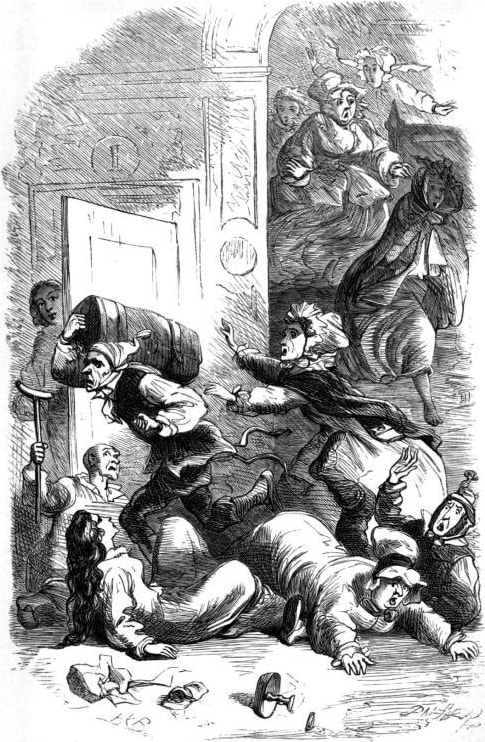
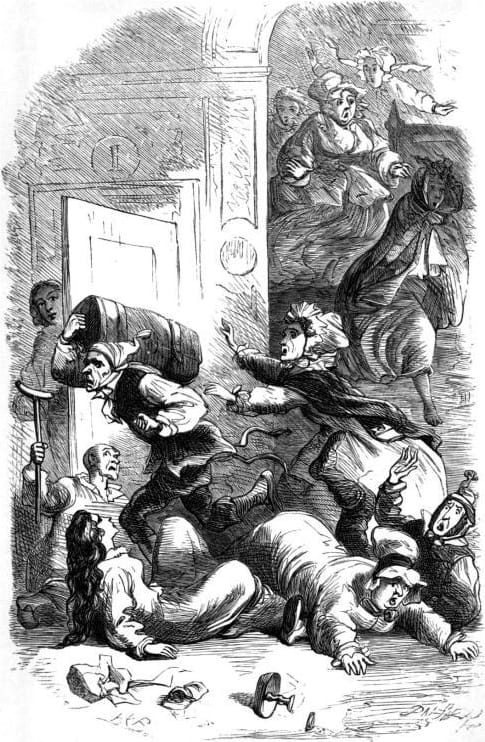
- Matthew Bramble writes to Dr. Lewis from Gloucester, complaining about his health, his sister Tabitha's vexations, and a 'ridiculous incident' involving his niece Liddy, before announcing their departure for the Hot Well at Bristol.
Key Themes
- Social Satire and Critique
- Smollett uses the diverse perspectives of the letter-writers, particularly Matthew Bramble's curmudgeonly observations, to satirize the follies, affectations, and corruption of 18th-century society. Targets include the superficiality of fashionable resorts like Bath, the chaos and moral decay of London, political venality, and the pretensions of various social classes.
- Travel and Regional Differences
- The journey through England and Scotland serves as a framework for exploring the distinct customs, landscapes, and characters of different regions. The letters highlight prejudices and misunderstandings between English, Welsh, and Scottish people, while also revealing shared human traits and the beauty of nature.
- Prejudice and Enlightenment
- Matthew Bramble, despite his initial prejudices and complaints, often finds his views challenged and softened by direct experience and the genuine goodness of people he encounters (like Clinker and the Dennisons). The novel suggests that true understanding comes from open-minded observation rather than preconceived notions, though some characters (like Tabitha) remain stubbornly unchanged.
Characters
- Matthew Bramble(protagonist)
- An elderly, wealthy Welsh gentleman, prone to hypochondria and misanthropy, but secretly benevolent and deeply moral, who embarks on a journey through England and Scotland for his health.
- Tabitha Bramble(supporting)
- Matthew's maiden sister, vain, ill-tempered, and desperate to marry, whose malapropisms and social ambitions provide much comic relief.
- Jeremy Melford(protagonist)
- Matthew's nephew, a young, observant, and witty Oxford student who narrates much of the family's travels and adventures.
- Lydia Melford(protagonist)
- Matthew's niece, a sensitive, romantic, and somewhat naive young woman, whose letters reveal her emotional journey and first love.
- Humphry Clinker(protagonist)
- A poor, pious, and awkward servant who joins the Bramble household and is later discovered to be Matthew Bramble's natural son.
- Winifred Jenkins(supporting)
- Mrs. Tabitha's Welsh maid, whose malapropisms, misspellings, and romantic aspirations provide much comic relief.
Link to this book
Add a free, dofollow link to Lex on your blog, forum, syllabus, or reading list.

<a href="https://lex-books.com/book/the-expedition-of-humphry-clinker-25268241-bd4e-491c-a3c4-4add958c4a69"><img src="https://lex-books.com/badges/read-on-lex.svg" alt="Read The Expedition of Humphry Clinker by T. Smollett free on Lex" width="160" height="40"></a>[](https://lex-books.com/book/the-expedition-of-humphry-clinker-25268241-bd4e-491c-a3c4-4add958c4a69)[url=https://lex-books.com/book/the-expedition-of-humphry-clinker-25268241-bd4e-491c-a3c4-4add958c4a69][img]https://lex-books.com/badges/read-on-lex.svg[/img][/url]Read The Expedition of Humphry Clinker by T. Smollett free on Lex: https://lex-books.com/book/the-expedition-of-humphry-clinker-25268241-bd4e-491c-a3c4-4add958c4a69Cite this book
Reading this edition for a paper or guide? Copy a citation.
Smollett, T.. The Expedition of Humphry Clinker. Lex, lex-books.com/book/the-expedition-of-humphry-clinker-25268241-bd4e-491c-a3c4-4add958c4a69.Smollett, T. (1771). The Expedition of Humphry Clinker. Lex. https://lex-books.com/book/the-expedition-of-humphry-clinker-25268241-bd4e-491c-a3c4-4add958c4a69Smollett, T.. The Expedition of Humphry Clinker. Lex. https://lex-books.com/book/the-expedition-of-humphry-clinker-25268241-bd4e-491c-a3c4-4add958c4a69.