The Economic Consequences of the Peace
The Economic Consequences of the Peace
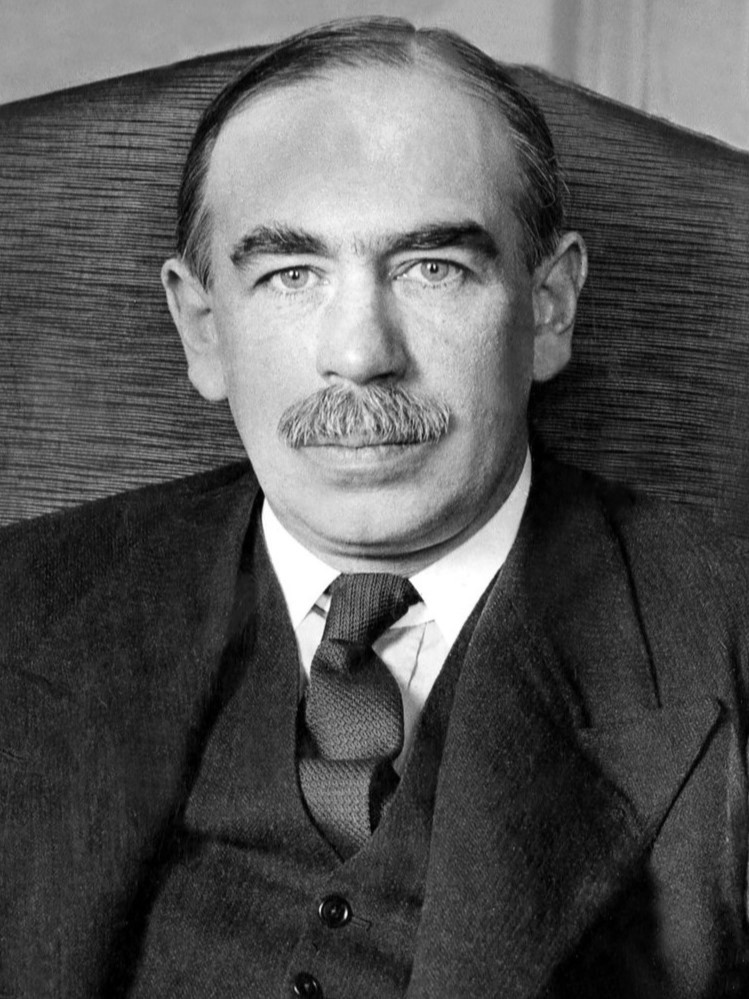
In 1919, John Maynard Keynes sat in the halls of the Paris Peace Conference as a British Treasury representative, watching the victors of World War I draft a treaty he knew would fail. He resigned in disgust, then wrote this book to explain why the peace being forged would strangle Europe economically and pave the road to another war. It is part forensic analysis, part prophetic warning. Keynes dissects the reparations, territorial seizures, and economic strangulation imposed on Germany, demonstrating how these terms would destroy not just the defeated nation, but the entire European economic system. His central argument cuts against the victorious powers' vengeful logic: you cannot extract wealth from a broken economy, and punishing one interconnected system harms everyone within it. The book made Keynes famous and shaped popular understanding of Versailles for generations. Its predictions proved terrifyingly accurate. But its enduring power lies in something deeper than historical prophecy. This is a moral argument about hubris, shortsightedness, and the way political leaders mistake vengeance for wisdom. Anyone interested in how peace can fail, how economics shapes history, and why the lessons of 1919 still matter should read it.
Editions

X-Ray
“When the final result is expected to be a compromise, it is often prudent to start from an extreme position.””
— John Maynard Keynes
“Lenin is said to have declared that the best way to destroy the capitalist system was to debauch the currency. By a continuing process of inflation, governments can confiscate, secretly and unobserved, an important part of the wealth of their citizens. By this method they not only confiscate, but they confiscate arbitrarily; and, while the process impoverishes many, it actually enriches some. The sight of this arbitrary rearrangement of riches strikes not only at security but [also] at confidence in the equity of the existing distribution of wealth.Those to whom the system brings windfalls, beyond their deserts and even beyond their expectations or desires, become "profiteers," who are the object of the hatred of the bourgeoisie, whom the inflationism has impoverished, not less than of the proletariat. As the inflation proceeds and the real value of the currency fluctuates wildly from month to month, all permanent relations between debtors and creditors, which form the ultimate foundation of capitalism, become so utterly disordered as to be almost meaningless; and the process of wealth-getting degenerates into a gamble and a lottery.Lenin was certainly right. There is no subtler, no surer means of overturning the existing basis of society than to debauch the currency. The process engages all the hidden forces of economic law on the side of destruction, and does it in a manner which not one man in a million is able to diagnose.””
— John Maynard Keynes
“By this means the government may secretly and unobserved, confiscate the wealth of the people, and not one man in a million will detect the theft.””
— John Maynard Keynes
“I cannot leave this subject as though its just treatment wholly depended either on our own pledges or economic facts. The policy of reducing Germany to servitude for a generation, of degrading the lives of millions of human beings, and of depriving a whole nation of happiness should be abhorrent and detestable, - abhorrent and detestable, even if it were possible, even if it enriched ourselves, even if it did not sow the decay of the whole civilized life of Europe. Some preach it in the name of Justice. In the great events of man's history, in the unwinding of the complex fates of nations Justice is not so simple. And if it were, nations are not authorized, by religion or by natural morals, to visit on the children of their enemies the misdoings of parents of rulers.””
— John Maynard Keynes
“The power to become habituated to his surroundings is a marked characteristic of mankind.””
— John Maynard Keynes
“Men will not always die quietly.””
— John Maynard Keynes
“The inhabitant of London could order by telephone, sipping his morning tea in bed, the various products of the whole earth, in such quantity as he might see fit, and reasonably expect their early delivery upon his doorstep; he could at the same moment and by the same means adventure his wealth in the natural resources and new enterprises of any quarter of the world, and share, without exertion or even trouble, in their prospective fruits and advantages; or he could decide to couple the security of his fortunes with the good faith of the townspeople of any substantial municipality in any continent that fancy or information might recommend. He could secure forthwith, if he wished it, cheap and comfortable means of transit to any country or climate without passport or other formality, could despatch his servant to the neighboring office of a bank for such supply of the precious metals as might seem convenient, and could then proceed abroad to foreign quarters, without knowledge of their religion, language, or customs, bearing coined wealth upon his person, and would consider himself greatly aggrieved and much surprised at the least interference. But, most important of all, he regarded this state of affairs as normal, certain, and permanent, except in the direction of further improvement, and any deviation from it as aberrant, scandalous, and avoidable. The projects and politics of militarism and imperialism, of racial and cultural rivalries, of monopolies, restrictions, and exclusion, which were to play the serpent to this paradise, were little more than the amusements of his daily newspaper, and appeared to exercise almost no influence at all on the ordinary course of social and economic life, the internationalization of which was nearly complete in practice.””
— John Maynard Keynes
“The immense accumulations of fixed capital which, to the great benefit of mankind, were built up during the half century before the war, could never have come about in a Society where wealth was divided equitably.””
— John Maynard Keynes
Link to this book
Add a free, dofollow link to Lex on your blog, forum, syllabus, or reading list.

<a href="https://lex-books.com/book/the-economic-consequences-of-the-peace-dddced1b-7068-4a51-aebd-117b9d9f9dbf"><img src="https://lex-books.com/badges/read-on-lex.svg" alt="Read The Economic Consequences of the Peace by John Maynard Keynes free on Lex" width="160" height="40"></a>[](https://lex-books.com/book/the-economic-consequences-of-the-peace-dddced1b-7068-4a51-aebd-117b9d9f9dbf)[url=https://lex-books.com/book/the-economic-consequences-of-the-peace-dddced1b-7068-4a51-aebd-117b9d9f9dbf][img]https://lex-books.com/badges/read-on-lex.svg[/img][/url]Read The Economic Consequences of the Peace by John Maynard Keynes free on Lex: https://lex-books.com/book/the-economic-consequences-of-the-peace-dddced1b-7068-4a51-aebd-117b9d9f9dbfCite this book
Reading this edition for a paper or guide? Copy a citation.
Keynes, John Maynard. The Economic Consequences of the Peace. Lex, lex-books.com/book/the-economic-consequences-of-the-peace-dddced1b-7068-4a51-aebd-117b9d9f9dbf.Keynes, J. M. (n.d.). The Economic Consequences of the Peace. Lex. https://lex-books.com/book/the-economic-consequences-of-the-peace-dddced1b-7068-4a51-aebd-117b9d9f9dbfKeynes, John Maynard. The Economic Consequences of the Peace. Lex. https://lex-books.com/book/the-economic-consequences-of-the-peace-dddced1b-7068-4a51-aebd-117b9d9f9dbf.