The Anatomy of Melancholy
1617
The Anatomy of Melancholy
1617
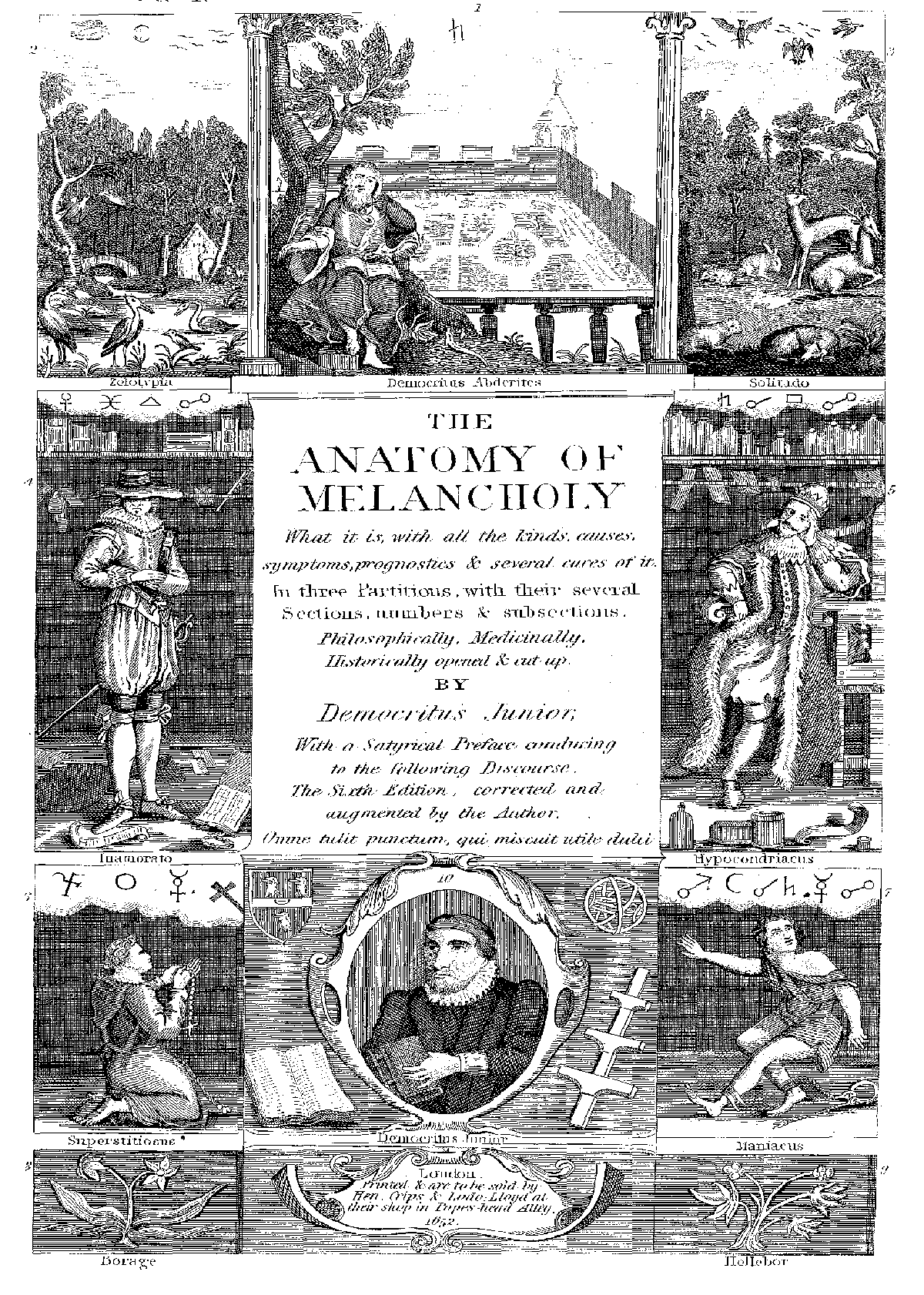
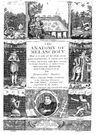
One of the most astonishing works in English literature, The Anatomy of Melancholy is a sprawling, erudite, and strangely funny meditation on human sadness written by a man who suffered from it his entire life. Robert Burton, an Oxford scholar writing under the pseudonym Democritus Junior, set out to catalogue every aspect of melancholy what we would call depression, but his inquiry ballooned into something far stranger: a 500,000-word labyrinth that swallows history, astronomy, geography, philosophy, and literature whole. The book is both medical treatise and personal confession, scientific inquiry and literary performance. Burton quotes everyone from Aristotle to his own tutors, launches into wild digressions, makes jokes, and openly admits he's writing partly to cure himself. Four centuries later, it remains irresistible: Dr. Johnson reportedly said it was the only book he rose early to read with pleasure, while John Keats called it his favorite book. For readers who want to understand how one brilliant, tortured mind made peace with sorrow through the sheer act of writing about it, there is nothing else like this in all of literature.
Editions
X-Ray
“[T]hou canst not think worse of me than I do of myself.””
— Robert Burton
“He that increaseth wisdom, increaseth sorrow.””
— Robert Burton
“What cannot be cured must be endured.””
— Robert Burton
“I am not poor, I am not rich; nihil est, nihil deest, I have little, I want nothing: all my treasure is in Minerva’s tower...I live still a collegiate student...and lead a monastic life, ipse mihi theatrum [sufficient entertainment to myself], sequestered from those tumults and troubles of the world...aulae vanitatem, fori ambitionem, ridere mecum soleo [I laugh to myself at the vanities of the court, the intrigues of public life], I laugh at all.””
— Robert Burton
“That which others hear or read of, I felt and practised myself; they get their knowledge by books, I mine by melancholizing.””
— Robert Burton
“If you like not my writing, go read something else.””
— Robert Burton
“Melancholy can be overcome only by melancholy.””
— Robert Burton
“Every man for himself, the devil for all.””
— Robert Burton
“[E]very man hath liberty to write, but few ability. Heretofore learning was graced by judicious scholars, but now noble sciences are vilified by base and illiterate scribblers, that either write for vain-glory, need, to get money, or as Parasites to flatter and collogue with some great men, they put out trifles, rubbish and trash. Among so many thousand Authors you shall scarce find one by reading of whom you shall be any whit better, but rather much worse; by which he is rather infected than any way perfected…What a catalogue of new books this year, all his age (I say) have our Frankfurt Marts, our domestic Marts, brought out. Twice a year we stretch out wits out and set them to sale; after great toil we attain nothing…What a glut of books! Who can read them? As already, we shall have a vast Chaos and confusion of Books, we are oppressed with them, our eyes ache with reading, our fingers with turning. For my part I am one of the number”
— Robert Burton
Link to this book
Add a free, dofollow link to Lex on your blog, forum, syllabus, or reading list.

<a href="https://lex-books.com/book/the-anatomy-of-melancholy-4616467f-372c-4576-99be-01f0101ba0a9"><img src="https://lex-books.com/badges/read-on-lex.svg" alt="Read The Anatomy of Melancholy by Robert Burton free on Lex" width="160" height="40"></a>[](https://lex-books.com/book/the-anatomy-of-melancholy-4616467f-372c-4576-99be-01f0101ba0a9)[url=https://lex-books.com/book/the-anatomy-of-melancholy-4616467f-372c-4576-99be-01f0101ba0a9][img]https://lex-books.com/badges/read-on-lex.svg[/img][/url]Read The Anatomy of Melancholy by Robert Burton free on Lex: https://lex-books.com/book/the-anatomy-of-melancholy-4616467f-372c-4576-99be-01f0101ba0a9Cite this book
Reading this edition for a paper or guide? Copy a citation.
Burton, Robert. The Anatomy of Melancholy. Lex, lex-books.com/book/the-anatomy-of-melancholy-4616467f-372c-4576-99be-01f0101ba0a9.Burton, R. (1617). The Anatomy of Melancholy. Lex. https://lex-books.com/book/the-anatomy-of-melancholy-4616467f-372c-4576-99be-01f0101ba0a9Burton, Robert. The Anatomy of Melancholy. Lex. https://lex-books.com/book/the-anatomy-of-melancholy-4616467f-372c-4576-99be-01f0101ba0a9.