Reminiscences, 1819-1899
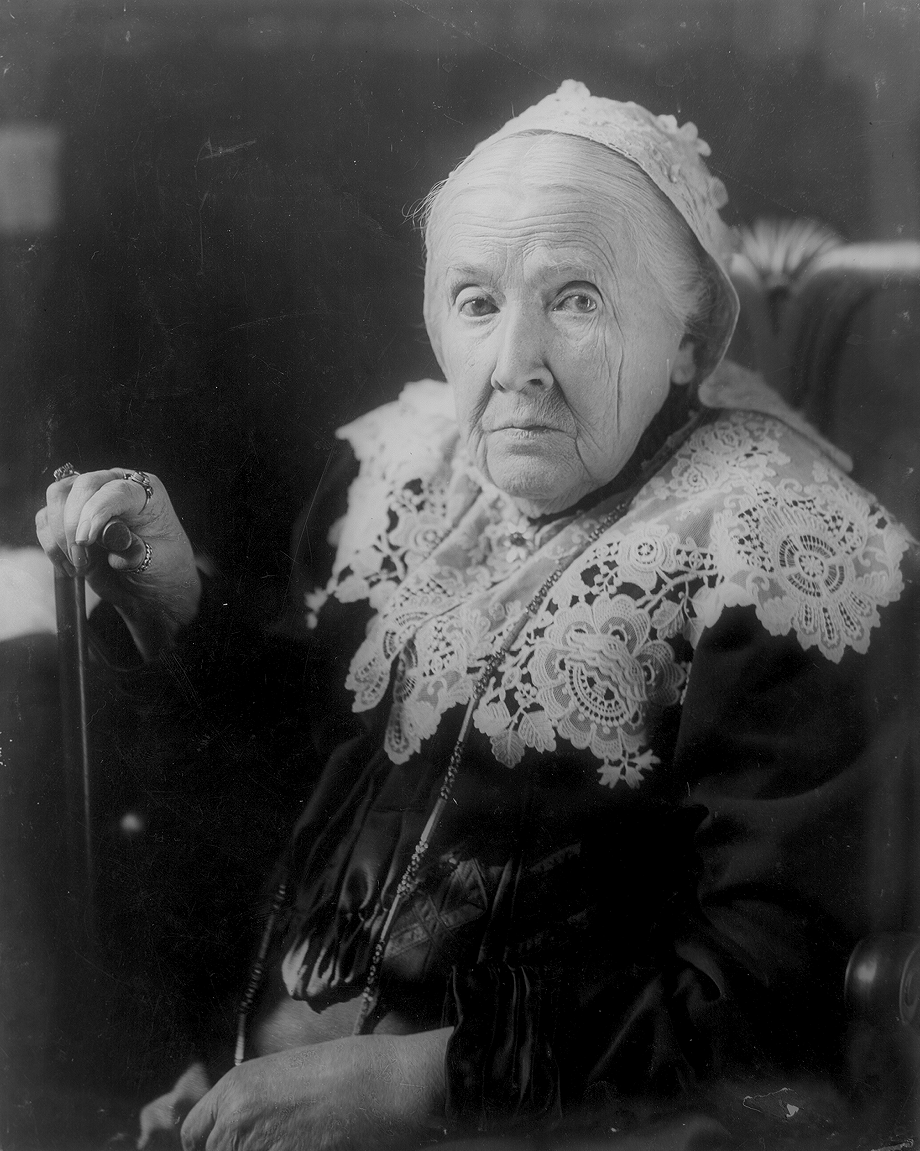
Julia Ward Howe witnessed America reinvent itself from the early republic through the turn of the century, and this memoir is her unsentimental, often witty account of living through those explosions. Born in New York in 1819 to a stern but intellectually ambitious father, she chronicles her unconventional education, her early literary experiments, and her immersion in the abolitionist and Transcendentalist movements that defined her era. She writes of her marriage to the fiery abolitionist Samuel Gridley Howe, of friendships with Emerson and other minds that shaped a nation, and of the extraordinary moment when, during a visit to a Union army camp, she composed 'The Battle Hymn of the Republic' - a song that would outlast the war itself. But this is not merely a record of notable acquaintances. Howe uses her long life to examine what it meant to be a woman who refused the narrow roles prescribed for her, who fought for women's rights and social justice with the same passion she brought to her poetry. Her voice remains sharp, often funny, sometimes bitter, always alive. For anyone curious about the making of modern America, here is one of its makers, speaking directly across the centuries.
Editions
X-Ray
“I sometimes feel as if words could not express the comfort and instruction which have come to me in the later years of my life from two sources. One of these has been the better acquaintance with my own sex; the other, the experience of the power resulting from associated action in behalf of worthy objects.During the first two thirds of my life I looked to the masculine ideal of character as the only true one. I sought its inspiration, and referred my merits and demerits to its judicial verdict. In an unexpected hour a new light came to me, showing me a world of thought and of character quite beyond the limits within which I had hitherto been content to abide. The new domain now made clear to me was that of true womanhood,”
— Julia Ward Howe
“So ends this arduous but pleasant episode of my peace crusade. I will only mention one feature more in connection with it. I had desired to institute a festival which should be observed as mothers' day, and which should be devoted to the advocacy of peace doctrines. I chose for this the second day of June, this being a time when flowers are abundant, and when the weather usually allows of open-air meetings. I had some success in carrying out this plan. In Boston I held the Mothers' Day meeting for quite a number of years. The day was also observed in other places, once or twice in Constantinople, and often in places nearer home. My heart was gladdened, this last year, by learning from a friend that a peace association in Philadelphia still celebrates Mothers' Day.””
— Julia Ward Howe
“I had early acquired some knowledge of Latin, and in later life found great pleasure in reading the essays and Tusculan dissertations of Cicero. The view of ethics represented in these writings sometimes appeared to me of higher tone than the current morality of Christendom, and I rejoiced in the thought that, even in the Rome of the pre-Christian Cæsars, God had not left himself without a witness.This enlarged notion of the ethical history of mankind might easily lead one in life's novitiate to underestimate the comparative value of the usually accepted traditions. I confess that I, personally, did not escape this error, which I haveseen largely prevalent among studious people of my own time.Who can say what joy there is in the rehabilitation of human nature, which is one essential condition of the liberal Christian faith? I had been trained to think that all mankind were by nature low, vile, and wicked. Only a chosen few, by a rare and difficult spiritual operation, could be rescued from the doom of a perpetual dwelling with the enemies of God, a perpetual participation in the torments "prepared for them from the beginning of the world." The rapture of this new freedom, of this enlarged brotherhood, which made all men akin to the Divine Father of all, every religion, however ignorant, the expression of a sincere and availing worship, might well produce in a neophyte an exhilaration bordering upon ecstasy. The exclusive doctrine which had made Christianity, and special forms of it, the only way of spiritual redemption, now appeared to me to commend itself as little to human reason as to human affection. I felt that we could not rightly honor our dear Christ by immolating at his shrine the souls of myriads of our fellows born under the widely diverse influences which could not be thought of as existing unwilled by the supreme Providence.””
— Julia Ward Howe
“If I may sum up in one term the leading bent of my life, I will simply call myself a student. Dr. Howe used to say of me: "Mrs. Howe is not a great reader, but she always studies."Albeit my intellectual pursuits have always been such as to task my mind, I cannot boast that I have acquired much in the way of technical erudition. I have only drawn from history and philosophy some understanding of human life, some lessons in the value of thought for thought's sake, and, above all, a sense of the dignity of character above every other dignity. Goethe chose well for his motto the words:”
— Julia Ward Howe
“Many years after this time I visited the public cemetery in Florence, and stood before the simple granite cross which marks the resting-place of this great apostle of freedom. I found it adorned with plants and vines which had evidently been brought from his native land. A dear friend of his, Mrs. Sarah Shaw Russell, had said to me of this spot, "It looks like a piece of New England." And I thought how this piece of New England belonged to the world.””
— Julia Ward Howe
“Of Mr. Phillips I must say that I at first regarded him through the same veil of prejudice which had caused me so greatly to misconceive the character of Mr. Garrison. I was a little softened by hearing that at one of the bazaars he had purchased a copy of my first volume of poems, with the remark, "She doesn't like me, but I like her poetry." This naturally led me to suppose that he must have some redeeming traits of character. I had not then heard him speak, and I did not wish to hear him; but I met him, also, at one of the Parker Sunday evenings, and, after a pleasant episode of conversation, I found myself constrained to take him out of my chamber of dislikes.””
— Julia Ward Howe
“Our second visit to England, in the autumn of the year 1844, on the way back to our own country, was less brilliant and novel than our first, but scarcely less in interest. We had received several invitations to visit friends at their country residences, and these opened to us the most delightful aspect of English hospitality. The English are nowhere so much at home as in the country, and they willingly make their visitors at home also.””
— Julia Ward Howe
“Dr. Howe attended one of the official receptions of M. Guizot, who was prime minister at this time. I tried to persuade him to wear the decorations given him by the Greek government in recognition of his services in the Greek revolution, but he refused to do so, thinking such ornaments unfitting a republican. I had the pleasure of witnessing one of the last performances of the celebrated danseuse, Madame Taglioni. She it was of whom one of the same profession said, "Nous autres, nous sautons et nous tombons, mais elle monte et elle descend." The ballet was "La Sylphide," in which she had achieved one of her earliest triumphs. Remembering this, Dr. Howe found her somewhat changed for the worse. I admired her very much, and her dancing appeared to me characterized by a perfection and finish which placed her beyond competition with more recent favorites.””
— Julia Ward Howe
“We made some stay in Paris, of which city I have chronicled elsewhere my first impressions. Among these was the pain of hearing a lecture from Philarète Chasles, in which he spoke most disparagingly of American literature, and of our country in general. He said that we had contributed nothing of value to the world of letters. Yet we had already given it the writings of Irving, Hawthorne, Emerson, Longfellow, Bryant, and Poe. It is true that these authors were little, if at all, known in France at that time; but the speaker, proposing to instruct the public, ought to have informed himself concerning that whereof he assumed to speak with knowledge.””
— Julia Ward Howe
Link to this book
Add a free, dofollow link to Lex on your blog, forum, syllabus, or reading list.

<a href="https://lex-books.com/book/reminiscences-1819-1899-3a7b8a38-d3e9-4189-b06b-e6f9eadd7fb2"><img src="https://lex-books.com/badges/read-on-lex.svg" alt="Read Reminiscences, 1819-1899 by Julia Ward Howe free on Lex" width="160" height="40"></a>[](https://lex-books.com/book/reminiscences-1819-1899-3a7b8a38-d3e9-4189-b06b-e6f9eadd7fb2)[url=https://lex-books.com/book/reminiscences-1819-1899-3a7b8a38-d3e9-4189-b06b-e6f9eadd7fb2][img]https://lex-books.com/badges/read-on-lex.svg[/img][/url]Read Reminiscences, 1819-1899 by Julia Ward Howe free on Lex: https://lex-books.com/book/reminiscences-1819-1899-3a7b8a38-d3e9-4189-b06b-e6f9eadd7fb2Cite this book
Reading this edition for a paper or guide? Copy a citation.
Howe, Julia Ward. Reminiscences, 1819-1899. Lex, lex-books.com/book/reminiscences-1819-1899-3a7b8a38-d3e9-4189-b06b-e6f9eadd7fb2.Howe, J. W. (n.d.). Reminiscences, 1819-1899. Lex. https://lex-books.com/book/reminiscences-1819-1899-3a7b8a38-d3e9-4189-b06b-e6f9eadd7fb2Howe, Julia Ward. Reminiscences, 1819-1899. Lex. https://lex-books.com/book/reminiscences-1819-1899-3a7b8a38-d3e9-4189-b06b-e6f9eadd7fb2.