Reason, the Only Oracle of Man; Or, a Compendius System of Natural Religion
1784
Reason, the Only Oracle of Man; Or, a Compendius System of Natural Religion
1784
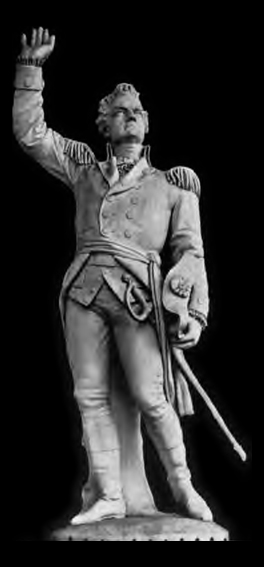
In 1784, the hero who captured Fort Ticonderoga turned his formidable intellect to a more dangerous enemy: religious dogma. Ethan Allen's "Reason, the Only Oracle of Man" stands as one of the earliest and most radical declarations of religious rationalism in American letters, a sweeping argument that true faith must answer to reason, not revelation. Written after the Revolution but driven by the same spirit of liberation, Allen mounts a ferocious critique of superstition, ecclesiastical authority, and the 'darkness' he believed religious orthodoxy imposed on humanity. He insists that awareness of God emerges from natural inquiry and moral reflection, not from priestly intermediation or scriptural literalism. The book was nearly lost to history - its unorthodox views made publication perilous, and Allen himself contextualizes the difficult journey from manuscript to print. What emerges is not mere skepticism but a constructive vision: a natural religion grounded in rational morality, free from the accumulated debris of centuries. For readers interested in the intellectual origins of American religious liberty, the Enlightenment's American reception, or the forgotten radicalism of early US thought, this remains an astonishing document - the work of a man who fought for freedom in every domain.
Editions
X-Ray
“; which is of itself a strong presumption that in the infancy of letters, learning and science, or in the world's non-age, those who confided in miracles, as a proof of the divine mission of the first promulgators of revelation, were imposed upon by fictitious appearances instead of miracles.””
— Ethan Allen
“Those who invalidate reason, ought seriously to consider, 'whether they argue against reason, with or without reason; if with reason, then they establish the principle, that they are laboring to dethrone;' but if they argue without reason, (which, in order to be consistent with themselves, they must do,) they are out of the reach of rational conviction, nor do they deserve a rational argument.””
— Ethan Allen
“I have generally been denominated a Deist, the reality of which I never disputed, being conscious , except mere infant baptism make me one; and as to being a Deist, I know not, strictly speaking, whether I am one or not, for I have never read their writings; mine will therefore determine the matter; for I have not in the least disguised my sentiments, but have written freely without any conscious knowledge of prejudice for, or against any man, sectary or party whatever; but ; and therefore my errors in the succeeding treatise, which may be rationally pointed out, will be readily rescinded.””
— Ethan Allen
“It is altogether reasonable to conclude that the heavenly bodies, alias worlds, which move or are situate within the circle of our knowledge, as well all others throughout immensity, are each and every one of them possessed or inhabited by some intelligent agents or other, however different their sensations or manners of receiving or communicating their ideas may be from ours, or however different from each other.””
— Ethan Allen
Link to this book
Add a free, dofollow link to Lex on your blog, forum, syllabus, or reading list.

<a href="https://lex-books.com/book/reason-the-only-oracle-of-man-or-a-compendius-system-of-natural-religion-6b63d88c-6e5a-41c9-9a80-4ac6fc750d0a"><img src="https://lex-books.com/badges/read-on-lex.svg" alt="Read Reason, the Only Oracle of Man; Or, a Compendius System of Natural Religion by Ethan Allen free on Lex" width="160" height="40"></a>[](https://lex-books.com/book/reason-the-only-oracle-of-man-or-a-compendius-system-of-natural-religion-6b63d88c-6e5a-41c9-9a80-4ac6fc750d0a)[url=https://lex-books.com/book/reason-the-only-oracle-of-man-or-a-compendius-system-of-natural-religion-6b63d88c-6e5a-41c9-9a80-4ac6fc750d0a][img]https://lex-books.com/badges/read-on-lex.svg[/img][/url]Read Reason, the Only Oracle of Man; Or, a Compendius System of Natural Religion by Ethan Allen free on Lex: https://lex-books.com/book/reason-the-only-oracle-of-man-or-a-compendius-system-of-natural-religion-6b63d88c-6e5a-41c9-9a80-4ac6fc750d0aCite this book
Reading this edition for a paper or guide? Copy a citation.
Allen, Ethan. Reason, the Only Oracle of Man; Or, a Compendius System of Natural Religion. Lex, lex-books.com/book/reason-the-only-oracle-of-man-or-a-compendius-system-of-natural-religion-6b63d88c-6e5a-41c9-9a80-4ac6fc750d0a.Allen, E. (1784). Reason, the Only Oracle of Man; Or, a Compendius System of Natural Religion. Lex. https://lex-books.com/book/reason-the-only-oracle-of-man-or-a-compendius-system-of-natural-religion-6b63d88c-6e5a-41c9-9a80-4ac6fc750d0aAllen, Ethan. Reason, the Only Oracle of Man; Or, a Compendius System of Natural Religion. Lex. https://lex-books.com/book/reason-the-only-oracle-of-man-or-a-compendius-system-of-natural-religion-6b63d88c-6e5a-41c9-9a80-4ac6fc750d0a.