Pierre and Jean
1888

Pierre and Jean opens on a fishing trip off the coast of Le Havre, where two brothers return to their provincial hometown carrying very different futures within them. Pierre, the elder, is a medical graduate adrift with no direction or ambition. Jean, the younger, has completed his law studies with distinction and radiates success. When a family friend dies and leaves only Jean a substantial inheritance, Pierre's world cracks open. The legacy should be a celebration, but Pierre cannot stop wondering: why him? Why not me? His suspicion curdles into certainty, Jean must be the old man's illegitimate son, born of a secret affair their mother never confessed. What follows is a merciless psychological duel between brothers, where Pierre's obsessive investigation destroys not only his relationship with Jean but his own sanity, while Jean basks in innocence he may or may not deserve. Maupassant dissects jealousy with a surgeon's precision, asking whether we ever truly know the people we share a home with, and whether love can survive the revelation of buried secrets. This is his shortest novel, but perhaps his most concentrated dose of human cruelty.
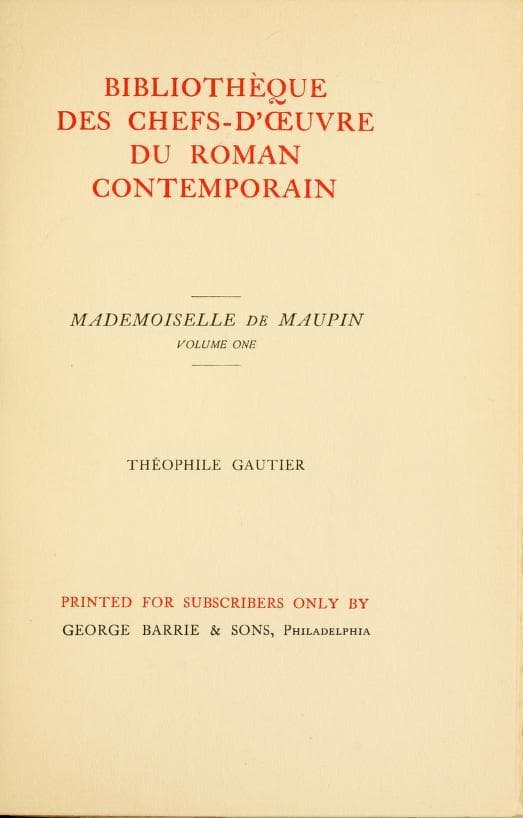
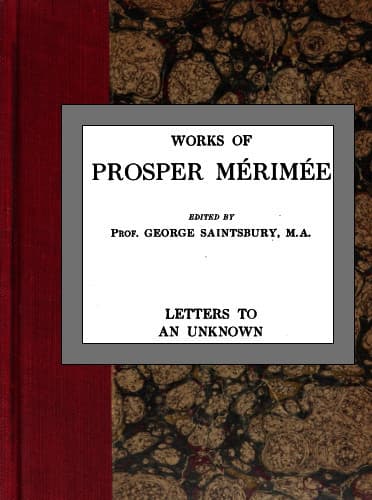
Editions


X-Ray
“The great artists are those who impose their personal vision upon humanity.””
— Guy de Maupassant
“There were some children round him playing in the dust on the paths. They had long fair hair, and with very earnest faces and solemn attention were making little mountains of sand so as to stamp on them and squash them underfoot.Pierre was going through one of those gloomy days when one looks into every corner of one's soul and shakes out every crease.'Our occupations are like the work of those kids,' he thought. Then he wondered whether after all the wisest course in life was not to beget two or three of these little useless beings and watch them grow with complacent curiosity. And he was touched by the desire to marry. You aren't so lost when you're not alone any more. At any rate you can hear somebody moving near you in times of worry and uncertainty, and it is something anyway to be able to say words of love to a woman when you are feeling down.He began thinking about women.His knowledge of them was very limited, as all he had had in the Latin Quarter was affairs of a fortnight or so, dropped when the month's money ran out and picked up again or replaced the following month. Yet kind, gentle, consoling creatures must exist. Hadn't his own mother brought sweet reasonableness and charm to his father's home? How he would have loved to meet a woman, a real woman!He leaped up, determined to go and pay a little visit to Mme Rosémilly.But he quickly sat down again. No, he didn't like that one!””
— Guy de Maupassant
“Charming, charming,' the lawyer said at intervals.””
— Guy de Maupassant
“When he woke up in the darkness of his hot and stuffy room he felt, even before his mind began working again, that painful oppression or of the soul left in us by some grief we have slept on. It seems as though the misfortune which merely grazed us the day before has worked its way during our sleep into our very flesh and is bruising and exhausting it like a fever.””
— Guy de Maupassant
“He felt better, pleased to have understood, to have caught himself out, and to have revealed the other self which is to be found in each of us.””
— Guy de Maupassant
“Le baiser frappe comme la foudre, l'amour passe comme un orage, puis la vie, de nouveau, se calme comme le ciel, et recommence ainsi qu'avant. Se souvient- on d'un nuage ?””
— Guy de Maupassant
“cette oppression douloureuse, ce malaise de l’ame que laisse en nous lé chagrin sur lequel on a dormi. Il semble que lé malheur, dont lé choc nous a seulement heurte la veille, se soit glisse, durant nôtre repos, dans nôtre chair elle-meme, qu’il meurtrit et fatigue comme une fièvre.هذا الضيق المؤلم، إنزعاج الروح الذي ننام عليه يترك فينا الأسى. ويبدو أن صدمة التعاسة التي ضربتنا بالأمس تنزلق خلال راحتنا، في لحمنا نفسه فتُمرض وتًتعب كالحمى.””
— Guy de Maupassant
“The love between man and woman is a voluntary pact in which the one who falls short is only guilty of perfidy, but when a woman has become a mother her duty is greater because nature has entrusted the human species to her. If she fails then she is a coward, unworthy and infamous.””
— Guy de Maupassant
“Her husband was not malicious, but he did bully, though without anger or animosity, as do petty tyrants who think that giving orders means swearing. In front of any stranger he behaved himself, but in his family he let himself go and pretended to be terrible although he was really scared of everybody.””
— Guy de Maupassant
Link to this book
Add a free, dofollow link to Lex on your blog, forum, syllabus, or reading list.

<a href="https://lex-books.com/book/pierre-and-jean-42d23abe-c861-4cc9-99b6-2ad6266b0155"><img src="https://lex-books.com/badges/read-on-lex.svg" alt="Read Pierre and Jean by Guy de Maupassant free on Lex" width="160" height="40"></a>[](https://lex-books.com/book/pierre-and-jean-42d23abe-c861-4cc9-99b6-2ad6266b0155)[url=https://lex-books.com/book/pierre-and-jean-42d23abe-c861-4cc9-99b6-2ad6266b0155][img]https://lex-books.com/badges/read-on-lex.svg[/img][/url]Read Pierre and Jean by Guy de Maupassant free on Lex: https://lex-books.com/book/pierre-and-jean-42d23abe-c861-4cc9-99b6-2ad6266b0155Cite this book
Reading this edition for a paper or guide? Copy a citation.
Maupassant, Guy de. Pierre and Jean. Lex, lex-books.com/book/pierre-and-jean-42d23abe-c861-4cc9-99b6-2ad6266b0155.Maupassant, G. D. (1888). Pierre and Jean. Lex. https://lex-books.com/book/pierre-and-jean-42d23abe-c861-4cc9-99b6-2ad6266b0155Maupassant, Guy de. Pierre and Jean. Lex. https://lex-books.com/book/pierre-and-jean-42d23abe-c861-4cc9-99b6-2ad6266b0155.