Our Edible Toadstools and Mushrooms and How to Distinguish Them: A Selection of Thirty Native Food Varieties Easily Recognizable by Their Marked Individualities, with Simple Rules for the Identification of Poisonous Species
1895
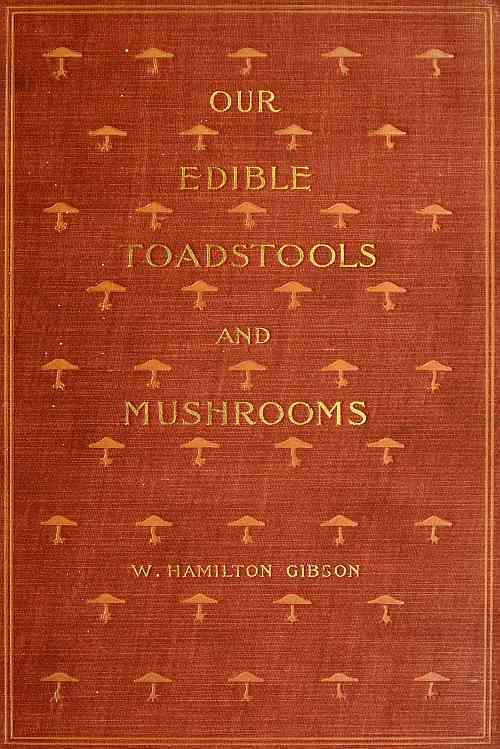
Our Edible Toadstools and Mushrooms and How to Distinguish Them: A Selection of Thirty Native Food Varieties Easily Recognizable by Their Marked Individualities, with Simple Rules for the Identification of Poisonous Species
1895
A practical guide on identifying edible fungi, likely written in the late 19th century. This publication focuses on educating the general public about thirty native food mushroom varieties and provides easy-to-follow rules for distinguishing these from their potentially poisonous counterparts. The book aims to promote the safe appreciation and gathering of mushrooms, addressing both the joy of foraging and the importance of caution. The opening of this work presents a thoughtful introduction to the author’s motivation for creating a user-friendly guide to mushrooms, responding to concerns about the widespread popularity and risks of mushroom consumption. Gibson discusses the challenges of conveying scientific knowledge on fungi to the general audience and highlights the specific dangers associated with poisonous species, particularly the Amanita genus. He emphasizes the need for practical knowledge in mushroom identification to prevent fatalities, while also underscoring the bountiful resources available in nature that could alleviate hunger if gathered mindfully. The author aims to empower readers with the skills to safely enjoy the culinary delights offered by certain mushrooms, while remaining vigilant against the dangers of misidentifying toxic varieties.
Editions
Link to this book
Add a free, dofollow link to Lex on your blog, forum, syllabus, or reading list.

<a href="https://lex-books.com/book/our-edible-toadstools-and-mushrooms-and-how-to-distinguish-them-a-selection-of-t-8fd9ad1a-10dc-4ebf-b9eb-2cd4d9cad900"><img src="https://lex-books.com/badges/read-on-lex.svg" alt="Read Our Edible Toadstools and Mushrooms and How to Distinguish Them: A Selection of Thirty Native Food Varieties Easily Recognizable by Their Marked Individualities, with Simple Rules for the Identification of Poisonous Species by W. Hamilton Gibson free on Lex" width="160" height="40"></a>[](https://lex-books.com/book/our-edible-toadstools-and-mushrooms-and-how-to-distinguish-them-a-selection-of-t-8fd9ad1a-10dc-4ebf-b9eb-2cd4d9cad900)[url=https://lex-books.com/book/our-edible-toadstools-and-mushrooms-and-how-to-distinguish-them-a-selection-of-t-8fd9ad1a-10dc-4ebf-b9eb-2cd4d9cad900][img]https://lex-books.com/badges/read-on-lex.svg[/img][/url]Read Our Edible Toadstools and Mushrooms and How to Distinguish Them: A Selection of Thirty Native Food Varieties Easily Recognizable by Their Marked Individualities, with Simple Rules for the Identification of Poisonous Species by W. Hamilton Gibson free on Lex: https://lex-books.com/book/our-edible-toadstools-and-mushrooms-and-how-to-distinguish-them-a-selection-of-t-8fd9ad1a-10dc-4ebf-b9eb-2cd4d9cad900Cite this book
Reading this edition for a paper or guide? Copy a citation.
Gibson, W. Hamilton. Our Edible Toadstools and Mushrooms and How to Distinguish Them: A Selection of Thirty Native Food Varieties Easily Recognizable by Their Marked Individualities, with Simple Rules for the Identification of Poisonous Species. Lex, lex-books.com/book/our-edible-toadstools-and-mushrooms-and-how-to-distinguish-them-a-selection-of-t-8fd9ad1a-10dc-4ebf-b9eb-2cd4d9cad900.Gibson, W. H. (1895). Our Edible Toadstools and Mushrooms and How to Distinguish Them: A Selection of Thirty Native Food Varieties Easily Recognizable by Their Marked Individualities, with Simple Rules for the Identification of Poisonous Species. Lex. https://lex-books.com/book/our-edible-toadstools-and-mushrooms-and-how-to-distinguish-them-a-selection-of-t-8fd9ad1a-10dc-4ebf-b9eb-2cd4d9cad900Gibson, W. Hamilton. Our Edible Toadstools and Mushrooms and How to Distinguish Them: A Selection of Thirty Native Food Varieties Easily Recognizable by Their Marked Individualities, with Simple Rules for the Identification of Poisonous Species. Lex. https://lex-books.com/book/our-edible-toadstools-and-mushrooms-and-how-to-distinguish-them-a-selection-of-t-8fd9ad1a-10dc-4ebf-b9eb-2cd4d9cad900.