Niebuhr's Lectures on Roman History, Vol. 3 (of 3)
Niebuhr's Lectures on Roman History, Vol. 3 (of 3)
Translated by Havilland Le Mesurier Chepmell
Niebuhr's Lectures on Roman History, Volume III traces the dissolution of the Republic through the lens of a historian who fundamentally changed how we read antiquity. Beginning with the Roman Empire's territorial vastness and the political fragmentation surrounding it, Niebuhr moves through the Mithridatic and Pirate Wars, Lucullus and Pompey's campaigns, before arriving at the legendary figures of Catiline, Cicero, and Julius Caesar. What distinguishes these lectures is not mere chronology but Niebuhr's forensic skepticism toward his sources, his attempt to separate legend from documentary reality at a moment when Rome itself was unraveling. The lectures carry the rhythm of a 19th-century scholar working in real time, wrestling with contradictions in Livy and Polybius while building his case. This volume captures the Republic in its final convulsions: the judicial corruption, the contested reforms, the great names whose ambitions would reshape the Mediterranean. For readers interested in how an earlier generation of historians approached Rome, or those seeking a rigorous, unromanticized account of the Republic's end, Niebuhr remains essential reading.
Editions
X-Ray
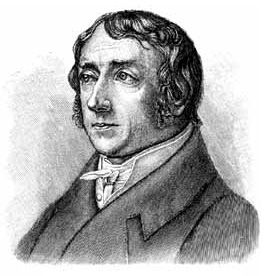
The author and lecturer, providing critical analysis and historical interpretation of Roman history.
A renowned orator and statesman during the late Roman Republic, whose career is deeply intertwined with the political turmoil and transition to empire.
A Roman senator who led a conspiracy to overthrow the Republic, characterized by extreme profligacy and daring.
A brilliant general and statesman whose civil war against Pompey marked the end of the Republic and laid the foundation for the Empire.
About Niebuhr's Lectures on Roman History, Vol. 3 (of 3)
Chapter Summaries
- 1
- This section outlines the Roman Empire's vast territorial reach and the political state of the known world around 700 AUC (60s BCE), including Gaul, Dalmatia, Macedon, Asia Minor, and the Parthian Empire. It details the venality of Roman courts and the restoration of the tribuneship by Pompey. The chapter then covers the war with Mithridates, Lucullus's campaigns, and Pompey's successful suppression of the widespread piracy in the Mediterranean.
- 2
- This section introduces Catiline, describing him as a figure of extreme crime and ambition, and details his conspiracy to overthrow the Republic. It then focuses on Cicero's character, his rise to consulship, his exposure and suppression of Catiline's plot, and the subsequent enmity he faced, particularly from Clodius. The narrative highlights Cicero's intellectual gifts, his kindness, and his political struggles in a corrupt age.
- 3
- This chapter delves into the life and character of Julius Caesar, from his youth and defiance of Sulla to his rise as a military and political leader. It covers his consulship, the formation of the First Triumvirate, and his extraordinary talents as a general and writer. Niebuhr emphasizes Caesar's benevolence and humanity towards his fellow citizens, contrasting it with his ruthlessness in foreign wars, and discusses his ambition for the title of king.
Key Themes
- The Decline of Republican Virtues
- The book frequently laments the loss of traditional Roman virtues like integrity, selflessness, and civic duty, especially during the late Republic and early Empire. Figures like Cicero struggle against widespread corruption and personal ambition, highlighting how these internal failings paved the way for tyranny and instability.
- The Corrupting Nature of Absolute Power
- Niebuhr meticulously details how absolute power, once consolidated by emperors like Augustus, often led to extreme cruelty, profligacy, and paranoia in their successors. Emperors like Caligula and Nero serve as prime examples of how unchecked authority could transform individuals into monsters, leading to cycles of violence and instability.
- The Rise of Military Dominance in Politics
- A recurring theme is the increasing influence of the Roman army in determining the fate of emperors and the empire itself. From the civil wars of Caesar and Pompey to the Praetorian Guard's king-making role and later the legions' proclamations of emperors, military loyalty and power became the ultimate arbiter of political authority, often at the expense of civilian institutions.
Characters
- Barthold Georg Niebuhr(narrator)
- The author and lecturer, providing critical analysis and historical interpretation of Roman history.
- Cicero(protagonist)
- A renowned orator and statesman during the late Roman Republic, whose career is deeply intertwined with the political turmoil and transition to empire.
- Catiline(antagonist)
- A Roman senator who led a conspiracy to overthrow the Republic, characterized by extreme profligacy and daring.
- Julius Caesar(protagonist)
- A brilliant general and statesman whose civil war against Pompey marked the end of the Republic and laid the foundation for the Empire.
- Pompey(antagonist)
- A celebrated general and rival of Caesar, whose defeat in the civil war solidified Caesar's power.
- Mark Antony(antagonist)
- A Roman general and triumvir, whose rivalry with Octavian led to the final civil war of the Republic.
Link to this book
Add a free, dofollow link to Lex on your blog, forum, syllabus, or reading list.

<a href="https://lex-books.com/book/niebuhr-s-lectures-on-roman-history-vol-3-of-3-5a8f4a58-a1f8-4380-98e9-3fbcceb214cc"><img src="https://lex-books.com/badges/read-on-lex.svg" alt="Read Niebuhr's Lectures on Roman History, Vol. 3 (of 3) by Barthold Georg Niebuhr free on Lex" width="160" height="40"></a>[](https://lex-books.com/book/niebuhr-s-lectures-on-roman-history-vol-3-of-3-5a8f4a58-a1f8-4380-98e9-3fbcceb214cc)[url=https://lex-books.com/book/niebuhr-s-lectures-on-roman-history-vol-3-of-3-5a8f4a58-a1f8-4380-98e9-3fbcceb214cc][img]https://lex-books.com/badges/read-on-lex.svg[/img][/url]Read Niebuhr's Lectures on Roman History, Vol. 3 (of 3) by Barthold Georg Niebuhr free on Lex: https://lex-books.com/book/niebuhr-s-lectures-on-roman-history-vol-3-of-3-5a8f4a58-a1f8-4380-98e9-3fbcceb214ccCite this book
Reading this edition for a paper or guide? Copy a citation.
Niebuhr, Barthold Georg. Niebuhr's Lectures on Roman History, Vol. 3 (of 3). Lex, lex-books.com/book/niebuhr-s-lectures-on-roman-history-vol-3-of-3-5a8f4a58-a1f8-4380-98e9-3fbcceb214cc.Niebuhr, B. G. (n.d.). Niebuhr's Lectures on Roman History, Vol. 3 (of 3). Lex. https://lex-books.com/book/niebuhr-s-lectures-on-roman-history-vol-3-of-3-5a8f4a58-a1f8-4380-98e9-3fbcceb214ccNiebuhr, Barthold Georg. Niebuhr's Lectures on Roman History, Vol. 3 (of 3). Lex. https://lex-books.com/book/niebuhr-s-lectures-on-roman-history-vol-3-of-3-5a8f4a58-a1f8-4380-98e9-3fbcceb214cc.