Niebuhr's Lectures on Roman History, Vol. 2 (of 3)
1875
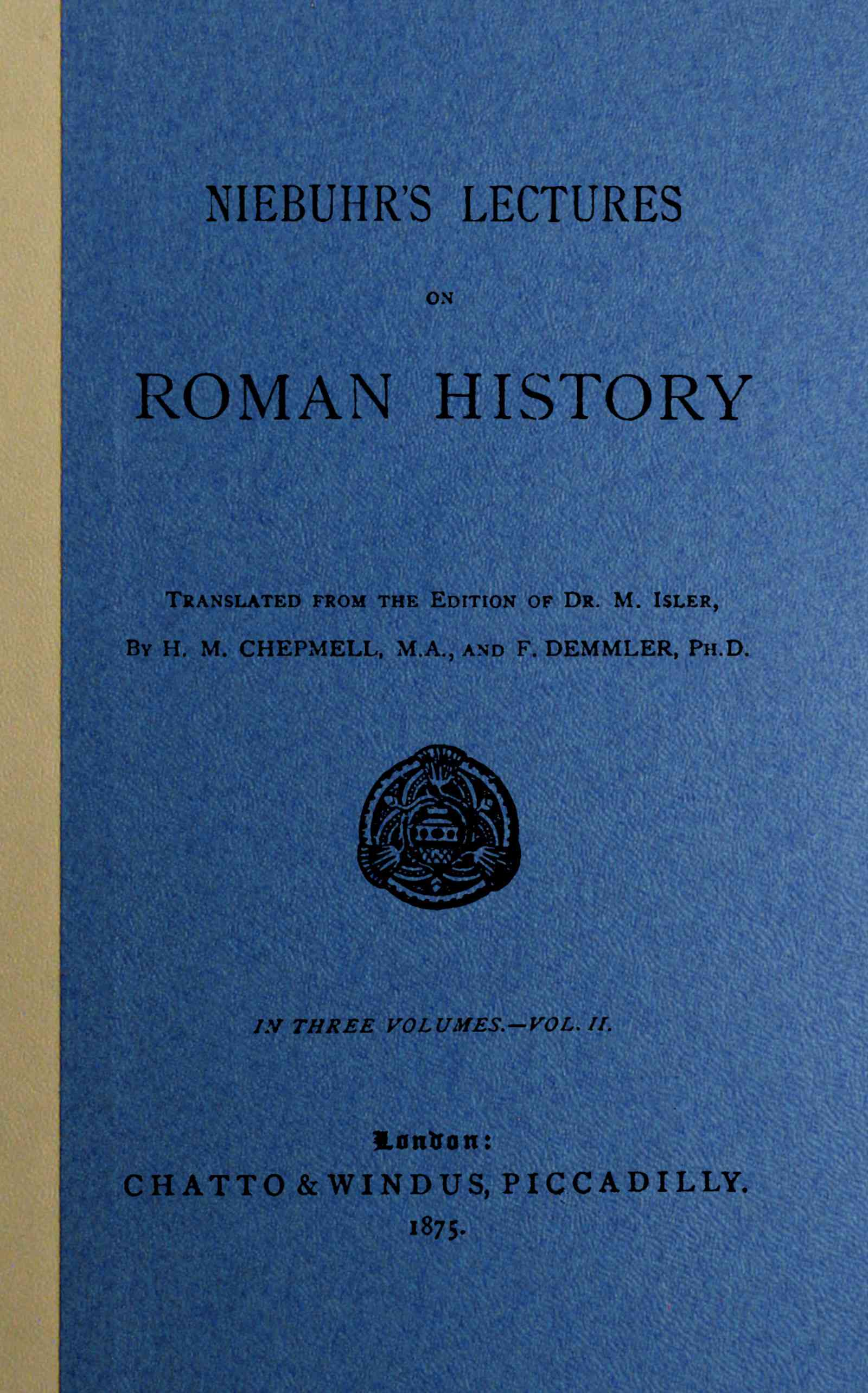
Niebuhr's Lectures on Roman History, Vol. 2 (of 3)
1875
Translated by Havilland Le Mesurier Chepmell
Barthold Georg Niebuhr fundamentally reimagined how we study ancient history, and these lectures, delivered in Berlin in the early 1800s, marked a watershed in classical scholarship. Volume Two tackles the First Punic War, that epochal struggle between Rome and Carthage that would determine who dominated the Mediterranean. Niebuhr traces Carthage's rise as a mercantile empire, examines the political tensions that ignited conflict, and dissects the military strategies on both land and sea that made this war so transformative. He gives particular attention to figures like Regulus and Hannibal, placing their decisions within the larger geopolitical currents that shaped the ancient world. The naval warfare fascinates especially: Rome, a land power, had to invent a navy almost from scratch to challenge Carthaginian supremacy. Written with the confidence of a man reconstructing history from fragmentary evidence, these lectures reward readers willing to engage with history as Niebuhr practiced it: as detective work, as argument, as the slow construction of meaning from sources that resist easy interpretation.
Editions
X-Ray
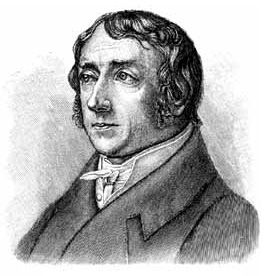
The author of the lectures, providing a critical and detailed historical account of Roman history.
A Carthaginian general, son of Hamilcar, who led Carthage in the Second Punic War, renowned for his military genius and implacable hatred of Rome.
A Carthaginian general, father of Hannibal, who distinguished himself in the First Punic War and founded the Carthaginian empire in Spain.
A Roman general who defeated Hannibal in the Second Punic War, known for his strategic brilliance and personal charisma.
About Niebuhr's Lectures on Roman History, Vol. 2 (of 3)
Chapter Summaries
- FIRST PUNIC WAR
- This section details the origins and course of the First Punic War, beginning with the foundation and early history of Carthage, its empire, and constitution. It covers the Roman intervention in Sicily, the siege of Agrigentum, the Roman innovation of building a fleet with boarding-bridges, naval victories like Mylae, Regulus's campaign in Africa and his defeat, and the eventual Roman victory at the Aegatian Isles, leading to Carthage's defeat and the acquisition of Sicily.
- SICILY A ROMAN PROVINCE. PRÆTOR PEREGRINUS. WAR WITH THE FALISCANS. MUTINY OF THE MERCENARIES AT CARTHAGE. THE FIRST ILLYRIAN WAR. THE LEX FLAMINIA FOR THE DIVISION OF THE AGER GALLICUS PICENUS. WAR AGAINST THE CISALPINE GAULS. SECOND ILLYRIAN WAR. THE CARTHAGINIANS FOUND AN EMPIRE IN SPAIN
- This chapter describes the aftermath of the First Punic War, including Sicily becoming Rome's first province and the creation of the Praetor Peregrinus office. It covers the brief war with the Faliscans, the devastating Mercenary War in Carthage, and Rome's opportunistic seizure of Sardinia and Corsica. The First Illyrian War against Queen Teuta is detailed, showcasing Rome's growing influence in Greece, followed by the agrarian law of C. Flaminius and the subsequent war against the Cisalpine Gauls. The chapter concludes with the Second Illyrian War and Hamilcar Barcas's establishment of a new Carthaginian empire in Spain.
- THE SECOND PUNIC WAR
- This extensive chapter covers the Second Punic War, starting with Hannibal's oath and his march across the Pyrenees and Alps into Italy. It details early Roman defeats at Ticinus, Trebia, and Trasimene Lake, the Fabian strategy, and the catastrophic Battle of Cannae. The narrative then shifts to Hannibal's attempts to win over Italian allies, the Roman recovery under Fabius and Marcellus, the siege of Syracuse and Archimedes' role, and the war in Spain under the Scipios. It culminates with Hasdrubal's march to Italy and his defeat at the Metaurus, Scipio's invasion of Africa, and Hannibal's final defeat at Zama, leading to a harsh peace treaty.
Key Themes
- Roman Expansionism and Imperialism
- The book meticulously details Rome's territorial growth through a series of wars, from the Punic Wars to conquests in Spain, Macedon, and Asia Minor. It highlights the strategic motivations, military innovations, and often brutal methods employed by Rome to establish its dominance over other nations and assimilate conquered territories into its provincial system.
- Military Strategy and Innovation
- Niebuhr frequently analyzes military tactics, such as the Roman invention of boarding-bridges in the First Punic War, Hannibal's masterful dispositions at Trebia and Cannae, Scipio's bold moves in Spain and Africa, and Marius's army reforms. The text emphasizes how adaptation and genius in warfare were crucial for success, often contrasting Roman perseverance with Carthaginian skill or Eastern effeminacy.
- Political Corruption and Moral Decay
- A pervasive theme, especially from the Second Punic War onwards, is the increasing corruption within the Roman Republic. This manifests in the sale of offices, bribery of judges, exploitation of provinces by governors and publicani, and the self-serving actions of leading politicians like Jugurtha's Roman allies or the opponents of the Gracchi. Niebuhr laments the loss of ancient Roman virtues and the rise of avarice and factionalism.
Characters
- Barthold Georg Niebuhr(author)
- The author of the lectures, providing a critical and detailed historical account of Roman history.
- Hannibal Barcas(antagonist)
- A Carthaginian general, son of Hamilcar, who led Carthage in the Second Punic War, renowned for his military genius and implacable hatred of Rome.
- Hamilcar Barcas(supporting)
- A Carthaginian general, father of Hannibal, who distinguished himself in the First Punic War and founded the Carthaginian empire in Spain.
- P. Cornelius Scipio Africanus(protagonist)
- A Roman general who defeated Hannibal in the Second Punic War, known for his strategic brilliance and personal charisma.
- Q. Fabius Maximus Cunctator(supporting)
- A Roman dictator and general known for his delaying tactics against Hannibal, earning him the surname 'Cunctator'.
- M. Claudius Marcellus(supporting)
- A dashing Roman general, known for his daring and bravery, who distinguished himself against Hannibal and in the siege of Syracuse.
Link to this book
Add a free, dofollow link to Lex on your blog, forum, syllabus, or reading list.

<a href="https://lex-books.com/book/niebuhr-s-lectures-on-roman-history-vol-2-of-3-128dc49f-62b4-4272-81e1-3c765a17ffd7"><img src="https://lex-books.com/badges/read-on-lex.svg" alt="Read Niebuhr's Lectures on Roman History, Vol. 2 (of 3) by Barthold Georg Niebuhr free on Lex" width="160" height="40"></a>[](https://lex-books.com/book/niebuhr-s-lectures-on-roman-history-vol-2-of-3-128dc49f-62b4-4272-81e1-3c765a17ffd7)[url=https://lex-books.com/book/niebuhr-s-lectures-on-roman-history-vol-2-of-3-128dc49f-62b4-4272-81e1-3c765a17ffd7][img]https://lex-books.com/badges/read-on-lex.svg[/img][/url]Read Niebuhr's Lectures on Roman History, Vol. 2 (of 3) by Barthold Georg Niebuhr free on Lex: https://lex-books.com/book/niebuhr-s-lectures-on-roman-history-vol-2-of-3-128dc49f-62b4-4272-81e1-3c765a17ffd7Cite this book
Reading this edition for a paper or guide? Copy a citation.
Niebuhr, Barthold Georg. Niebuhr's Lectures on Roman History, Vol. 2 (of 3). Lex, lex-books.com/book/niebuhr-s-lectures-on-roman-history-vol-2-of-3-128dc49f-62b4-4272-81e1-3c765a17ffd7.Niebuhr, B. G. (1875). Niebuhr's Lectures on Roman History, Vol. 2 (of 3). Lex. https://lex-books.com/book/niebuhr-s-lectures-on-roman-history-vol-2-of-3-128dc49f-62b4-4272-81e1-3c765a17ffd7Niebuhr, Barthold Georg. Niebuhr's Lectures on Roman History, Vol. 2 (of 3). Lex. https://lex-books.com/book/niebuhr-s-lectures-on-roman-history-vol-2-of-3-128dc49f-62b4-4272-81e1-3c765a17ffd7.