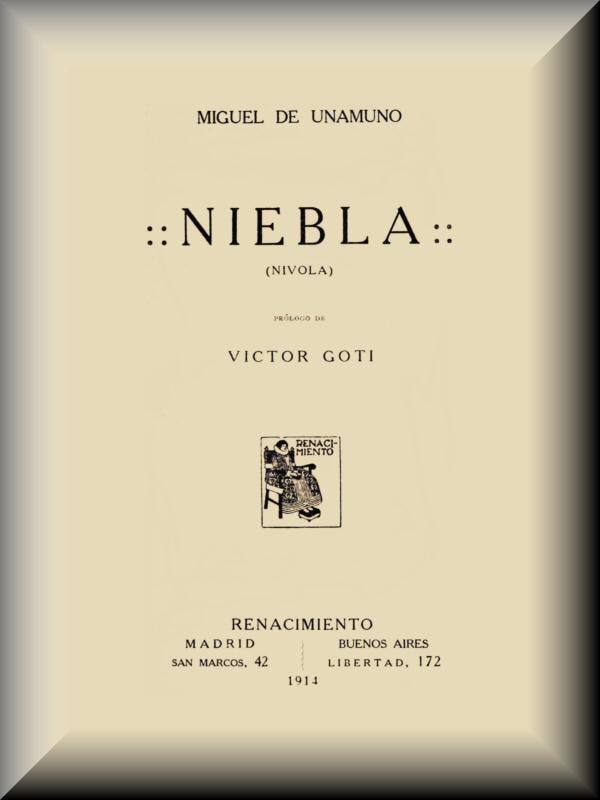
Niebla (nivola)
1914
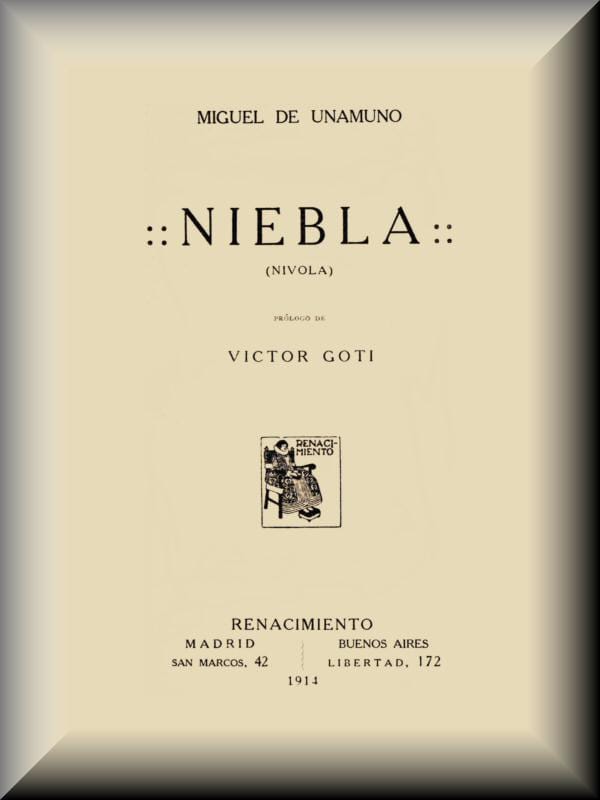
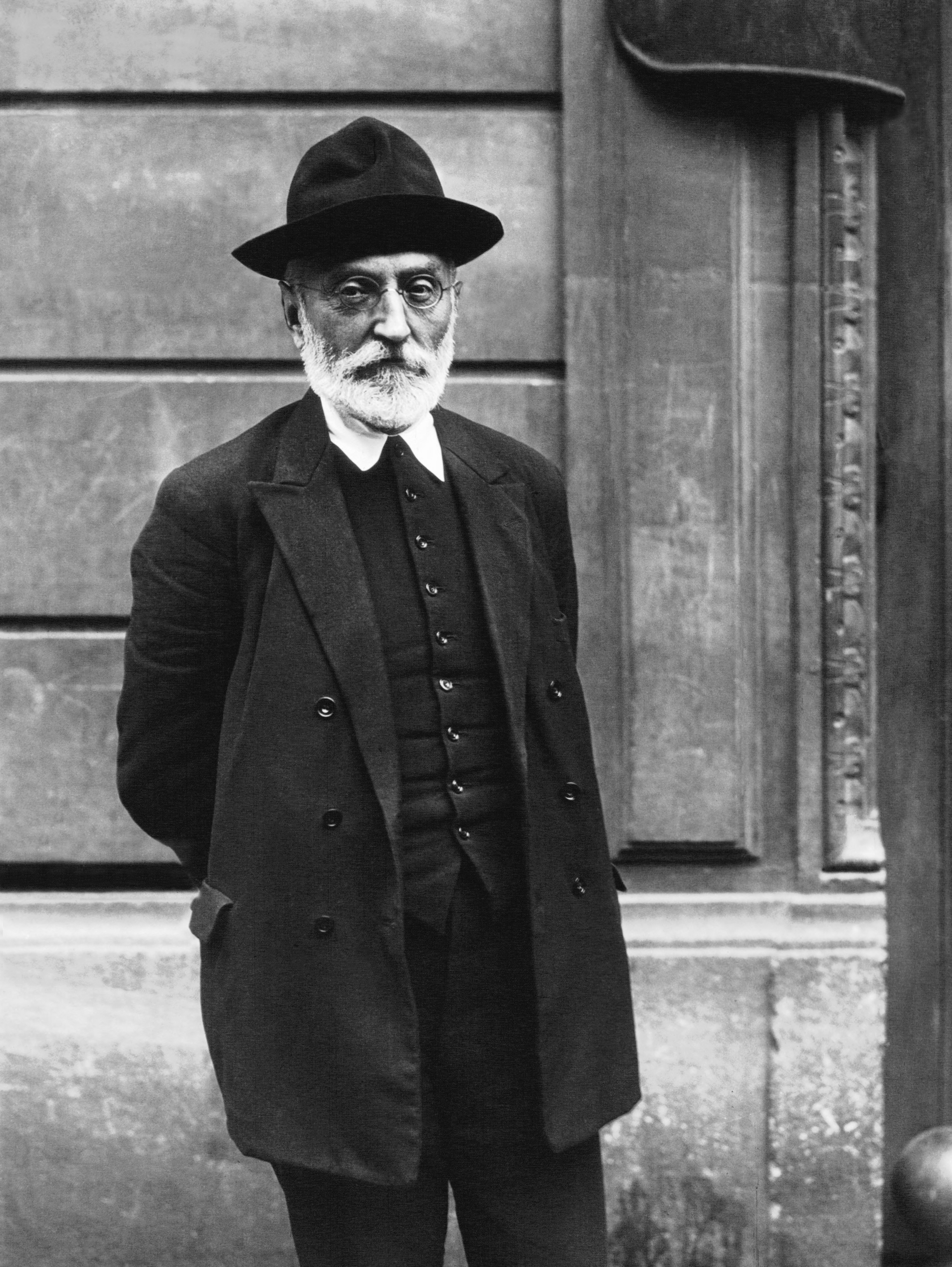
Niebla (Fog) is the book that anticipated existentialism decades before Sartre or Camus gave it a name. Published in 1914, it follows Augusto Pérez, a solitary man wandering the streets of an unnamed Spanish city, searching for meaning in love and life. When he meets the captivating Eugenia, he finds himself entangled in a romance that raises the most dangerous question of all: can we choose our destiny, or are we merely characters moving through a story already written? Unamuno, who appears in his own novel as a character who must decide whether to let Augusto live or die, constructs a dazzling metafictional maze where the boundaries between author, character, and reader collapse. This is a novel about the terror of being alive without guarantees, the desperate need to be seen and remembered, and the illusion of control we cling to while mistaking fog for solid ground. It is as much a philosophical treatise as it is a love story, and it remains startlingly modern: a book about the anxiety of existence that reads as if written yesterday for readers who have always felt it.
Editions
X-Ray
“¿Y qué es amor? ¿Quién definió el amor? Amor definido deja de serlo...””
— Miguel de Unamuno
“Hasta que se llora de veras no se sabe si se tiene o no alma.””
— Miguel de Unamuno
“We men do nothing but lie and make ourselves important. Speech was invented for the purpose of magnifying all of our sensations and impressions”
— Miguel de Unamuno
“el que viaja mucho va huyendo de cada lugar que deja y no buscando cada lugar a que llega.””
— Miguel de Unamuno
“No, no es que me miró, es que me envolvió en su mirada; y no es que creí en Dios, sino que me creí un dios””
— Miguel de Unamuno
“Yo no vivía, y ahora vivo; pero ahora que vivo es cuando siento lo que es morir””
— Miguel de Unamuno
“Hay quien se hunde en la lectura de novelas para distraerse de sí mismo, para olvidar sus penas...””
— Miguel de Unamuno
“El amor precede al conocimiento, y éste mata a aquél.””
— Miguel de Unamuno
“Cásate con la mujer que te quiera, aunque no la quieras tú. Es mejor casarte para que le conquisten a uno el amor que para conquistarlo.””
— Miguel de Unamuno
Link to this book
Add a free, dofollow link to Lex on your blog, forum, syllabus, or reading list.

<a href="https://lex-books.com/book/niebla-nivola-6245824b-468f-4e62-97ad-0cd93ebd3ecc"><img src="https://lex-books.com/badges/read-on-lex.svg" alt="Read Niebla (nivola) by Miguel de Unamuno free on Lex" width="160" height="40"></a>[](https://lex-books.com/book/niebla-nivola-6245824b-468f-4e62-97ad-0cd93ebd3ecc)[url=https://lex-books.com/book/niebla-nivola-6245824b-468f-4e62-97ad-0cd93ebd3ecc][img]https://lex-books.com/badges/read-on-lex.svg[/img][/url]Read Niebla (nivola) by Miguel de Unamuno free on Lex: https://lex-books.com/book/niebla-nivola-6245824b-468f-4e62-97ad-0cd93ebd3eccCite this book
Reading this edition for a paper or guide? Copy a citation.
Unamuno, Miguel de. Niebla (nivola). Lex, lex-books.com/book/niebla-nivola-6245824b-468f-4e62-97ad-0cd93ebd3ecc.Unamuno, M. D. (1914). Niebla (nivola). Lex. https://lex-books.com/book/niebla-nivola-6245824b-468f-4e62-97ad-0cd93ebd3eccUnamuno, Miguel de. Niebla (nivola). Lex. https://lex-books.com/book/niebla-nivola-6245824b-468f-4e62-97ad-0cd93ebd3ecc.