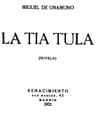
La Tía Tula (novela)
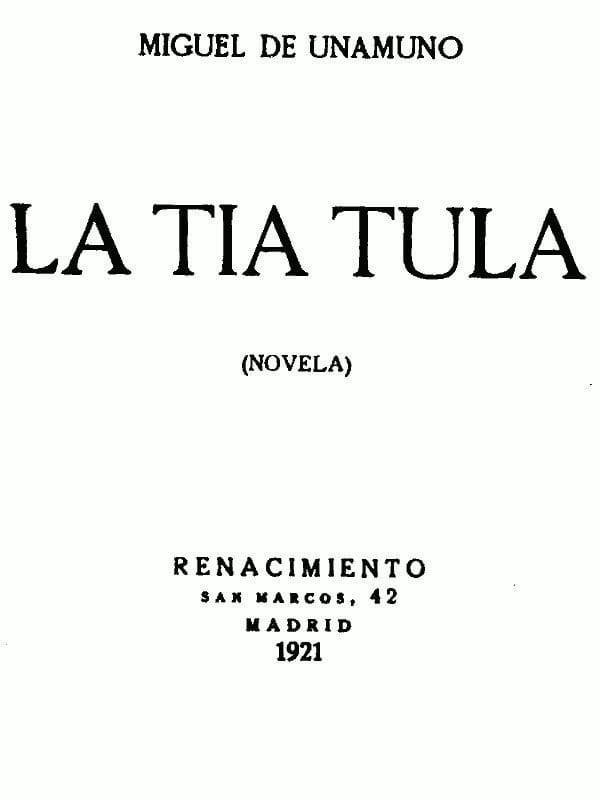
Gertrudis, Tía Tula, has made herself indispensable. After her sister Rosa dies, Tula raises her children, manages the household, and tends to her brother-in-law Ramiro with quiet efficiency. She is the family's backbone, its moral compass, its invisible engine. But beneath her practical wisdom and grave demeanor lies something she has never spoken aloud: a hunger for a life of her own. Tula has never married, never borne children, never claimed any existence beyond this house and these people who need her. As the children grow and the years accumulate, Unamuno traces the slow, devastating architecture of a woman who chose duty, and must now live with what that choice cost her. This is not a melodrama of suffering but something more unsettling: a quiet excavation of repression, of love that has nowhere to go, of flesh and spirit at war within a woman society has designated as untouchable. The erotism here is not explicit but omnipresent, coiled in glances not taken and words not spoken. It is the erotism of denial itself.
Editions
X-Ray
“Eso de amor -decíase Ramiro ahora- sabe a libro; sólo en el teatro y en las novelas se oye el yo te amo; en la vida de la carne y sangre y hueso el entrañable ¡te quiero! y el más entrañable aún callárselo.””
— Miguel de Unamuno
“¿Amor? No, ni cariño siquiera, sino algo sin nombre y que no se dice por confundirse ello con la vida misma.””
— Miguel de Unamuno
“Porque sua mulher vivia com o coração na mão e estendia este como oferta para o ar do mundo, entregue por completo ao momento presente, como vivem as rosas do campo e as rolas dos céus.””
— Miguel de Unamuno
“Não tenho medo das palavras, mas calo-me.””
— Miguel de Unamuno
“<<¡El cristianismo, al fin, y a pesar de la Magdalena, es religión de hombres -se decía Gertrudis-; masculinos el Padre, el Hijo y el Espíritu Santo...!>>. Pero ¿y la Madre? La religión de la Madre está en: <> y en pedir a su Hijo que provea de vino a una bodas, de vino que embriaga y alegra y hace olvidar penas, y para que el Hijo le diga: <<¿Qué tengo yo que ver contigo, mujer? Aún no ha venido mi hora>>””
— Miguel de Unamuno
“El amor, si ¿Amor? ¿Amor dicen? ¿Qué saben de él todos esos escritores amatorios, que no amorosos, que de él hablan y quieren excitarlo en quien los lee? ¿Qué saben de él los galeotos de las letras? ¿Amor? No amor, sino mejor cariño. Eso del amor -decíase Ramiro ahora- sabe a libro; sólo en el teatro y en la novelas se oye el yo te amo; en la vida de carne y sangre y hueso el entrañable ¡te quiero!, y el más entrañable aún callárselo ¿Amor? No, ni cariño siquiera, sino algo sin nombre y que no se dice por confundirse ello con la vida misma. Los más de los cantores amatorios saben de amor lo que de oración los masculla-jaculatorias, traga-novelas y engulle-rosarios”.””
— Miguel de Unamuno
“«Ella sería el báculo de todos los que la rodearan; pero si sus piernas flaquearan, si su cabeza no le mantuviese firme en su sendero, si su corazón empezaba a bambolear y enflaquecer, ¿quién la sostendría a ella?, ¿quién sería su báculo? [...]»””
— Miguel de Unamuno
“Cuando la vio gozar, sufriendo al darle su primer hijo, es cuando comprendió cómo es el amor más fuerte que la vida y que la muerte, y domina la discordia de estas; cómo el amor hace morirse a la vida y vivir la muerte; cómo él vivía ahora la muerte de su Rosa y se moría en su propia vida.””
— Miguel de Unamuno
“Quiero irme de este mundo sin saber muchas cosas...””
— Miguel de Unamuno
Link to this book
Add a free, dofollow link to Lex on your blog, forum, syllabus, or reading list.

<a href="https://lex-books.com/book/la-t-a-tula-novela-1018ff16-2833-4112-984b-5318fa1d0c53"><img src="https://lex-books.com/badges/read-on-lex.svg" alt="Read La Tía Tula (novela) by Miguel de Unamuno free on Lex" width="160" height="40"></a>[](https://lex-books.com/book/la-t-a-tula-novela-1018ff16-2833-4112-984b-5318fa1d0c53)[url=https://lex-books.com/book/la-t-a-tula-novela-1018ff16-2833-4112-984b-5318fa1d0c53][img]https://lex-books.com/badges/read-on-lex.svg[/img][/url]Read La Tía Tula (novela) by Miguel de Unamuno free on Lex: https://lex-books.com/book/la-t-a-tula-novela-1018ff16-2833-4112-984b-5318fa1d0c53Cite this book
Reading this edition for a paper or guide? Copy a citation.
Unamuno, Miguel de. La Tía Tula (novela). Lex, lex-books.com/book/la-t-a-tula-novela-1018ff16-2833-4112-984b-5318fa1d0c53.Unamuno, M. D. (n.d.). La Tía Tula (novela). Lex. https://lex-books.com/book/la-t-a-tula-novela-1018ff16-2833-4112-984b-5318fa1d0c53Unamuno, Miguel de. La Tía Tula (novela). Lex. https://lex-books.com/book/la-t-a-tula-novela-1018ff16-2833-4112-984b-5318fa1d0c53.