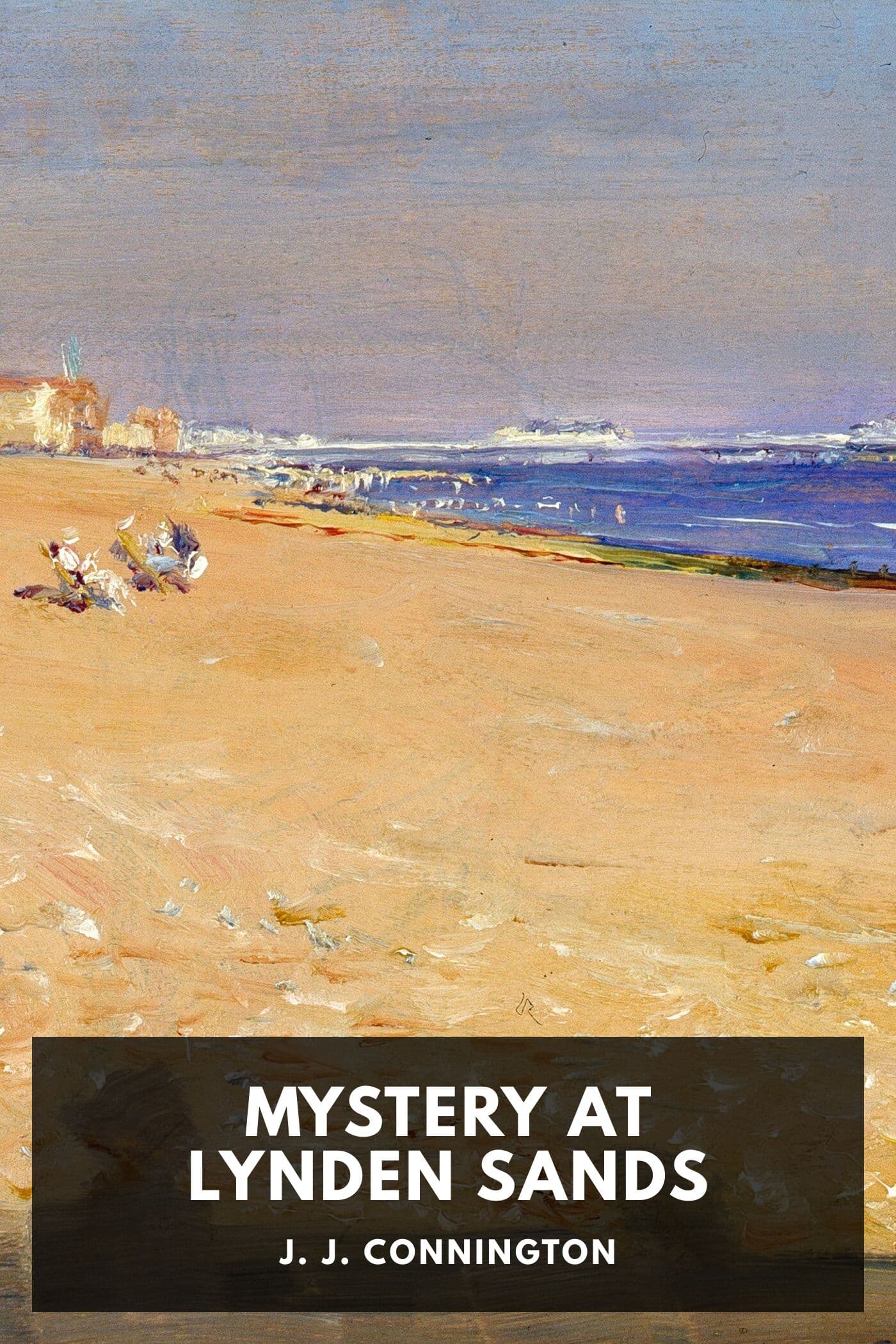
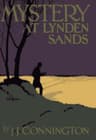
Mystery at Lynden Sands
1928

Paul and Jay Fordingbridge wait at a seaside hotel rather than their family home, Foxhills, their patience wearing thin while Derek remains missing. Then the caretaker dies at the estate, his wrists bearing unexplained marks, and the family summons Chief-Constable Sir Clinton Driffield. What begins as a question of inheritance and absence quickly unravels into something far darker: a missing heir who may be an impostor, an accidental bigamist, secret marriages and impersonations, trust fund embezzlement, a kidnapping, and two murders. Connington piles puzzle upon puzzle, each discovery leading to another layer of deception. Driffield, unlike the amateur sleuths who dominate Golden Age fiction, is a policeman first, and his method relies on physical clues others overlook: the position of a body, the timing of a train, the damning logic of financial records. The 1928 critical reception was extraordinary, one reviewer suggesting it "may just fail of being the best detective story of the century." It remains a masterclass in the form: intricate, fair-play, and devastatingly British.
Editions

Link to this book
Add a free, dofollow link to Lex on your blog, forum, syllabus, or reading list.

<a href="https://lex-books.com/book/mystery-at-lynden-sands-62c9bc35-06df-41a9-a406-1176d5722174"><img src="https://lex-books.com/badges/read-on-lex.svg" alt="Read Mystery at Lynden Sands by J. J. Connington free on Lex" width="160" height="40"></a>[](https://lex-books.com/book/mystery-at-lynden-sands-62c9bc35-06df-41a9-a406-1176d5722174)[url=https://lex-books.com/book/mystery-at-lynden-sands-62c9bc35-06df-41a9-a406-1176d5722174][img]https://lex-books.com/badges/read-on-lex.svg[/img][/url]Read Mystery at Lynden Sands by J. J. Connington free on Lex: https://lex-books.com/book/mystery-at-lynden-sands-62c9bc35-06df-41a9-a406-1176d5722174Cite this book
Reading this edition for a paper or guide? Copy a citation.
Connington, J. J.. Mystery at Lynden Sands. Lex, lex-books.com/book/mystery-at-lynden-sands-62c9bc35-06df-41a9-a406-1176d5722174.Connington, J. J. (1928). Mystery at Lynden Sands. Lex. https://lex-books.com/book/mystery-at-lynden-sands-62c9bc35-06df-41a9-a406-1176d5722174Connington, J. J.. Mystery at Lynden Sands. Lex. https://lex-books.com/book/mystery-at-lynden-sands-62c9bc35-06df-41a9-a406-1176d5722174.