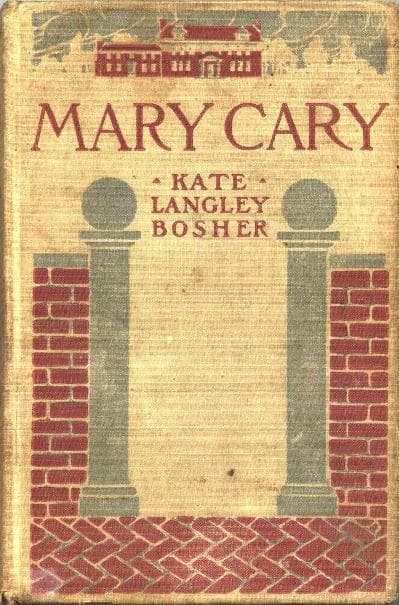
Mary Cary, Frequently Martha

Mary Cary keeps a diary, and thank goodness she does. Living at the Yorkburg Female Orphan Asylum in Virginia, she sees plenty that needs documenting: the petty cruelties of Miss Bray, the orphanage's calculating headmistress who lies to the Board with practiced ease, and the small kindnesses of Miss Katherine, the nurse who treats Mary like a human being instead of a problem to be managed. But Mary herself is the most interesting thing in the book. She has an imaginary companion named Martha, her "other self", who speaks exactly what Mary is too polite to say, who gets angry when Mary wants to be good, who exists in delightful opposition to the girl's better nature. This split consciousness is wonderfully realized, a child's id speaking truth to the absurd social machinery around her. When Mary discovers clues to her real family and writes a daring letter to her unknown uncle, the story builds toward a resolution that feels earned. Bosher wrote this in 1910, and the book has genuine historical interest as social commentary on orphanages, but it's the voice that endures, sharp, funny, humane, and completely winning.
Editions

Link to this book
Add a free, dofollow link to Lex on your blog, forum, syllabus, or reading list.

<a href="https://lex-books.com/book/mary-cary-frequently-martha-5f8a64fb-f408-4c33-8151-cdd6839d59fd"><img src="https://lex-books.com/badges/read-on-lex.svg" alt="Read Mary Cary, Frequently Martha by Kate Langley Bosher free on Lex" width="160" height="40"></a>[](https://lex-books.com/book/mary-cary-frequently-martha-5f8a64fb-f408-4c33-8151-cdd6839d59fd)[url=https://lex-books.com/book/mary-cary-frequently-martha-5f8a64fb-f408-4c33-8151-cdd6839d59fd][img]https://lex-books.com/badges/read-on-lex.svg[/img][/url]Read Mary Cary, Frequently Martha by Kate Langley Bosher free on Lex: https://lex-books.com/book/mary-cary-frequently-martha-5f8a64fb-f408-4c33-8151-cdd6839d59fdCite this book
Reading this edition for a paper or guide? Copy a citation.
Bosher, Kate Langley. Mary Cary, Frequently Martha. Lex, lex-books.com/book/mary-cary-frequently-martha-5f8a64fb-f408-4c33-8151-cdd6839d59fd.Bosher, K. L. (n.d.). Mary Cary, Frequently Martha. Lex. https://lex-books.com/book/mary-cary-frequently-martha-5f8a64fb-f408-4c33-8151-cdd6839d59fdBosher, Kate Langley. Mary Cary, Frequently Martha. Lex. https://lex-books.com/book/mary-cary-frequently-martha-5f8a64fb-f408-4c33-8151-cdd6839d59fd.