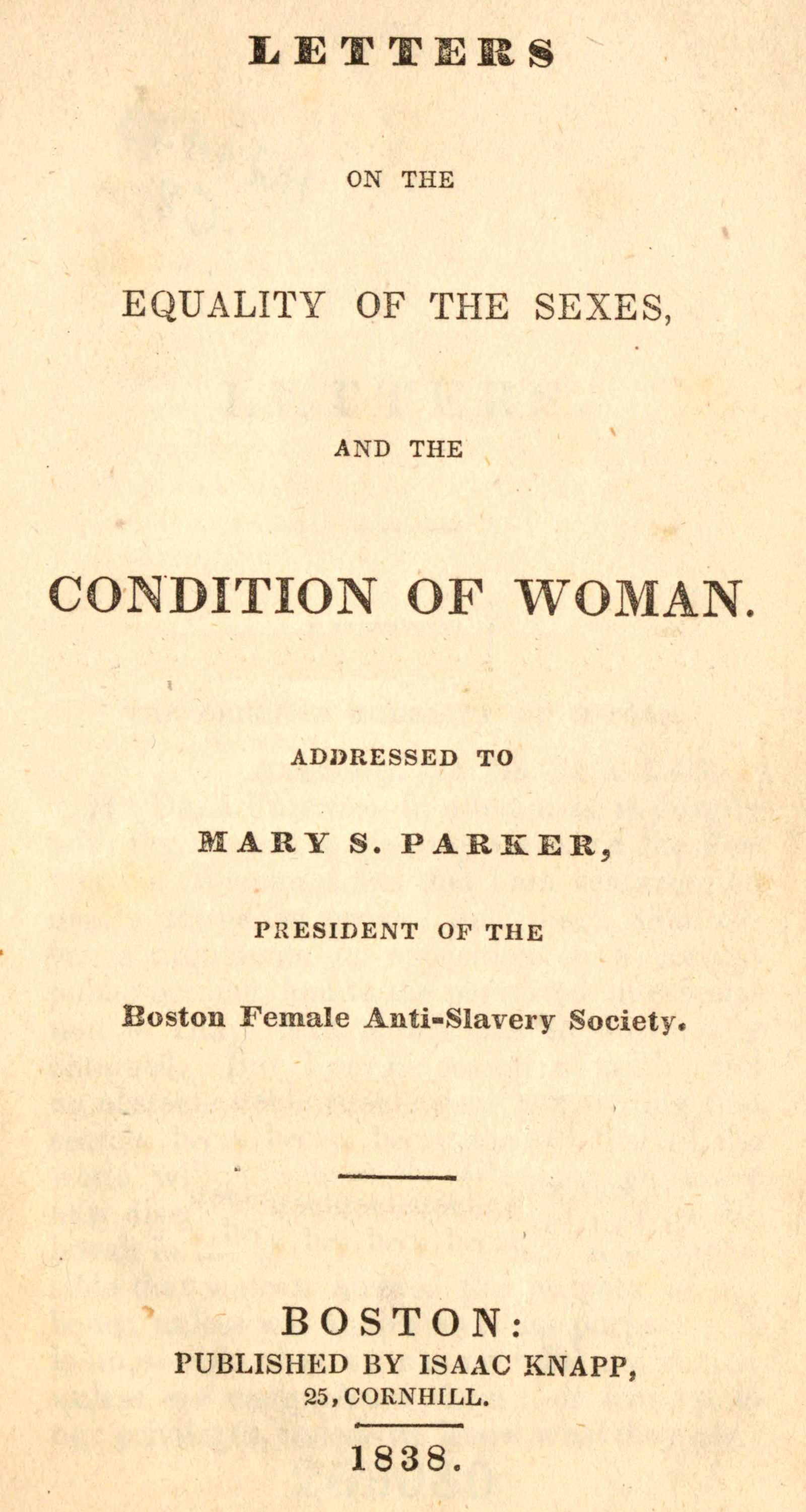
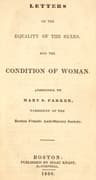
Letters on the Equality of the Sexes, and the Condition of Woman
1838

Letters on the Equality of the Sexes, and the Condition of Woman
1838
Before Seneca Falls, before the word 'feminist' existed, Sarah Grimké picked up her pen and rewrote the Bible's verdict on womanhood. Written as letters to her friend Mary Parker in 1838, this slender volume does something audacious: it takes the same scripture used for centuries to justify women's silence and submission, and demonstrates that those passages have been deliberately misread. Grimké, a Quaker-turned-abolitionist, argues that Genesis presents not male dominion but original equality, and that women's 'inferiority' is not divine decree but human artifice dressed in holy clothing. She moves through scripture with methodical fury, dismantling each proof-text used to bind women to the home and to subjection. But this is no dry theological exercise. Grimké writes with the fire of someone who has felt the weight of artificial chains and refuses to pretend they are natural. She insists that women were created in God's image as fully as men, that their minds are equally capable of moral reasoning, and that the structures keeping them dependent are not heavensent but human-made. These letters are theroot system of American feminism, written nearly two centuries before most people think the conversation began. Essential for anyone who wants to understand where the fight actually started.
Editions
Link to this book
Add a free, dofollow link to Lex on your blog, forum, syllabus, or reading list.

<a href="https://lex-books.com/book/letters-on-the-equality-of-the-sexes-and-the-condition-of-woman-343fd90f-f44b-47d7-b755-c74681d39514"><img src="https://lex-books.com/badges/read-on-lex.svg" alt="Read Letters on the Equality of the Sexes, and the Condition of Woman by Sarah Grimké free on Lex" width="160" height="40"></a>[](https://lex-books.com/book/letters-on-the-equality-of-the-sexes-and-the-condition-of-woman-343fd90f-f44b-47d7-b755-c74681d39514)[url=https://lex-books.com/book/letters-on-the-equality-of-the-sexes-and-the-condition-of-woman-343fd90f-f44b-47d7-b755-c74681d39514][img]https://lex-books.com/badges/read-on-lex.svg[/img][/url]Read Letters on the Equality of the Sexes, and the Condition of Woman by Sarah Grimké free on Lex: https://lex-books.com/book/letters-on-the-equality-of-the-sexes-and-the-condition-of-woman-343fd90f-f44b-47d7-b755-c74681d39514Cite this book
Reading this edition for a paper or guide? Copy a citation.
Grimké, Sarah. Letters on the Equality of the Sexes, and the Condition of Woman. Lex, lex-books.com/book/letters-on-the-equality-of-the-sexes-and-the-condition-of-woman-343fd90f-f44b-47d7-b755-c74681d39514.Grimké, S. (1838). Letters on the Equality of the Sexes, and the Condition of Woman. Lex. https://lex-books.com/book/letters-on-the-equality-of-the-sexes-and-the-condition-of-woman-343fd90f-f44b-47d7-b755-c74681d39514Grimké, Sarah. Letters on the Equality of the Sexes, and the Condition of Woman. Lex. https://lex-books.com/book/letters-on-the-equality-of-the-sexes-and-the-condition-of-woman-343fd90f-f44b-47d7-b755-c74681d39514.