La Tulipe Noire
1844
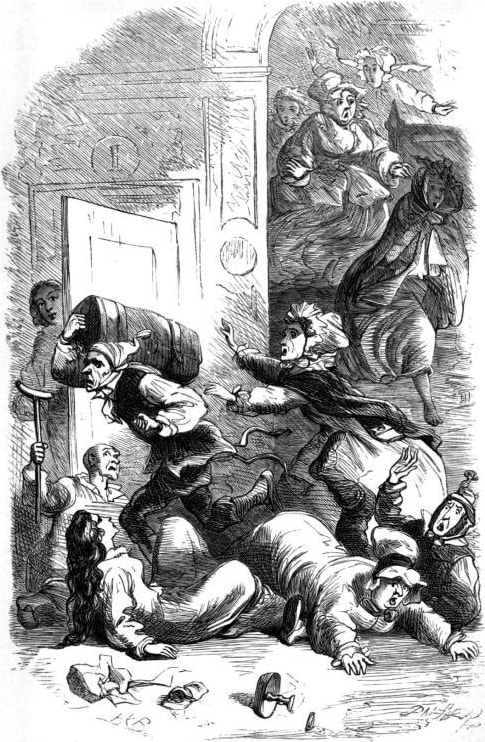
In the sweltering summer of 1672, the Netherlands descends into madness. The de Witt brothers, pillars of Dutch resistance against William of Orange, are torn apart by a mob whipped into frenzy. Against this blood-soaked backdrop, Cornelius van Baerle, their godson, cares only for one thing: cultivating the impossible flower, a tulip of absolute blackness. Imprisoned for his loyalty to the brothers, Cornelius tends his precious bulbs while revolution storms outside the prison walls. Dumas weaves a tender tale of obsession and redemption, where a flower's fate becomes entangled with the survival of a young woman, a prisoner's faith, and a nation's violent birth. The Black Tulip is unlike any other Dumas novel: less swashbuckling, more contemplative, it asks what humanity will sacrifice for beauty, and what beauty might yet save.
Editions
X-Ray
“Sometimes one has suffered enough to have the right to never say: I am too happy.””
— Alexandre Dumas
“Misfortune does not help us to believe. ””
— Alexandre Dumas
“It is quite rare for God to provide a great man at the necessary moment to carry out some great deep, which is why when this unusual combination of circumstance does occur, history at once records the name of the chosen one and recommends him to the admiration of posterity. ””
— Alexandre Dumas
“There is nothing more galling to angry people than the coolness of those on whom they wish to vent their spleen.””
— Alexandre Dumas
“You scholars, you're in communication with the devil.””
— Alexandre Dumas
“God orders a man to do all he can to save his life.””
— Alexandre Dumas
“There are some catastrophes that a poor writer's pen cannot describe and which he is obliged to leave to the imagination of his readers with a bald statement of the facts.””
— Alexandre Dumas
“But there is this terrible thing in evil thoughts, that evil minds soon grow familiar with them.””
— Alexandre Dumas
“To despise flowers is to offend God.””
— Alexandre Dumas
Link to this book
Add a free, dofollow link to Lex on your blog, forum, syllabus, or reading list.

<a href="https://lex-books.com/book/la-tulipe-noire-4edd0dd8-1c34-435c-b352-19928b01f3b0"><img src="https://lex-books.com/badges/read-on-lex.svg" alt="Read La Tulipe Noire by Alexandre Dumas free on Lex" width="160" height="40"></a>[](https://lex-books.com/book/la-tulipe-noire-4edd0dd8-1c34-435c-b352-19928b01f3b0)[url=https://lex-books.com/book/la-tulipe-noire-4edd0dd8-1c34-435c-b352-19928b01f3b0][img]https://lex-books.com/badges/read-on-lex.svg[/img][/url]Read La Tulipe Noire by Alexandre Dumas free on Lex: https://lex-books.com/book/la-tulipe-noire-4edd0dd8-1c34-435c-b352-19928b01f3b0Cite this book
Reading this edition for a paper or guide? Copy a citation.
Dumas, Alexandre. La Tulipe Noire. Lex, lex-books.com/book/la-tulipe-noire-4edd0dd8-1c34-435c-b352-19928b01f3b0.Dumas, A. (1844). La Tulipe Noire. Lex. https://lex-books.com/book/la-tulipe-noire-4edd0dd8-1c34-435c-b352-19928b01f3b0Dumas, Alexandre. La Tulipe Noire. Lex. https://lex-books.com/book/la-tulipe-noire-4edd0dd8-1c34-435c-b352-19928b01f3b0.