Koditon: Romaani
1862
Koditon: Romaani
1862
Translated by Teuvo Pakkala
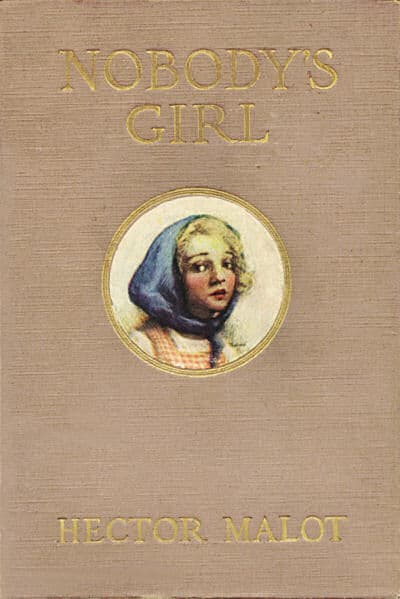
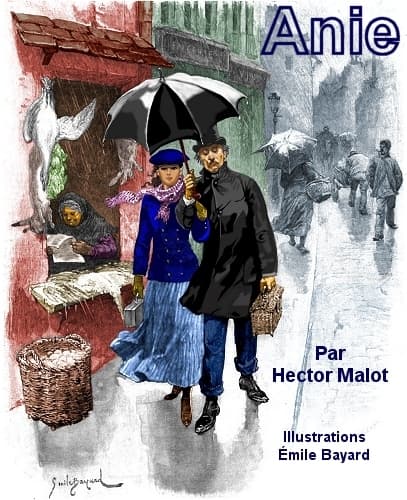
A novel written in the early 20th century. The story follows an orphan boy named Remi, who believes he has a mother in a woman named Barberin until monumental changes unfold in his life. The narrative explores themes of family, identity, and struggle as young Remi faces the harsh realities of his upbringing. The opening of the novel introduces Remi, who reflects on his childhood in a poor village in central France, where he has been raised by Barberin and her husband. Despite never having met his biological parents, he finds solace in the love and care provided by Barberin. However, everything changes when news arrives that Barberin's husband has been injured at work, leading to a series of events that unravel their fragile stability. The tension escalates as financial struggles prompt Barberin to consider selling their cherished cow for money, highlighting the dire circumstances they face. Eventually, the story takes a pivotal turn when Remi's fate hangs in the balance, as discussions arise regarding his future—pushing him towards the harsh realization that he might be sent to an orphanage unless he is taken in by someone else.
Editions
X-Ray
“Mais il faut bien dire qu'il y a quelque chose de plus important encore que le temps qu'on emploie au travail, c'est l'application qu'on y apporte; ce n'est pas l'heure que nous passons sur notre leçon qui met cette leçon dans notre mémoire, c'est la volonté d'apprendre.””
— Hector Malot
“Mais il y a des moments où le cœur voit mieux et plus loin que les yeux les plus perçants””
— Hector Malot
“Ah! Cât de sărac este graiul buzelor față de cel al ochilor. Cât de reci și goale sunt cuvintele în comparație co ochii!””
— Hector Malot
“Vậy ra tôi chỉ yêu thương và được yêu thương để rồi phải xa lìa một cách phũ phàng, những người tôi cứ muốn sống suốt đời bên cạnh. Không có cách gì để có thể đoàn tụ họ lại được sao?””
— Hector Malot
“On obtient peu de chose par la brutalité, tandis qu'on obtient beaucoup, pour ne pas dire tout, par la douceur.””
— Hector Malot
“Comprends aujourd’hui, mon garçon, que la vie est trop souvent une bataille dans laquelle on ne fait pas ce qu’on veut.””
— Hector Malot
“Gia đình không phải là việc cháu mang dòng máu của ai. Mà là việc cháu yêu thương, chia sẻ, cảm thông và quan tâm đến ai.””
— Hector Malot
“la moquerie peut avoir du bon pour réformer un caractère vicieux, mais lorsqu’elle s’adresse à l’ignorance, elle est une marque de sottise chez celui qui l’emploie.””
— Hector Malot
“Sự chế giễu đôi khi cũng tốt là để cải hóa một thói xấu. Nhưng nếu dùng để đùa cợt một người dốt thì lại là vô ý thức.””
— Hector Malot
Link to this book
Add a free, dofollow link to Lex on your blog, forum, syllabus, or reading list.

<a href="https://lex-books.com/book/koditon-romaani-28a6eec6-5524-4fbf-9b85-f0b32c9abd7f"><img src="https://lex-books.com/badges/read-on-lex.svg" alt="Read Koditon: Romaani by Hector Malot free on Lex" width="160" height="40"></a>[](https://lex-books.com/book/koditon-romaani-28a6eec6-5524-4fbf-9b85-f0b32c9abd7f)[url=https://lex-books.com/book/koditon-romaani-28a6eec6-5524-4fbf-9b85-f0b32c9abd7f][img]https://lex-books.com/badges/read-on-lex.svg[/img][/url]Read Koditon: Romaani by Hector Malot free on Lex: https://lex-books.com/book/koditon-romaani-28a6eec6-5524-4fbf-9b85-f0b32c9abd7fCite this book
Reading this edition for a paper or guide? Copy a citation.
Malot, Hector. Koditon: Romaani. Lex, lex-books.com/book/koditon-romaani-28a6eec6-5524-4fbf-9b85-f0b32c9abd7f.Malot, H. (1862). Koditon: Romaani. Lex. https://lex-books.com/book/koditon-romaani-28a6eec6-5524-4fbf-9b85-f0b32c9abd7fMalot, Hector. Koditon: Romaani. Lex. https://lex-books.com/book/koditon-romaani-28a6eec6-5524-4fbf-9b85-f0b32c9abd7f.