Kerkklokken

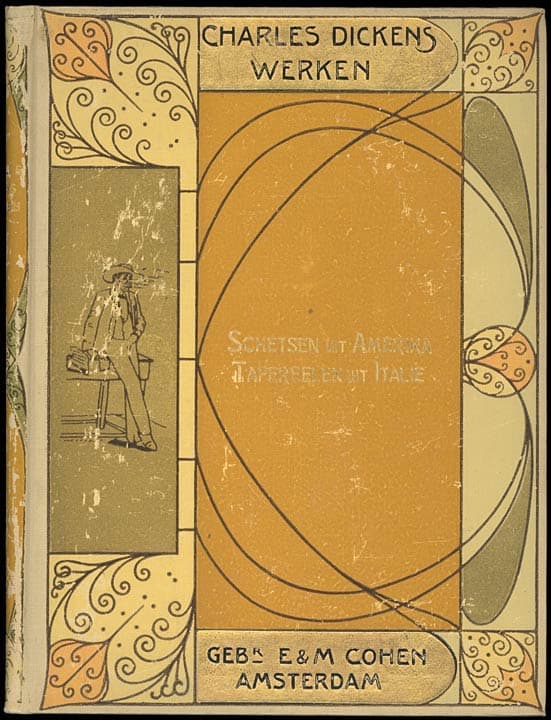
Charles Dickens's 'The Chimes' (1844) arrives a year after 'A Christmas Carol' cemented his reputation as the era's most passionate social voice. Written in Genoa during a period of personal exile, this New Year's tale follows Trotty Veck, a weary ticket porter whose faith in humanity has eroded under the weight of poverty and neglect. When the church bells of a New Year's Eve descend into supernatural waking visions, Trotty is forced to confront what society becomes when it abandons its most vulnerable members. The ghosts show him a London of the future: a city where children starve, women are driven to desperation, and the poor are silenced by those who profit from their suffering. This is Dickens at his most polemical and visceral, using spectral intervention not to teach generosity toward individuals but to indict an entire system. Yet hope endures. The novel culminates in a vision of what becomes possible when humanity remembers its shared obligation to one another. Darker and more politically radical than its predecessor, 'The Chimes' is a roaring defense of the poor against a society that would rather not see them.
Editions

Link to this book
Add a free, dofollow link to Lex on your blog, forum, syllabus, or reading list.

<a href="https://lex-books.com/book/kerkklokken-40a02866-d415-4176-b350-c5d00171683f"><img src="https://lex-books.com/badges/read-on-lex.svg" alt="Read Kerkklokken by Charles Dickens free on Lex" width="160" height="40"></a>[](https://lex-books.com/book/kerkklokken-40a02866-d415-4176-b350-c5d00171683f)[url=https://lex-books.com/book/kerkklokken-40a02866-d415-4176-b350-c5d00171683f][img]https://lex-books.com/badges/read-on-lex.svg[/img][/url]Read Kerkklokken by Charles Dickens free on Lex: https://lex-books.com/book/kerkklokken-40a02866-d415-4176-b350-c5d00171683fCite this book
Reading this edition for a paper or guide? Copy a citation.
Dickens, Charles. Kerkklokken. Lex, lex-books.com/book/kerkklokken-40a02866-d415-4176-b350-c5d00171683f.Dickens, C. (n.d.). Kerkklokken. Lex. https://lex-books.com/book/kerkklokken-40a02866-d415-4176-b350-c5d00171683fDickens, Charles. Kerkklokken. Lex. https://lex-books.com/book/kerkklokken-40a02866-d415-4176-b350-c5d00171683f.