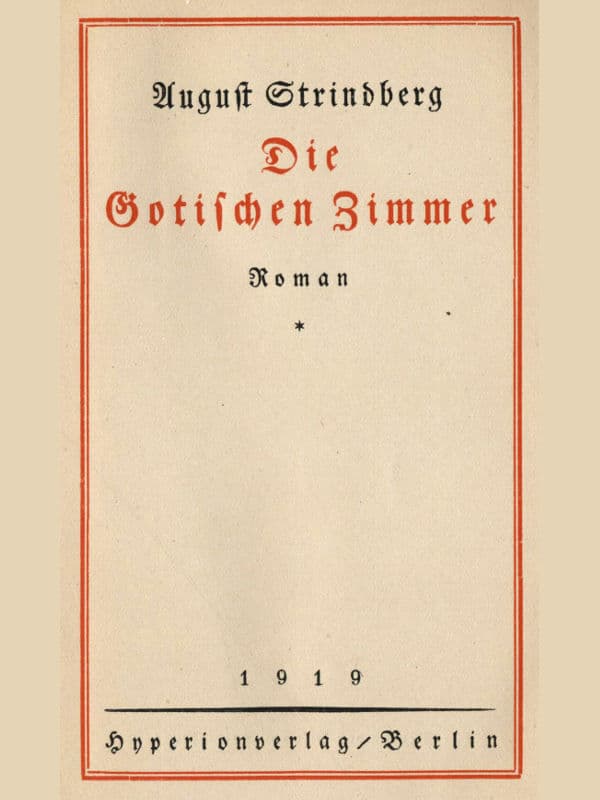
Inferno; Legenden
1897
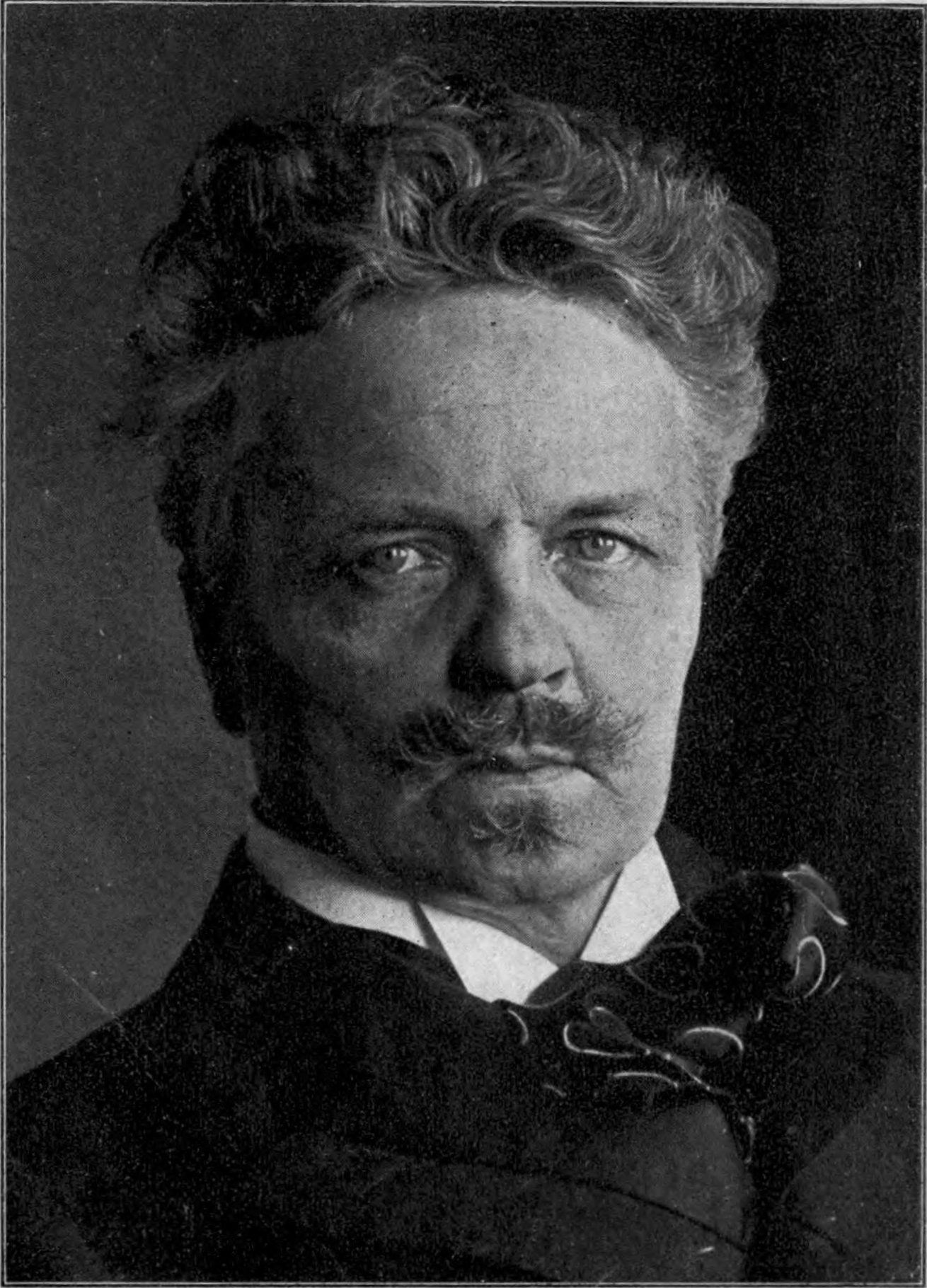
Inferno; Legenden, published in 1897 by August Strindberg, is an autobiographical fiction that intertwines philosophical drama with existential themes. The narrative features allegorical figures such as God, Lucifer, Adam, and Eve, exploring the creation of the world and the moral conflicts between good and evil. Strindberg's work delves into the human condition, questioning reality and the pursuit of knowledge amidst despair and temptation. This unique blend of personal reflection and allegory marks it as a significant contribution to 19th-century literature.
Editions
X-Ray
“How sweet is life after all, when the mist of a mild intoxication casts its veil over the miseries of existence.””
— August Strindberg
“Must I be humbled in order to be lifted up, made low in order to be raised high?””
— August Strindberg
“La oss derfor lide uten håp om en eneste varig glede i dette livet siden vi, mine brødre, allerede er i helvete.””
— August Strindberg
“If you humble yourself before men, you will arouse their pride, for all will think themselves, no matter how guilty they may be, better than you.Well, then, is one to humble oneself before God? But is it not disgraceful to degrade the Highest by conceiving of Him as the overseer of a slave plantation?Shall we pray? What! Presume to try to alter the will and decision of the Eternal by flattery and crawling? I look for God and find the Devil! That is my destiny! I have repented and reformed myself.I renounce alcohol, and come about nine o'clock soberly home to drink milk. The room is filled with all kinds of demons, who drag me out of bed and try to stifle me under the blankets. But if I come home at midnight intoxicated, I sleep like an angel and wake up strong as a young god, and ready to work like a galley-slave.I live a chaste life, and am troubled by unwholesome dreams. I accustom myself to think only good of my friends, entrust my secrets and my money to them, and am betrayed. If I show offence at such treachery, it is always I who am punished.””
— August Strindberg
“Strange "circulus vitiosus," which I already foresaw in my twentieth year, when I wrote my drama Meister Olaf, and which has constituted the tragedy of my life. Why be tormented during thirty years in order to be taught by experience what one had already foreboded? When young I was sincerely pious, and you have made me a freethinker. Out of the freethinker you have made an atheist, and out of the atheist a religious man. Inspired by humanitarian ideas, I have been a herald of socialism. Five years later, you have shown me the absurdity of socialism; you have made all my prophecies futile. And supposing I become again religious, I am sure that, in another ten years, you will reduce religion to an absurdity.Ah! what a game the gods play with us poor mortals! And therefore, in the most tormented moments of life, we too can laugh with self-conscious raillery.How is it that you wish us to take earnestly what is nothing but a huge bad joke?For whom was Christ the Saviour? Consider the most Christian of all Christians, our pious Scandinavians, these amæmic, wretched, timid creatures, who look as though they were possessed. They seem to carry an evil spirit in their hearts, and observe how most of their leaders have ended in prison as criminals. Why has their master delivered them over to the enemy? Is religion a punishment, and Christ an Avenger?””
— August Strindberg
“It is then no acoustic hallucination from which I suffer; everywhere there are plots, I say to myself. But one day, as I go by chance into a shoemaker's shop, the noise instantaneously breaks out. It is no plot, then! It is the Devil himself! Hunted from hotel to hotel, pursued everywhere by electric wires even to my bed, attacked everywhere by electric currents which lift me from my chair, or out of bed, I deliberately set about planning my suicide. The weather is terrible, and in my depression I seek distraction in drinking bouts with friends.””
— August Strindberg
“Who gives me the strength to suffer? Who denies me the power, and delivers me over to torments? Is it He, the Lord of life and death, Whose wrath I have provoked, when, influenced by the pamphlet The Joy of Dying, I tried to die, and considered myself already ripe for eternal life? Am I Phlegyas doomed to the pains of Tartarus for his pride, or Prometheus, who, because he revealed the secret of the powers to mortals, was torn by the vulture?(While I am writing this, I think of the scene in the sufferings of Christ when the soldiers spit in His face, some buffet Him and others strike Him with rods and say to Him, "Tell us, who is he that smote thee?"Perhaps my old companions in Stockholm remember that orgy when the author of this book played the rôle of the soldier?)Who has struck thee? A question without an answer. Doubt, uncertainty, mystery”
— August Strindberg
“Hell? But I have been brought up in the profoundest contempt of the doctrine of hell, as one consigned to the rubbish-heap of out-worn ideas. And yet I cannot deny the fact”
— August Strindberg
“In the evening I roam about the gloomy Quarter, and cross the St. Martin's canal. It is as dark as the grave, and seems exactly made to drown oneself in. I remain standing at the corner of Rue Alibert. Why Alibert? Who is he? Was not the graphite which the chemist found in my sulphur called Alibert-graphite? Well, what of it? Strangely enough, an impression of something not yet explained remains in my mind. Then I enter Rue Dieu. Why "Dieu," when the Republic has washed its hands of God? Then Rue Beaurepaire”
— August Strindberg
Link to this book
Add a free, dofollow link to Lex on your blog, forum, syllabus, or reading list.

<a href="https://lex-books.com/book/inferno-legenden-c7df6814-078d-4ef6-a88a-7dbdf6f343e6"><img src="https://lex-books.com/badges/read-on-lex.svg" alt="Read Inferno; Legenden by August Strindberg free on Lex" width="160" height="40"></a>[](https://lex-books.com/book/inferno-legenden-c7df6814-078d-4ef6-a88a-7dbdf6f343e6)[url=https://lex-books.com/book/inferno-legenden-c7df6814-078d-4ef6-a88a-7dbdf6f343e6][img]https://lex-books.com/badges/read-on-lex.svg[/img][/url]Read Inferno; Legenden by August Strindberg free on Lex: https://lex-books.com/book/inferno-legenden-c7df6814-078d-4ef6-a88a-7dbdf6f343e6Cite this book
Reading this edition for a paper or guide? Copy a citation.
Strindberg, August. Inferno; Legenden. Lex, lex-books.com/book/inferno-legenden-c7df6814-078d-4ef6-a88a-7dbdf6f343e6.Strindberg, A. (1897). Inferno; Legenden. Lex. https://lex-books.com/book/inferno-legenden-c7df6814-078d-4ef6-a88a-7dbdf6f343e6Strindberg, August. Inferno; Legenden. Lex. https://lex-books.com/book/inferno-legenden-c7df6814-078d-4ef6-a88a-7dbdf6f343e6.