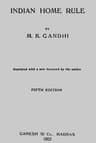
Indian Home Rule
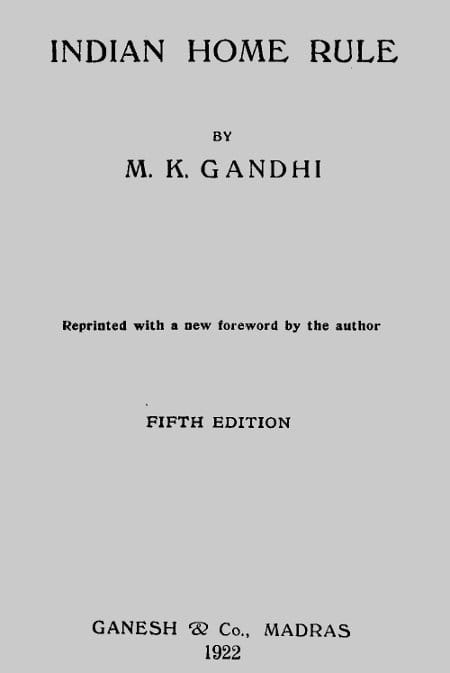
Indian Home Rule
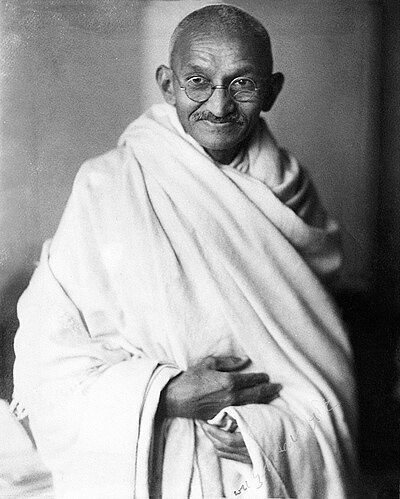
Gandhi wrote this slender volume in 1909, during a single voyage from London to South Africa, in response to the British suppression of the Indian independence movement. What began as an answer to a single question, "What is your remedy?" became something far more ambitious: a blueprint for moral and political liberation that would reshape the twentieth century. The book takes the form of a dialogue between Gandhi and a skeptical reader, making complex ideas about empire, resistance, and civilization feel intimate and urgent. Gandhi argues that true home rule cannot be merely political; it must be spiritual and ethical. He dismantles the assumption that Western civilization represents progress, exposing its foundations in exploitation and moral bankruptcy. For Gandhi, Swaraj was never about swapping one set of rulers for another; it was about reclaiming one's soul. This is the book that birthed a philosophy. Gandhi's argument that liberation begins with individual moral reform before political action would go on to inspire Martin Luther King Jr., Nelson Mandela, and virtually every non-violent movement since. It remains essential reading for anyone who believes that resistance, to be truly powerful, must also be righteous.
Editions
X-Ray
“A man, whilst he is dreaming, believes in his dream; he is undeceived only when he is awakened from his slumber.””
— Mahatma Gandhi
“In reality, there are as many religions as there are individuals.””
— Mahatma Gandhi
“पहले लोगों को मार–पीटकर गुलाम बनाया जाता था; आज लोगों को पैसे का और भोग7 का लालच देकर गुलाम बनाया जाता है।””
— Mahatma Gandhi
“We measure the universe by our own miserable foot-rule. When we are slaves, we think that the whole universe is enslaved. Because we are in an abject condition, we think that the whole of India is in that condition. As a matter of fact, it is not so, yet it is as well to impute our slavery to the whole of India. But if we bear in mind the above fact, we can see that if we become free, India is free. And in this thought you have a definition of Swaraj. It is Swaraj when we learn to rule ourselves.””
— Mahatma Gandhi
“வெவ்வேறு மதங்களைச் சேர்ந்த மக்கள் வாழ்கிறார்கள் என்பதனால் இந்தியா ஒரே தேசமில்லாமல் ஆகிவிட முடியாது. அயலவர்களின் வருகை ஒருநாட்டை அழித்துத்தான் ஆகவேண்டும் என்பதில்லை; அவர்கள் அதில் கலந்துவிடுகிறார்கள்.””
— Mahatma Gandhi
“The Kingdom of God is Within You”
— Mahatma Gandhi
“अपना कर्तव्य12 मैं कर लूँ, इसी में काम की सारी सिद्धियाँ समाई हुई हैं।””
— Mahatma Gandhi
“पैसा आदमी को दीन3 बना देता है। ऐसी दूसरी चीज दुनिया में विषय–भोग4 है। ये दोनों विषय5 विषम6 हैं। उनका डंक साँप के डंक से ज्यादा जहरीला है।””
— Mahatma Gandhi
Link to this book
Add a free, dofollow link to Lex on your blog, forum, syllabus, or reading list.

<a href="https://lex-books.com/book/indian-home-rule-5ecc9efd-61d1-44be-8393-0005b7e83376"><img src="https://lex-books.com/badges/read-on-lex.svg" alt="Read Indian Home Rule by Mahatma Gandhi free on Lex" width="160" height="40"></a>[](https://lex-books.com/book/indian-home-rule-5ecc9efd-61d1-44be-8393-0005b7e83376)[url=https://lex-books.com/book/indian-home-rule-5ecc9efd-61d1-44be-8393-0005b7e83376][img]https://lex-books.com/badges/read-on-lex.svg[/img][/url]Read Indian Home Rule by Mahatma Gandhi free on Lex: https://lex-books.com/book/indian-home-rule-5ecc9efd-61d1-44be-8393-0005b7e83376Cite this book
Reading this edition for a paper or guide? Copy a citation.
Gandhi, Mahatma. Indian Home Rule. Lex, lex-books.com/book/indian-home-rule-5ecc9efd-61d1-44be-8393-0005b7e83376.Gandhi, M. (n.d.). Indian Home Rule. Lex. https://lex-books.com/book/indian-home-rule-5ecc9efd-61d1-44be-8393-0005b7e83376Gandhi, Mahatma. Indian Home Rule. Lex. https://lex-books.com/book/indian-home-rule-5ecc9efd-61d1-44be-8393-0005b7e83376.