From the Cape to Cairo: The First Traverse of Africa from South to North
1900
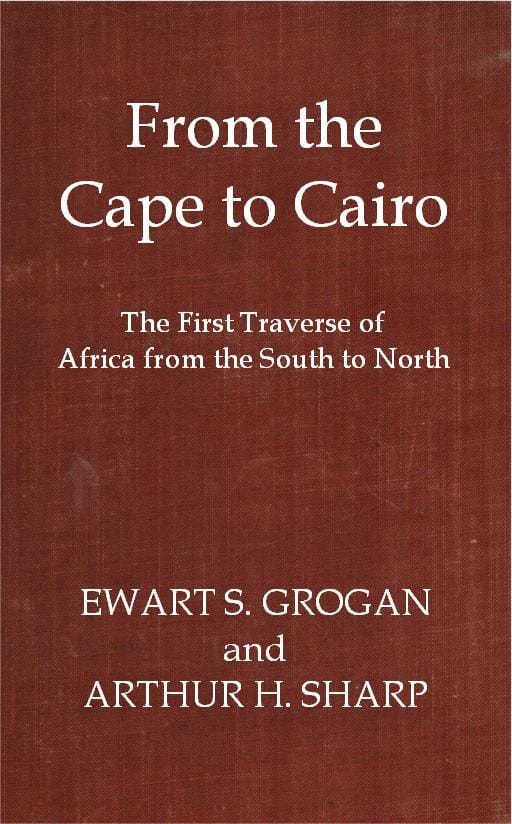
From the Cape to Cairo: The First Traverse of Africa from South to North
1900
In 1900, two explorers completed what no one had ever done: cross Africa from its southern tip to its northern shore, foot by foot, through unmapped wilderness and politically charged territories. This is their account. The journey from Cape Town to Cairo spans over 6,000 miles of savanna, desert, jungle, and mountain, through lands inhabited by hundreds of distinct peoples, each with their own languages, customs, and relationship to the colonial powers pressing inward. The narrative captures a continent on the brink of transformation, documenting landscapes and cultures that would soon be reshaped by empire. The writing blends meticulous observation with dark humor and occasional arrogance typical of its era. The explorers face brutal travel conditions, unreliable transport, dangerous wildlife, and the ever-present tensions between European ambitions and African realities. For readers drawn to tales of exploration, the history of Africa before the twentieth century's great upheavals, or the psychology of pioneering journeys, this account remains essential.
Editions
X-Ray
“You go away for a long time and return a different person - you never come all the way back.””
— Unknown
“The measure of civilized behavior is compassion.””
— Unknown
“The wish to disappear sends many travelers away. If you are thoroughly sick of being kept waiting at home or at work, travel is perfect: let other people wait for a change. Travel is a sort of revenge for having been put on hold, or having to leave messages on answering machines, not knowing your party's extension, being kept waiting all your working life - the homebound writer's irritants. But also being kept waiting is the human conditon.””
— Unknown
“I added that it was no fun to grow old, but that the compensation for it was that time turned your mental shit-detector into a highly calibrated instrument.””
— Unknown
“Travel is transition, and at its best it is a journey from home, a setting forth. I hated parachuting into a place. I needed to be able to link one place to another. One of the problems I had with travel in general was the ease and speed with which a person could be transported from the familiar to the strange, the moon shot whereby the New York office worker, say, is insinuated overnight into the middle of Africa to gape at gorillas. That was just a way of feeling foreign. The other way, going slowly, crossing national frontiers, scuttling past razor wire with my bag and my passport, was the best way of being reminded that there was a relationship between Here and There, and that a travel narrative was the story of There and Back.””
— Unknown
“What I remembered most clearly about this Jinja road was that on portions of it, for reasons no one could explain, butterflies settled in long fluffy tracts. There might be eighty feet of road carpeted by white butterflies, so many of them that if you drove too fast your tires lost their grip, and some people lost their lives, skidding on butterflies.””
— Unknown
“The Swahili word safari means journey, it has nothing to do with animals, someone ‘on safari’ is just away and unobtainable and out of touch.””
— Unknown
“That was my Malawian epiphany. Only Africans were capable of making a difference in Africa. All the others, donors and volunteers and bankers, however idealistic, were simply agents of subversion.””
— Unknown
“Maputo was much praised as a desirable destination, but it was a dreary, beat-up city of desperate people who had cowered there while war raged in the provinces for twenty-five years, destroying bridges, roads, and railways. Banks and donors and charities claimed to have had successes in Mozambique. I suspected they invented these successes to justify their existence; I saw no positive results of charitable efforts. But whenever I expressed skepticism about the economy, the unemployment, the potholes, or the petty thievery, people in Maputo said, as Africans elsewhere did, 'It was much worse before.' In many places, I knew, it was much better before. It was hard to imagine how much worse a place had to be for a broken-down city like Maputo to seem like an improvement.””
— Unknown
Link to this book
Add a free, dofollow link to Lex on your blog, forum, syllabus, or reading list.

<a href="https://lex-books.com/book/from-the-cape-to-cairo-the-first-traverse-of-africa-from-south-to-north-5588712f-dee9-436e-bc12-af90bbb6b4ee"><img src="https://lex-books.com/badges/read-on-lex.svg" alt="Read From the Cape to Cairo: The First Traverse of Africa from South to North by Unknown free on Lex" width="160" height="40"></a>[](https://lex-books.com/book/from-the-cape-to-cairo-the-first-traverse-of-africa-from-south-to-north-5588712f-dee9-436e-bc12-af90bbb6b4ee)[url=https://lex-books.com/book/from-the-cape-to-cairo-the-first-traverse-of-africa-from-south-to-north-5588712f-dee9-436e-bc12-af90bbb6b4ee][img]https://lex-books.com/badges/read-on-lex.svg[/img][/url]Read From the Cape to Cairo: The First Traverse of Africa from South to North by Unknown free on Lex: https://lex-books.com/book/from-the-cape-to-cairo-the-first-traverse-of-africa-from-south-to-north-5588712f-dee9-436e-bc12-af90bbb6b4eeCite this book
Reading this edition for a paper or guide? Copy a citation.
Unknown. From the Cape to Cairo: The First Traverse of Africa from South to North. Lex, lex-books.com/book/from-the-cape-to-cairo-the-first-traverse-of-africa-from-south-to-north-5588712f-dee9-436e-bc12-af90bbb6b4ee.Unknown (1900). From the Cape to Cairo: The First Traverse of Africa from South to North. Lex. https://lex-books.com/book/from-the-cape-to-cairo-the-first-traverse-of-africa-from-south-to-north-5588712f-dee9-436e-bc12-af90bbb6b4eeUnknown. From the Cape to Cairo: The First Traverse of Africa from South to North. Lex. https://lex-books.com/book/from-the-cape-to-cairo-the-first-traverse-of-africa-from-south-to-north-5588712f-dee9-436e-bc12-af90bbb6b4ee.