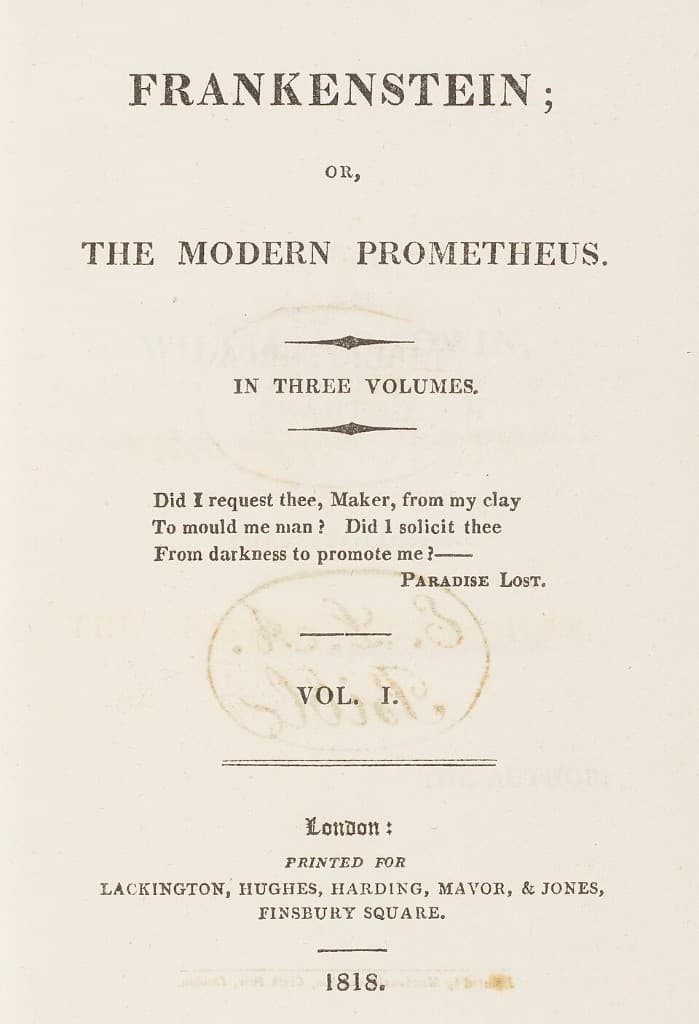
Frankenstein; or The Modern Prometheus (1818)

At eighteen, Mary Shelley imagined a story that would outlive empires. Young scientist Victor Frankenstein discovers how to breathe life into dead matter, and in a fever of creation, he builds a being from stolen limbs and galvanic spark. But the moment it opens its eyes, Victor flees in disgust, abandoning his creature to a world that recoils from him in terror. What follows is a tragedy of staggering emotional power: the Creature, intelligent and eloquent, pleads for connection, for a companion, for any scrap of acceptance and is met only with rejection. Victor refuses to bear responsibility for what he has made, and the consequences unfold with the inevitability of Greek drama. Told through layered narration, Walton's letters framing Victor's confession framing the Creature's own account, Frankenstein becomes a hall of mirrors reflecting abandonment, creation, and the terrible question of what we owe the things we bring into being. This is not a simple monster tale. It is a horror story about the violence of indifference, and a warning about the price of playing God without accepting the divine obligation that comes with creation.
Editions


Link to this book
Add a free, dofollow link to Lex on your blog, forum, syllabus, or reading list.

<a href="https://lex-books.com/book/frankenstein-or-the-modern-prometheus-1818-152165f5-092a-41ba-a571-415e29ddc3bd"><img src="https://lex-books.com/badges/read-on-lex.svg" alt="Read Frankenstein; or The Modern Prometheus (1818) by Mary Wollstonecraft Shelley free on Lex" width="160" height="40"></a>[](https://lex-books.com/book/frankenstein-or-the-modern-prometheus-1818-152165f5-092a-41ba-a571-415e29ddc3bd)[url=https://lex-books.com/book/frankenstein-or-the-modern-prometheus-1818-152165f5-092a-41ba-a571-415e29ddc3bd][img]https://lex-books.com/badges/read-on-lex.svg[/img][/url]Read Frankenstein; or The Modern Prometheus (1818) by Mary Wollstonecraft Shelley free on Lex: https://lex-books.com/book/frankenstein-or-the-modern-prometheus-1818-152165f5-092a-41ba-a571-415e29ddc3bdCite this book
Reading this edition for a paper or guide? Copy a citation.
Shelley, Mary Wollstonecraft. Frankenstein; or The Modern Prometheus (1818). Lex, lex-books.com/book/frankenstein-or-the-modern-prometheus-1818-152165f5-092a-41ba-a571-415e29ddc3bd.Shelley, M. W. (n.d.). Frankenstein; or The Modern Prometheus (1818). Lex. https://lex-books.com/book/frankenstein-or-the-modern-prometheus-1818-152165f5-092a-41ba-a571-415e29ddc3bdShelley, Mary Wollstonecraft. Frankenstein; or The Modern Prometheus (1818). Lex. https://lex-books.com/book/frankenstein-or-the-modern-prometheus-1818-152165f5-092a-41ba-a571-415e29ddc3bd.