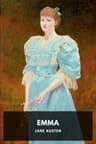
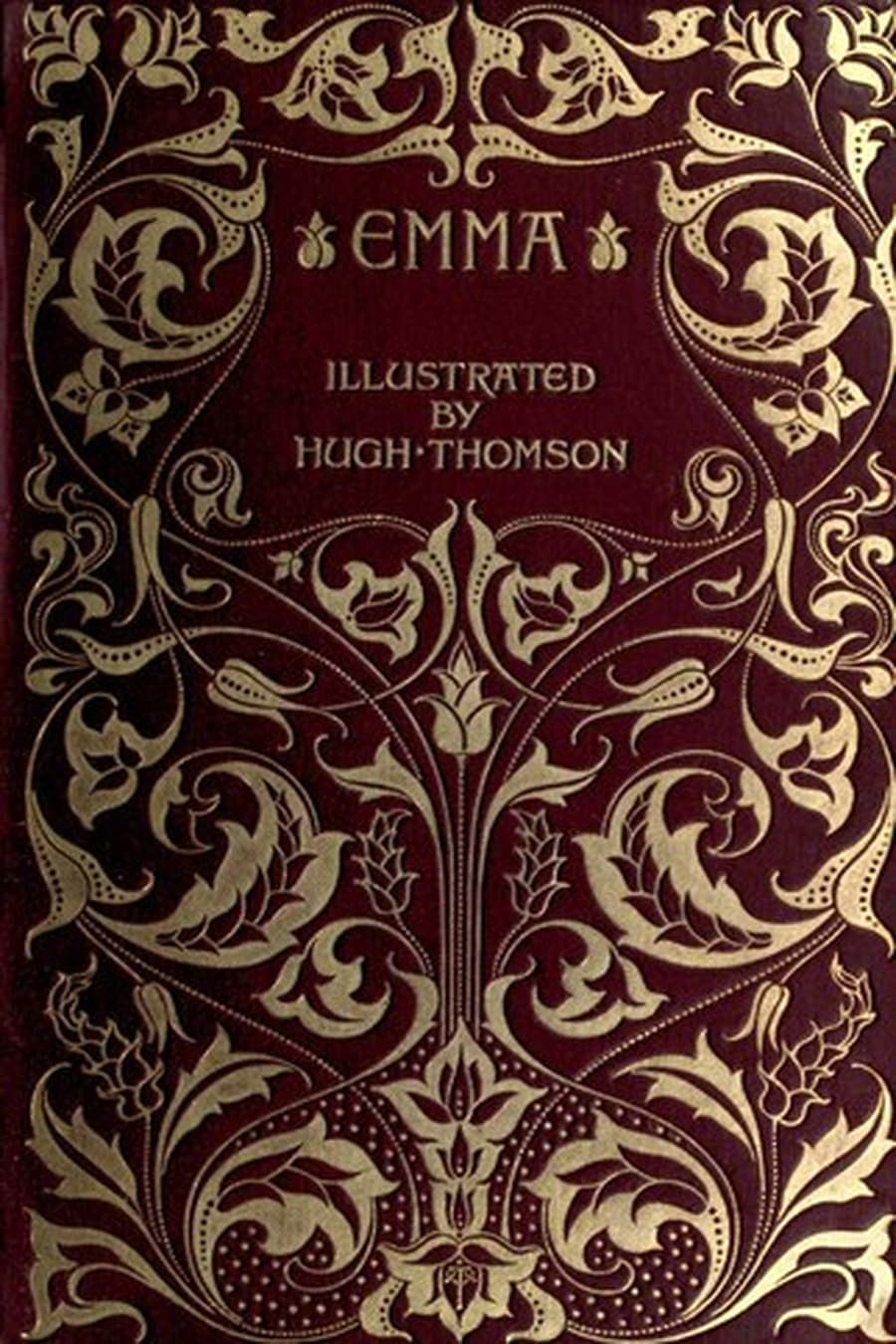
Emma
1815
The opening line tells you everything: Emma Woodhouse "has lived nearly twenty-one years in the world with very little to distress or vex her." That comfortable insulation is about to crack. Emma decides she has a genius for matchmaking and sets about rearranging the lives of Highbury's residents, particularly her sweet, malleable friend Harriet Smith. What follows is a dazzling display of self-deception, Emma sees herself as a shrewd observer of human nature while remaining utterly blind to her own heart, her own class prejudices, and the damage her well-intentioned meddling inflicts. Jane Austen, who confessed her heroine was "no one but myself will much like," created something radical: a protagonist whose very intelligence makes her blindness not just tolerable but compulsive. The village of Highbury becomes a stage for comedy of manners at its finest, each character trapped by expectations of class and propriety, by pride, and by the terrible human tendency to mistake imagination for insight. When Emma is finally forced to see herself clearly, the humiliation is earned and the wit has teeth.
Editions

X-Ray
“If I loved you less, I might be able to talk about it more.””
— Jane Austen
“Silly things do cease to be silly if they are done by sensible people in an impudent way.””
— Jane Austen
“I may have lost my heart, but not my self-control. ””
— Jane Austen
“I cannot make speeches, Emma...If I loved you less, I might be able to talk about it more. But you know what I am. You hear nothing but truth from me. I have blamed you, and lectured you, and you have borne it as no other woman in England would have borne it.””
— Jane Austen
“I always deserve the best treatment because I never put up with any other.””
— Jane Austen
“Seldom, very seldom, does complete truth belong to any human disclosure; seldom can it happen that something is not a little disguised or a little mistaken.””
— Jane Austen
“There are people, who the more you do for them, the less they will do for themselves.””
— Jane Austen
“One half of the world cannot understand the pleasures of the other.””
— Jane Austen
“You must be the best judge of your own happiness.””
— Jane Austen
Link to this book
Add a free, dofollow link to Lex on your blog, forum, syllabus, or reading list.

<a href="https://lex-books.com/book/emma-eb68d374-fb43-43bf-8c19-f1e543c8e211"><img src="https://lex-books.com/badges/read-on-lex.svg" alt="Read Emma by Jane Austen free on Lex" width="160" height="40"></a>[](https://lex-books.com/book/emma-eb68d374-fb43-43bf-8c19-f1e543c8e211)[url=https://lex-books.com/book/emma-eb68d374-fb43-43bf-8c19-f1e543c8e211][img]https://lex-books.com/badges/read-on-lex.svg[/img][/url]Read Emma by Jane Austen free on Lex: https://lex-books.com/book/emma-eb68d374-fb43-43bf-8c19-f1e543c8e211Cite this book
Reading this edition for a paper or guide? Copy a citation.
Austen, Jane. Emma. Lex, lex-books.com/book/emma-eb68d374-fb43-43bf-8c19-f1e543c8e211.Austen, J. (1815). Emma. Lex. https://lex-books.com/book/emma-eb68d374-fb43-43bf-8c19-f1e543c8e211Austen, Jane. Emma. Lex. https://lex-books.com/book/emma-eb68d374-fb43-43bf-8c19-f1e543c8e211.
![Love and Freindship [sic]](/_next/image?url=https%3A%2F%2Fd3b2n8gj62qnwr.cloudfront.net%2FCOVERS%2Fgutenberg_covers75k%2Febook-1212.png&w=3840&q=75)