Das Bildnis Des Dorian Gray
1890
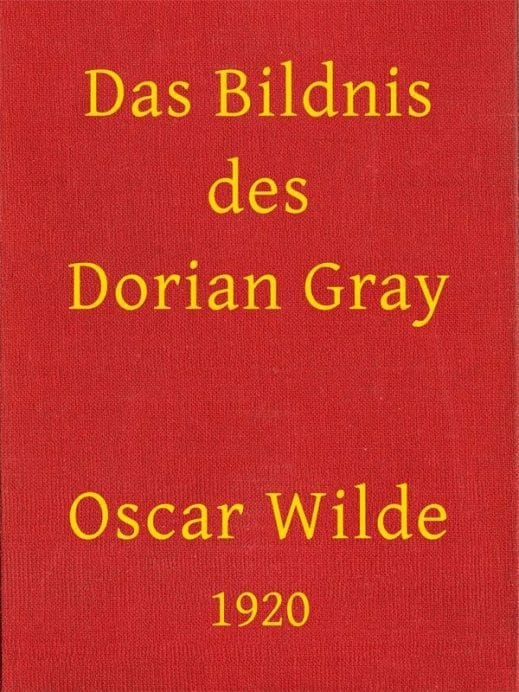
Das Bildnis Des Dorian Gray
1890
Translated by Richard Zoozmann
Wilde's only novel begins with a painter capturing the face of a young man so beautiful that Basil Hallward swears he cannot exhibit the portrait, for it reveals too much of his own soul. Into the studio walks Lord Henry Wotton, whose silky philosophy convinces Dorian Gray that beauty is the only thing worth pursuing, that youth is the only truth, that consequences are for other people. When Dorian wishes aloud that he could remain forever young while the portrait bears the weight of his sins, the wish is granted. What follows is a descent into every excess, every cruelty, every dissipation London society can offer. Yet Dorian's face stays perfect. The portrait, locked away, becomes a map of damnation. The novel operates as both Gothic horror and sharp philosophical meditation. Wilde understood something essential: that we all have a portrait somewhere, some visible truth we spend our lives hiding. Dorian's tragedy is that his hiding place is literal, and the image only he can see grows monstrous while he remains radiant. The prose simmers with Wilde's famous wit, but beneath the epigrams lies genuine darkness. This is a book about what we trade our souls for, and whether the trade is even visible to us.
Editions
X-Ray
“The books that the world calls immoral are books that show the world its own shame.””
— Oscar Wilde
“You will always be fond of me. I represent to you all the sins you never had the courage to commit.””
— Oscar Wilde
“Experience is merely the name men gave to their mistakes.””
— Oscar Wilde
“Those who find ugly meanings in beautiful things are corrupt without being charming. This is a fault. Those who find beautiful meanings in beautiful things are the cultivated. For these there is hope. They are the elect to whom beautiful things mean only Beauty. There is no such thing as a moral or an immoral book. Books are well written, or badly written. That is all.””
— Oscar Wilde
“To define is to limit.””
— Oscar Wilde
“Nowadays people know the price of everything and the value of nothing.””
— Oscar Wilde
“I don't want to be at the mercy of my emotions. I want to use them, to enjoy them, and to dominate them.””
— Oscar Wilde
“Behind every exquisite thing that existed, there was something tragic.””
— Oscar Wilde
“The only way to get rid of temptation is to yield to it.””
— Oscar Wilde
Link to this book
Add a free, dofollow link to Lex on your blog, forum, syllabus, or reading list.

<a href="https://lex-books.com/book/das-bildnis-des-dorian-gray-2413393e-8beb-4d8a-b7a1-0db182183275"><img src="https://lex-books.com/badges/read-on-lex.svg" alt="Read Das Bildnis Des Dorian Gray by Oscar Wilde free on Lex" width="160" height="40"></a>[](https://lex-books.com/book/das-bildnis-des-dorian-gray-2413393e-8beb-4d8a-b7a1-0db182183275)[url=https://lex-books.com/book/das-bildnis-des-dorian-gray-2413393e-8beb-4d8a-b7a1-0db182183275][img]https://lex-books.com/badges/read-on-lex.svg[/img][/url]Read Das Bildnis Des Dorian Gray by Oscar Wilde free on Lex: https://lex-books.com/book/das-bildnis-des-dorian-gray-2413393e-8beb-4d8a-b7a1-0db182183275Cite this book
Reading this edition for a paper or guide? Copy a citation.
Wilde, Oscar. Das Bildnis Des Dorian Gray. Lex, lex-books.com/book/das-bildnis-des-dorian-gray-2413393e-8beb-4d8a-b7a1-0db182183275.Wilde, O. (1890). Das Bildnis Des Dorian Gray. Lex. https://lex-books.com/book/das-bildnis-des-dorian-gray-2413393e-8beb-4d8a-b7a1-0db182183275Wilde, Oscar. Das Bildnis Des Dorian Gray. Lex. https://lex-books.com/book/das-bildnis-des-dorian-gray-2413393e-8beb-4d8a-b7a1-0db182183275.