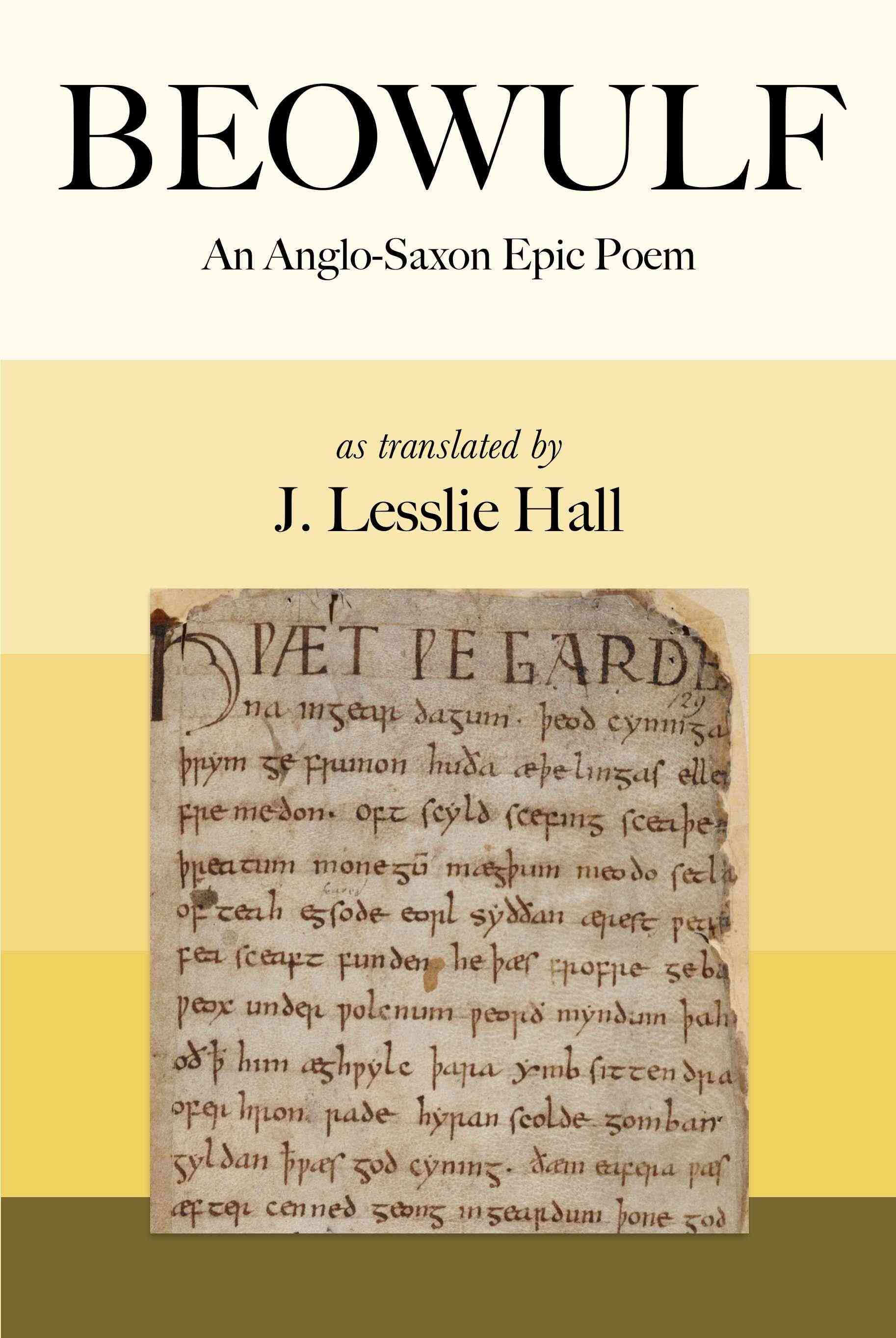
Beowulf: An Anglo-Saxon Epic Poem
1000
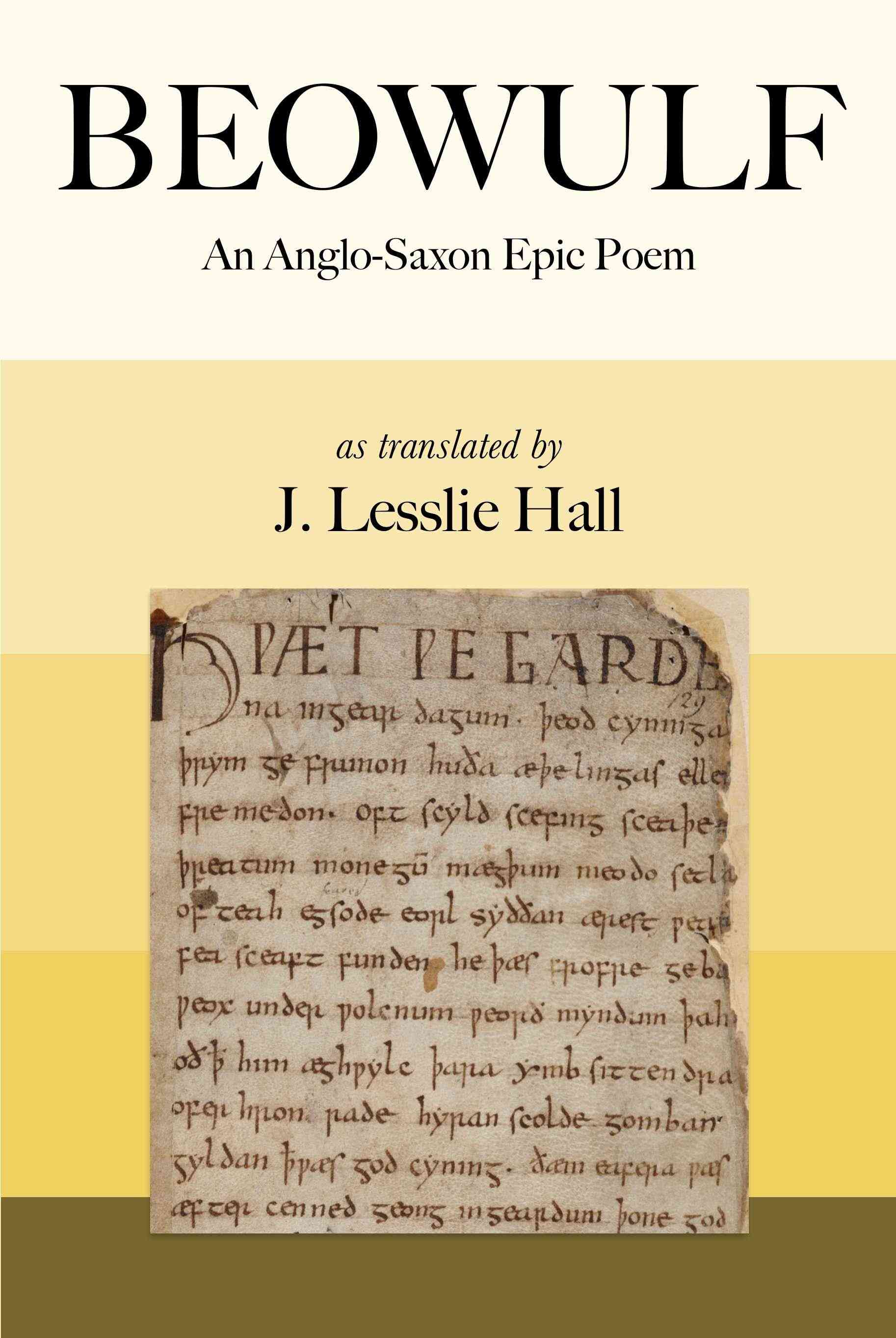
Beowulf: An Anglo-Saxon Epic Poem
1000
Translated by J. Lesslie (John Lesslie) Hall
The oldest surviving major epic in English, Beowulf thunders across a thousand years with the raw power of its alliterative verse and the haunting beauty of its kennings. Written by an unknown poet around 1000 AD, it drops us into a world of mead-halls, dragon-hoards, and monsters that are part supernatural terror, part manifestation of a civilization's deepest fears. When the great hall Heorot is besieged by the demon Grendel, a young warrior named Beowulf sails from Geatland to face the creature in single combat. What follows is a primal drama of strength versus savagery, of glory-seeking versus the humbler wisdom of serving others, and ultimately of a hero confronting his own mortality as he faces a fire-breathing dragon decades later. This is not a tale of simple triumph. It is a grief-haunted poem that understands heroism as inseparable from loss, and fame as the best that fragile mortals can hope for. For readers willing to meet it on its own terms, Beowulf offers something rare: the voice of a vanished world that sounds, across all that distance, startlingly human.
Editions

X-Ray
“It is always betterto avenge dear ones than to indulge in mourning.For every one of us, living in this worldmeans waiting for our end. Let whoever canwin glory before death. When a warrior is gone,that will be his best and only bulwark.””
— Unknown
“Behaviour that's admiredis the path to power among people everywhere.””
— Unknown
“Anyone with gumption and a sharp mind will take the measure of two things: what's said and what's done.””
— Unknown
“I shall gain glory or die.””
— Unknown
“Quickly, the dragon came at him, encouragedAs Beowulf fell back; its breath flared,And he suffered, wrapped around in swirlingFlames -- a king, before, but nowA beaten warrior. None of his comradesCame to him, helped him, his brave and nobleFollowers; they ran for their lives, fledDeep in a wood. And only one of themRemained, stood there, miserable, remembering,As a good man must, what kinship should mean.””
— Unknown
“Fate will unwind as it must!””
— Unknown
“That was their way, their heathenish hope; deep in their hearts they remembered hell.””
— Unknown
“Fate goes ever as fate must.””
— Unknown
“Meanwhile, the swordbegan to wilt into gory icicles, to slather and thaw. It was a wonderful thing, the way it all melted as ice melts when the Father eases the fetters off the frostand unravels the water-ropes. He who wields powerover time and tide: He is the true Lord.””
— Unknown
About Beowulf: An Anglo-Saxon Epic Poem
Chapter Summaries
- I
- The poem opens by introducing the glorious lineage of the Spear-Danes, led by the legendary King Scyld Scefing. After a life of bringing honor and tribute to his people, Scyld dies and is given a magnificent, mysterious funeral at sea, his body placed on a treasure-laden ship and set adrift.
- II
- Scyld's lineage continues through his son Beowulf and grandson Healfdene, leading to King Hrothgar, who builds the grand mead-hall Heorot. However, the hall's joyous sounds enrage Grendel, a monstrous descendant of Cain, who begins a reign of terror.
- III
- Grendel attacks Heorot after the Danes fall asleep, seizing and devouring thirty warriors. For twelve long years, Hrothgar and his people suffer endless agony, unable to defeat the monster, and resort to pagan prayers as they lack knowledge of the true God.
Key Themes
- Heroism and Valor
- Beowulf embodies the ideal Anglo-Saxon hero, demonstrating extraordinary physical strength, courage, and a willingness to face overwhelming odds. His deeds, from defeating sea-monsters to slaying Grendel and the dragon, are constantly celebrated as the pinnacle of heroic achievement, driven by a desire for glory and protection of his people.
- Fate (Wyrd) vs. Free Will
- The poem frequently references 'Weird' (Fate) as a powerful, often predetermined force guiding events and individual destinies. However, characters, particularly Beowulf, also make conscious choices to act, fight, and seek glory, suggesting a complex interplay where human agency can influence or fulfill a fated path, especially when aided by divine favor.
- Good vs. Evil
- The narrative clearly delineates forces of good and evil. Grendel, his mother, and the dragon represent chaotic, destructive evil, cursed by God and hostile to human civilization. Beowulf, often seen as divinely sent, is the champion of good, restoring order and safety to the human world by vanquishing these dark entities.
Characters
- Beowulf(protagonist)
- A Geatish hero of immense strength and valor, who comes to the aid of the Danes and later becomes king of his own people, ultimately dying in battle against a dragon.
- Hrothgar(supporting)
- The aged King of the Danes (Scyldings) who builds the great mead-hall Heorot, but is tormented for years by the monster Grendel.
- Grendel(antagonist)
- A monstrous descendant of Cain who attacks Hrothgar's mead-hall Heorot for twelve years, driven by hatred of human joy.
- Grendel's Mother(antagonist)
- A female monster, also of Cain's lineage, who seeks vengeance for her son Grendel's death by attacking Heorot.
- Wiglaf(supporting)
- A young Geatish warrior and kinsman of Beowulf, who remains loyal and aids Beowulf in his final, fatal battle with the dragon.
- Higelac(supporting)
- King of the Geats, Beowulf's uncle and liegelord, who generously rewards Beowulf for his deeds.
Link to this book
Add a free, dofollow link to Lex on your blog, forum, syllabus, or reading list.

<a href="https://lex-books.com/book/beowulf-an-anglo-saxon-epic-poem-fe1b28f7-78c9-4efb-b48c-78f84da0d0dd"><img src="https://lex-books.com/badges/read-on-lex.svg" alt="Read Beowulf: An Anglo-Saxon Epic Poem by Unknown free on Lex" width="160" height="40"></a>[](https://lex-books.com/book/beowulf-an-anglo-saxon-epic-poem-fe1b28f7-78c9-4efb-b48c-78f84da0d0dd)[url=https://lex-books.com/book/beowulf-an-anglo-saxon-epic-poem-fe1b28f7-78c9-4efb-b48c-78f84da0d0dd][img]https://lex-books.com/badges/read-on-lex.svg[/img][/url]Read Beowulf: An Anglo-Saxon Epic Poem by Unknown free on Lex: https://lex-books.com/book/beowulf-an-anglo-saxon-epic-poem-fe1b28f7-78c9-4efb-b48c-78f84da0d0ddCite this book
Reading this edition for a paper or guide? Copy a citation.
Unknown. Beowulf: An Anglo-Saxon Epic Poem. Lex, lex-books.com/book/beowulf-an-anglo-saxon-epic-poem-fe1b28f7-78c9-4efb-b48c-78f84da0d0dd.Unknown (1000). Beowulf: An Anglo-Saxon Epic Poem. Lex. https://lex-books.com/book/beowulf-an-anglo-saxon-epic-poem-fe1b28f7-78c9-4efb-b48c-78f84da0d0ddUnknown. Beowulf: An Anglo-Saxon Epic Poem. Lex. https://lex-books.com/book/beowulf-an-anglo-saxon-epic-poem-fe1b28f7-78c9-4efb-b48c-78f84da0d0dd.