Ashcliffe Hall: A Tale of the Last Century
1870
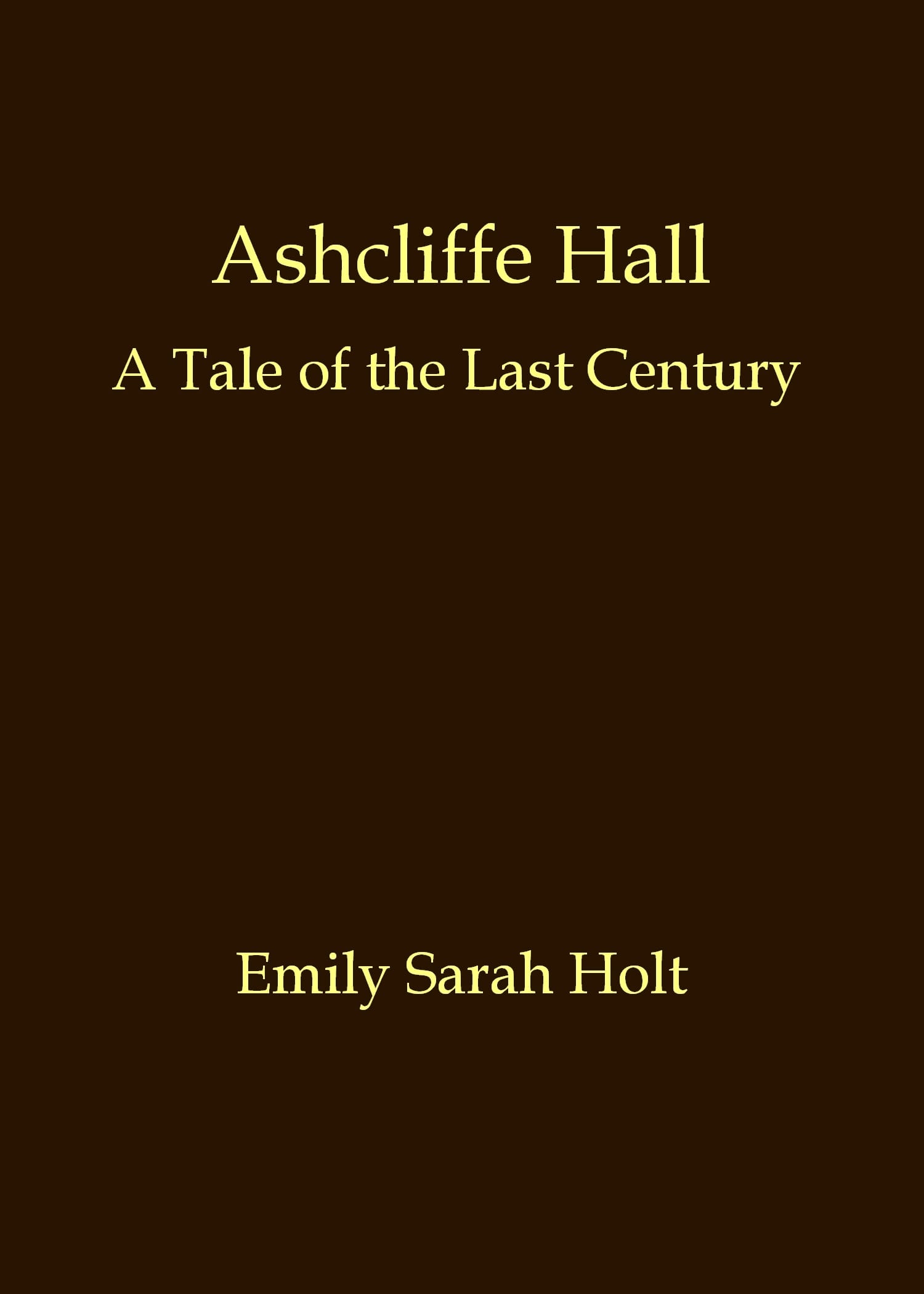
Ashcliffe Hall, 1793. The Passmore sisters move through its corridors with the quiet obedience expected of young women in England's conservative heartland, their days measured by household duties, tedious sermons, and the iron expectations of Georgian society. But beneath the polished floors and formal teas, something darker stirs. Celia and Lucy, bound by sisterly affection yet divided by their own secret rebellions, begin to notice what their household would prefer remain hidden: concealed chambers, whispered political conspiracies, and visitors whose intentions seem darker than simple social calls. Holt constructs a world where the Revolutionary terror across the Channel has begun to bleed into English country life, turning loyal families into nests of suspicion and forcing the Passmore women to question exactly where their loyalties should lie. The novel operates as both a family drama and a subtle political thriller, revealing how the private spheres of English manor houses were never as insulated from history's upheavals as they pretended. For readers who appreciate the quiet dread of Radcliffe or the social precision of Austen, this novel offers a darker, more suspicious vision of England's provincial past.
Editions
Link to this book
Add a free, dofollow link to Lex on your blog, forum, syllabus, or reading list.

<a href="https://lex-books.com/book/ashcliffe-hall-a-tale-of-the-last-century-0ca8497a-0840-4eea-9eab-743e206bbd61"><img src="https://lex-books.com/badges/read-on-lex.svg" alt="Read Ashcliffe Hall: A Tale of the Last Century by Emily Sarah Holt free on Lex" width="160" height="40"></a>[](https://lex-books.com/book/ashcliffe-hall-a-tale-of-the-last-century-0ca8497a-0840-4eea-9eab-743e206bbd61)[url=https://lex-books.com/book/ashcliffe-hall-a-tale-of-the-last-century-0ca8497a-0840-4eea-9eab-743e206bbd61][img]https://lex-books.com/badges/read-on-lex.svg[/img][/url]Read Ashcliffe Hall: A Tale of the Last Century by Emily Sarah Holt free on Lex: https://lex-books.com/book/ashcliffe-hall-a-tale-of-the-last-century-0ca8497a-0840-4eea-9eab-743e206bbd61Cite this book
Reading this edition for a paper or guide? Copy a citation.
Holt, Emily Sarah. Ashcliffe Hall: A Tale of the Last Century. Lex, lex-books.com/book/ashcliffe-hall-a-tale-of-the-last-century-0ca8497a-0840-4eea-9eab-743e206bbd61.Holt, E. S. (1870). Ashcliffe Hall: A Tale of the Last Century. Lex. https://lex-books.com/book/ashcliffe-hall-a-tale-of-the-last-century-0ca8497a-0840-4eea-9eab-743e206bbd61Holt, Emily Sarah. Ashcliffe Hall: A Tale of the Last Century. Lex. https://lex-books.com/book/ashcliffe-hall-a-tale-of-the-last-century-0ca8497a-0840-4eea-9eab-743e206bbd61.