Anne Page
1909
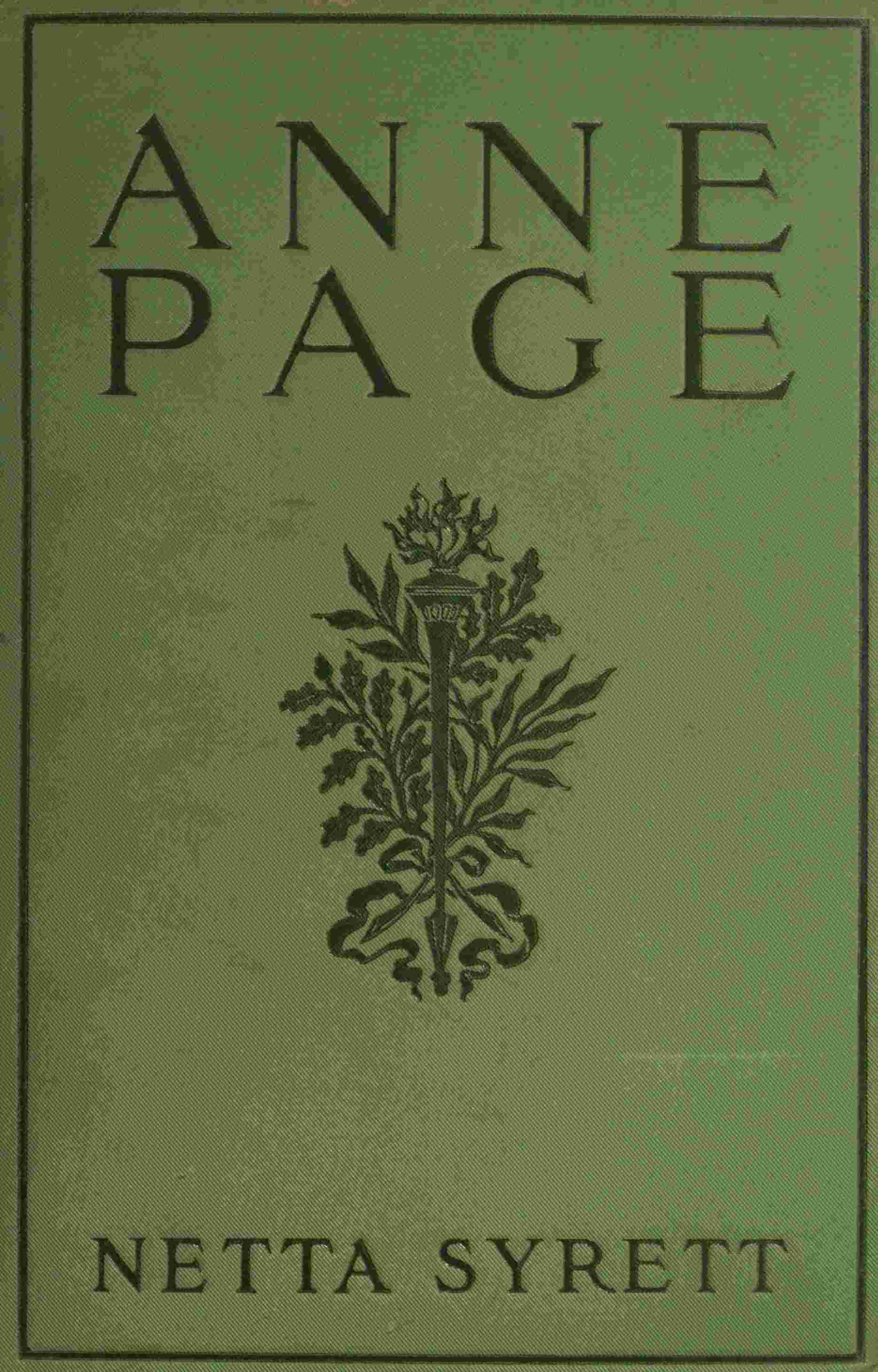
At forty-three, Anne Page has learned to inhabit her own beauty, a warmth that has deepened while her youth has softened into something more interesting. The novel opens in the garden at Fairholme Court as twilight settles over the hedges, and Anne prepares for dinner guests: the local vicar and his wife, and François Fontenelle, an old friend whose arrival carries the weight of unspoken years. There is something delicious about these evenings, these small performances of charm and connection that Anne has perfected. But François sees her still as she was, and his seeing awakens something in her, a recognition of the gap between who she was and who she has become. This is a novel of quiet reverberations, where a single evening crackles with memory and the tender ache of paths not taken. Syrett writes with sharp affection for her protagonist, capturing the particular loneliness of a woman who has not stopped wanting, even as she has learned to want quietly. For readers who cherish the interiors of Henry James or the delicate dissections of social life found in early twentieth-century women's fiction.
Editions
Link to this book
Add a free, dofollow link to Lex on your blog, forum, syllabus, or reading list.

<a href="https://lex-books.com/book/anne-page-49710894-8ec0-4ffa-9cf3-4d9f0a3cd02c"><img src="https://lex-books.com/badges/read-on-lex.svg" alt="Read Anne Page by Netta Syrett free on Lex" width="160" height="40"></a>[](https://lex-books.com/book/anne-page-49710894-8ec0-4ffa-9cf3-4d9f0a3cd02c)[url=https://lex-books.com/book/anne-page-49710894-8ec0-4ffa-9cf3-4d9f0a3cd02c][img]https://lex-books.com/badges/read-on-lex.svg[/img][/url]Read Anne Page by Netta Syrett free on Lex: https://lex-books.com/book/anne-page-49710894-8ec0-4ffa-9cf3-4d9f0a3cd02cCite this book
Reading this edition for a paper or guide? Copy a citation.
Syrett, Netta. Anne Page. Lex, lex-books.com/book/anne-page-49710894-8ec0-4ffa-9cf3-4d9f0a3cd02c.Syrett, N. (1909). Anne Page. Lex. https://lex-books.com/book/anne-page-49710894-8ec0-4ffa-9cf3-4d9f0a3cd02cSyrett, Netta. Anne Page. Lex. https://lex-books.com/book/anne-page-49710894-8ec0-4ffa-9cf3-4d9f0a3cd02c.