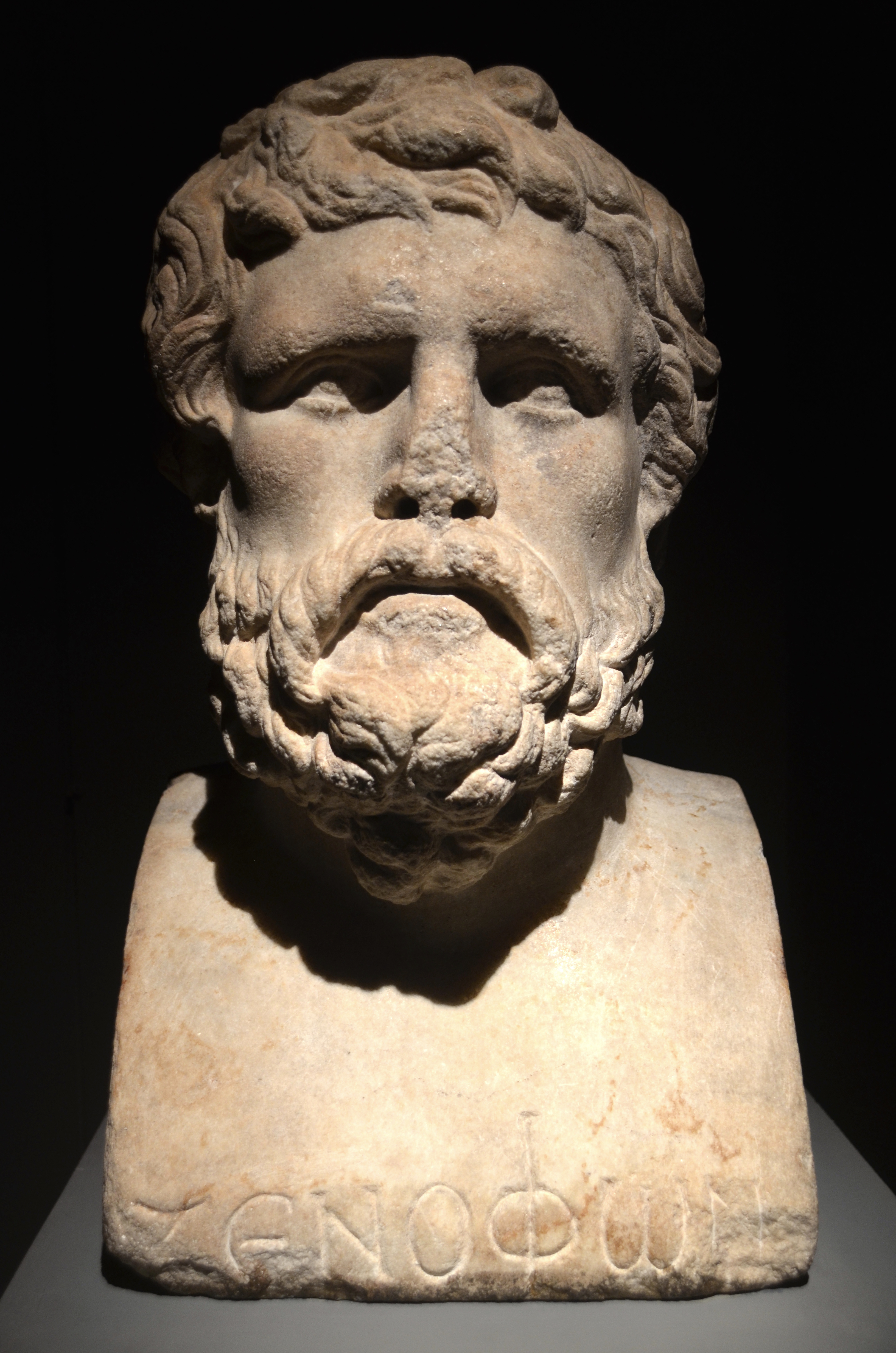
Anabasis
1859
Ten thousand Greek mercenaries marched into Persia to install a prince on his brother's throne. When that prince fell at the Battle of Cunaxa, the Greeks found themselves trapped deep in enemy territory, their Persian allies turned hostile, and their leaders betrayed and executed. What followed was an extraordinary retreat: a winter march across mountains and deserts, through hostile terrain, pursued by satraps and warlike tribes, starving and freezing, yet refusing to surrender. Young Xenophon, an Athenian aristocrat who had joined the expedition seeking glory, rose to help lead the survivors home. More than a military adventure, Anabasis is a searching examination of leadership under impossible pressure, of men discovering what they're capable of when everything goes wrong, and of the fragile bonds that hold an army together when survival demands everything. Written in the fourth century BC, it remains the oldest surviving first-person narrative of war, a foundational text that has shaped military thought from Alexander to the present day.
Editions
X-Ray
“You are well aware that it is not numbers or strength that bring the victories in war. No, it is when one side goes against the enemy with the gods' gift of a stronger morale that their adversaries, as a rule, cannot withstand them. I have noticed this point too, my friends, that in soldiering the people whose one aim is to keep alive usually find a wretched and dishonorable death, while the people who, realizing that death is the common lot of all men, make it their endeavour to die with honour, somehow seem more often to reach old age and to have a happier life when they are alive. These are facts which you too should realize (our situation demands it) and should show that you yourselves are brave men and should call on the rest to do likewise.””
— Xenophon
“Men, the enemy troops you can see are all that stands between us and the place we have for so long been determined to reach. We must find a way to eat them alive!””
— Xenophon
“He had put on the best-looking uniform that he could, thinking that...victory deserved the best-looking armour.””
— Xenophon
“When, in the course of their march, they came upon a friendly population, these would entertain them with exhibitions of fatted children belonging to the wealthy classes, fed up on boiled chestnuts until they were as white as white can be, of skin plump and delicate, and very nearly as broad as they were long, with their backs variegated and their breasts tattooed with patterns of all sorts of flowers. They sought after the women in the Hellenic army, and would fain have laid with them openly in broad daylight, for that was their custom. The whole community, male and female alike, were fair-complexioned and white-skinned. It was agreed that this was the most barbaric and outlandish people that they had passed through on the whole expedition, and the furthest removed from the Hellenic customs, doing in a crowd precisely what other people would prefer to do in solitude, and when alone behaving exactly as others would behave in company, talking to themselves and laughing at their own expense, standing still and then again capering about, wherever they might chance to be, without rhyme or reason, as if their sole business were to show off to the rest of the world.””
— Xenophon
“Thálatta! Thálatta!””
— Xenophon
“When, lithe of limb, she danced the Pyrrhic, loud clapping followed; and the Paphlagonians asked, "If these women fought by their side in battle?" to which they answered, "To be sure, it was the women who routed the great King, and drove him out of camp." So ended the night.””
— Xenophon
“In heaven's name, let us not wait for other people to come to us and call upon us to do great deeds. Let us instead be the first to summon the rest to a path of honor.””
— Xenophon
“I do not see how one who is an enemy of the gods can run fast enough away, nor where he can flee to escape, nor what darkness could cover him, nor how he could find a position strong enough for refuge. For all things in all places are subject to the gods, and the power of the gods extends equally over everything.””
— Xenophon
“Some one may say, are you not ashamed to be so taken in like a fool? Yes, I should be ashamed, if it had been an open enemy who had so deceived me. But, to my mind, when friend cheats friend, a deeper stain attaches to the perpetrator than to the victim of deceit.””
— Xenophon
Link to this book
Add a free, dofollow link to Lex on your blog, forum, syllabus, or reading list.

<a href="https://lex-books.com/book/anabasis-5a1ad5f8-787a-4575-96dd-94c93edc945c"><img src="https://lex-books.com/badges/read-on-lex.svg" alt="Read Anabasis by Xenophon free on Lex" width="160" height="40"></a>[](https://lex-books.com/book/anabasis-5a1ad5f8-787a-4575-96dd-94c93edc945c)[url=https://lex-books.com/book/anabasis-5a1ad5f8-787a-4575-96dd-94c93edc945c][img]https://lex-books.com/badges/read-on-lex.svg[/img][/url]Read Anabasis by Xenophon free on Lex: https://lex-books.com/book/anabasis-5a1ad5f8-787a-4575-96dd-94c93edc945cCite this book
Reading this edition for a paper or guide? Copy a citation.
Xenophon. Anabasis. Lex, lex-books.com/book/anabasis-5a1ad5f8-787a-4575-96dd-94c93edc945c.Xenophon (1859). Anabasis. Lex. https://lex-books.com/book/anabasis-5a1ad5f8-787a-4575-96dd-94c93edc945cXenophon. Anabasis. Lex. https://lex-books.com/book/anabasis-5a1ad5f8-787a-4575-96dd-94c93edc945c.