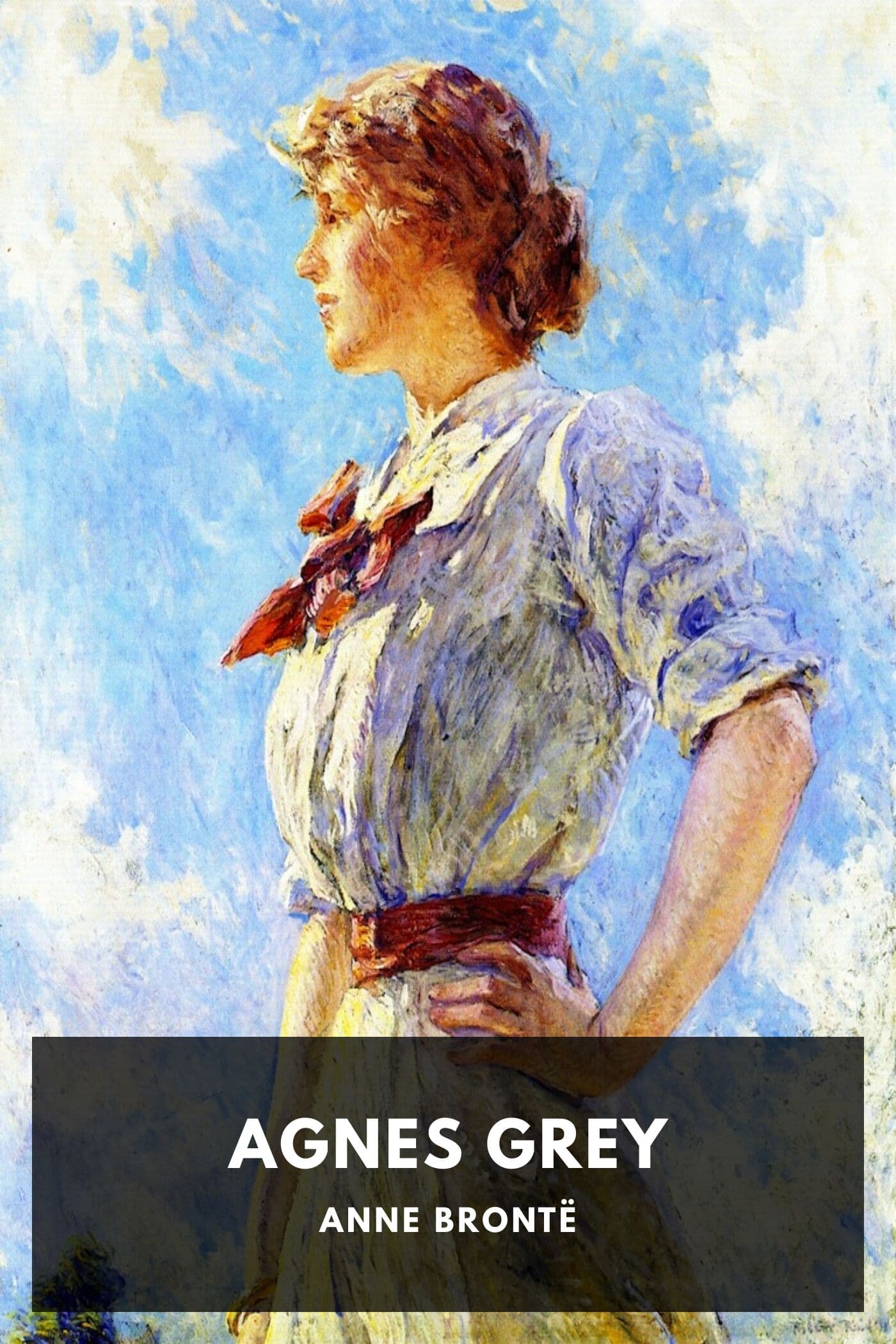
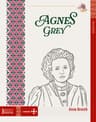
Agnes Grey
1847
Agnes Grey leaves her father's modest parsonage to become a governess, determined to prove herself useful and escape the idleness that haunts her educated but impoverished family. Her first position brings her to the Bloomfield household, where she encounters children whose spoilt cruelty she cannot correct without destroying their parents' illusion of perfection. Her second situation introduces her to the Ashby family, where the quiet tyranny of social expectation and the loneliness of her position prove even more corrosive to her spirit. Through both placements, Agnes observes the small violences of class, the impossible bind of the governess who must be neither too harsh nor too familiar, and the way women are trained to disappear into others' expectations. Anne Brontë writes with a restraint that makes its impact all the more devastating: this is no sweeping romance but rather a careful accounting of what it costs to maintain one's humanity in a world designed to diminish it. The novel endures because it captures something many female writers have felt but few have articulated so precisely: the particular loneliness of being employed but not quite belonging, educated but not quite respected, present but not quite seen.
Editions

X-Ray
“Reading is my favourite occupation, when I have leisure for it and books to read.””
— Anne Brontë
“It is foolish to wish for beauty. Sensible people never either desire it for themselves or care about it in others. If the mind be but well cultivated, and the heart well disposed, no one ever cares for the exterior.””
— Anne Brontë
“What business had I to think of one that never thought of me?””
— Anne Brontë
“I was sorry for her; I was amazed, disgusted at her heartless vanity; I wondered why so much beauty should be given to those who made so bad a use of it, and denied to some who would make it a benefit to both themselves and others.But, God knows best, I concluded. There are, I suppose, some men as vain, as selfish, and as heartless as she is, and, perhaps, such women may be useful to punish them.””
— Anne Brontë
“The ties that bind us to life are tougher than you imagine, or than any one can who has not felt how roughly they may be pulled without breaking.””
— Anne Brontë
“What a fool you must be," said my head to my heart, or my sterner to my softer self.””
— Anne Brontë
“He had not breathed a word of love, or dropped one hint of tenderness or affection, and yet I had been supremely happy. To be near him, to hear him talk as he did talk, and to feel that he thought me worthy to be so spoken to - capable of understanding and duly appreciating such discourse - was enough.””
— Anne Brontë
“No, thank you, I don't mind the rain,' I said. I always lacked common sense when taken by surprise.””
— Anne Brontë
“A little girl loves her bird--Why? Because it lives and feels; because it is helpless and harmless? A toad, likewise, lives and feels, and is equally helpless and harmless; but though she would not hurt a toad, she cannot love it like the bird, with its graceful form, soft feathers, and bright, speaking eyes.””
— Anne Brontë
Link to this book
Add a free, dofollow link to Lex on your blog, forum, syllabus, or reading list.

<a href="https://lex-books.com/book/agnes-grey-665a5987-bd5f-4a77-b72a-61469dba8f04"><img src="https://lex-books.com/badges/read-on-lex.svg" alt="Read Agnes Grey by Anne Brontë free on Lex" width="160" height="40"></a>[](https://lex-books.com/book/agnes-grey-665a5987-bd5f-4a77-b72a-61469dba8f04)[url=https://lex-books.com/book/agnes-grey-665a5987-bd5f-4a77-b72a-61469dba8f04][img]https://lex-books.com/badges/read-on-lex.svg[/img][/url]Read Agnes Grey by Anne Brontë free on Lex: https://lex-books.com/book/agnes-grey-665a5987-bd5f-4a77-b72a-61469dba8f04Cite this book
Reading this edition for a paper or guide? Copy a citation.
Brontë, Anne. Agnes Grey. Lex, lex-books.com/book/agnes-grey-665a5987-bd5f-4a77-b72a-61469dba8f04.Brontë, A. (1847). Agnes Grey. Lex. https://lex-books.com/book/agnes-grey-665a5987-bd5f-4a77-b72a-61469dba8f04Brontë, Anne. Agnes Grey. Lex. https://lex-books.com/book/agnes-grey-665a5987-bd5f-4a77-b72a-61469dba8f04.