A Rational Theology, as Taught by the Church of Jesus Christ of Latter-Day Saints
A Rational Theology, as Taught by the Church of Jesus Christ of Latter-Day Saints
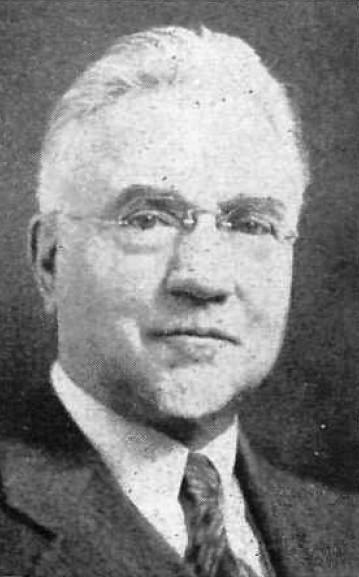
John A. Widtsoe approached theology the way he approached chemistry: with precision, systematic inquiry, and absolute conviction that truth cannot contradict itself. One of early Mormonism's most intellectually formidable apostles, Widtsoe brings scientific rigor to questions most theologians address through devotion alone. This 1915 work articulates Latter-Day Saint doctrine not as received wisdom but as a coherent philosophical framework one a rational mind might reach through careful examination of existence itself. The book establishes foundational principles: that knowledge and faith are not adversaries, that divine laws operate with the same consistency as physical ones, and that human agency represents the crowning architecture of God's design. From these premises, Widtsoe proceeds to examine the nature of God, the scope of mortal freedom, and the possibility of alignment with eternal purposes. For readers drawn to faith traditions that welcome intellectual scrutiny, this volume demonstrates that systematic thought and spiritual commitment need not live in separate houses.
Editions
X-Ray
“True freedom, which is full joy, is the complete recognition of law and adaptation to it. Bondage comes from ignorance of law or opposition to it.””
— John Andreas Widtsoe
“Man must learn to know the universe precisely as it is, or he cannot successfully find his place in it. A man should therefore use his reasoning faculty in all matters involving truth, and especially as concerning his religion. He must learn to distinguish between truth and error.””
— John Andreas Widtsoe
“The better men know the Lord, the better may the eternal truths we learn be applied in our daily lives.””
— John Andreas Widtsoe
“Men, discouraged by their failure to accomplish exactly what they desire, often speak of their lives as purposeless, but it is idle talk, for, in fact, no intelligent life which concerns itself vigorously and properly with the things about it can be said to be purposeless. Such a life adheres, automatically, to the law of progression, and therefore moves toward a great destiny of supreme power and accompanying joys. The only purposeless life is the one that does not use its faculties. It matters little what tasks men perform in life, if only they do them well and will all their strength. In the eternal plan they are given progressive value. In an infinite universe, one cannot possibly learn all or do all, at once. A beginning must be made somewhere and corner by corner, department by department, space by space, all will be known and conquered. In the end, all must be explored, and whether one begins in the east or the west cannot matter much. The big concern is the extent to which a man offers himself, mind and body, to his worthwhile work. Upon that will growth depend.””
— John Andreas Widtsoe
“That which is true must always remain true, though the applications may change greatly from generation to generation. It is the absence of such fundamental certainties, no doubt, that leads men into continual search for a satisfying religion, or that drives them away from their old religion.””
— John Andreas Widtsoe
“No one attribute so clearly distinguishes man as does the intelligent will or the will to act intelligently. It was by the exercise of their wills that spiritual beings in the beginning gathered information rapidly or slowly, acquired experiences freely or laboriously. Through the exercise of their wills they grew, remained passive, or retrograded, for with living things motion in any direction is possible.””
— John Andreas Widtsoe
“It is the business of man to become acquainted with the material universe in all of its manifestations, so far as may be possible, in order to provide a foundation of knowledge on which the reasoning mind of man may increasingly build.””
— John Andreas Widtsoe
“If each today is made great, the tomorrows will be surpassingly greater.””
— John Andreas Widtsoe
Link to this book
Add a free, dofollow link to Lex on your blog, forum, syllabus, or reading list.

<a href="https://lex-books.com/book/a-rational-theology-as-taught-by-the-church-of-jesus-christ-of-latter-day-saints-338b3b4d-0904-49ea-ae1d-3b5db91a1aff"><img src="https://lex-books.com/badges/read-on-lex.svg" alt="Read A Rational Theology, as Taught by the Church of Jesus Christ of Latter-Day Saints by John Andreas Widtsoe free on Lex" width="160" height="40"></a>[](https://lex-books.com/book/a-rational-theology-as-taught-by-the-church-of-jesus-christ-of-latter-day-saints-338b3b4d-0904-49ea-ae1d-3b5db91a1aff)[url=https://lex-books.com/book/a-rational-theology-as-taught-by-the-church-of-jesus-christ-of-latter-day-saints-338b3b4d-0904-49ea-ae1d-3b5db91a1aff][img]https://lex-books.com/badges/read-on-lex.svg[/img][/url]Read A Rational Theology, as Taught by the Church of Jesus Christ of Latter-Day Saints by John Andreas Widtsoe free on Lex: https://lex-books.com/book/a-rational-theology-as-taught-by-the-church-of-jesus-christ-of-latter-day-saints-338b3b4d-0904-49ea-ae1d-3b5db91a1affCite this book
Reading this edition for a paper or guide? Copy a citation.
Widtsoe, John Andreas. A Rational Theology, as Taught by the Church of Jesus Christ of Latter-Day Saints. Lex, lex-books.com/book/a-rational-theology-as-taught-by-the-church-of-jesus-christ-of-latter-day-saints-338b3b4d-0904-49ea-ae1d-3b5db91a1aff.Widtsoe, J. A. (n.d.). A Rational Theology, as Taught by the Church of Jesus Christ of Latter-Day Saints. Lex. https://lex-books.com/book/a-rational-theology-as-taught-by-the-church-of-jesus-christ-of-latter-day-saints-338b3b4d-0904-49ea-ae1d-3b5db91a1affWidtsoe, John Andreas. A Rational Theology, as Taught by the Church of Jesus Christ of Latter-Day Saints. Lex. https://lex-books.com/book/a-rational-theology-as-taught-by-the-church-of-jesus-christ-of-latter-day-saints-338b3b4d-0904-49ea-ae1d-3b5db91a1aff.